
An Introduction
A call has gone out. It was uttered in ancient times and speaks to men and women this very day. Many never heard it, and of those who did, fewer still heeded its cry. The esteemed men and women of old were those who heard its beckoning and heeded its invitation. Some had little else than the clothes on their backs, others possessed all the riches their age could give them, but what they had or could have otherwise gained was despised for the opportunity to share in the reproach of the greatest man who ever walked the face of the earth. These were those who endeavored to leave the world while still residing in it, who refused to build on the sands of fleeting desires and temporary pleasures something that the wave of time and death would crash over and make rubble of. They were the men and women who refused to put roots down in what is rootless, who understood that their defeat was found in speaking the word “home” over something that was not; their victory the confession of their exile, the truth that they did not belong. They were those who held out to the very end for a better country.
This great exodus continues to unfold throughout the generations. It is composed of people of every nation, tribe, continent, and custom. A people united across time—those who journeyed on camelback across deserts and those who journey in speeding cars across highways kindred spirits; those who tilled their land with iron plows and those in office cubicles hunched over their desks, fingers at the keyboard, long lost brothers and sisters separated by the centuries. A people who have come to realize you must lose your life to save it. A people whom love has made wanderers, and are now seeking a country of their own.
It sounds epic, and it is; it strikes one as lofty, and it is so, more than we could ever understand. It is the great unfolding story of the ages, and to claim to be part of it would require a hubris seen among kings and conquerors and history’s most vain characters, or else a humility, wonder, and faith that only children are known to possess. It is a journey no man could ever make, leading to a destination no man could ever arrive at, save by the help of God himself.
And yet, this is precisely what happened on the Hill called “Skull” two thousand years ago, when the Messiah, God in the flesh, was murdered on a cross. His spilt blood spoke a better word. His torn body opened the path. His impoverishing revealed the source of eternal treasures to all the poor of spirit who would ever walk the earth. His death secured the way and his ascension from the grave enabled the humble of the earth with the grace and power to walk it.

Christianity is a story of a people who have been redeemed—enemies made into friends; slaves to a cruel lord set free by a righteous and kind-hearted king. They are exiles now, but they are also free, no longer bound to sin and doomed to death, and they sing with joy inexpressible in thanks to the One who shed his blood to save them. Though now they are distressed with various trials, they know they will one day be kings. Their life on earth is now a journey, undertaken on the narrow road whose brightness grows like the dawning sun over the flat, dark horizon, looming larger till the noon of its day.
And so it is with us—those still in this world but called out of it. Those who came to the end of ourselves and found Christ, who trust in his grace alone and live by faith alone, who know that we could never make ourselves worthy and so live to glorify, know and love the one who is. The weak and foolish of our generations, sinners and wretches saved by grace, hell-deserving and heaven-bound. We too have a path to walk.
This path is difficult, and few find it. It requires sacrifice and cross-bearing. It is a narrow path, one of holiness, and most around us will take the other way. To remain on this path is more than a daunting task—it is an impossible one. Any who tried to walk it by their own ability would get lost on the way. And it is here we find a promise and an unshakable hope: “He guides me in the paths of righteousness for His name sake” (Psalm 23:3). We have not been left to ourselves; the one who made this path will walk with us on it and lead us every step of the way—and he will do it for the upholding of his name above all things.
Why does this promise speak of “paths”? After all, is there not but one road for the redeemed to walk on? The answer, of course, is yes, there is only one path; the path of righteousness created by the footsteps of Jesus himself. But detailing and discovering what that path looks like in life’s myriad offering of problems, challenges, and blessings is the difficult and rewarding task given to every one of the saints. It can only be accomplished by a complete reliance on His Spirit and an unwavering allegiance and devotion to the whole counsel of God as found in the holy scriptures. What does it look like to follow the master in an increasingly post Judeo-Christian society? What does it look like to follow him in civics? In marriage? At our desk job? In times of crisis, sorrow, confusion, and moral decay? The writings presented here are humble attempts to show some of those paths, to illumine some among the plethora of ways we are to know Him and bear his image while walking as pilgrims on this earth. They are by no means exhaustive and they are written for apprentices by an apprentice stepping unartfully forward (and rather slowly it would seem) in fumbling attempts to follow his master—it is no attack of credibility to admit that mistakes will almost certainly be made, both in the substance and presentation of what is written. Indeed, it is a truth continually made wondrous each time it happens that God uses any of us at all, and the fact that diligence in the pursuit and study of truth is required of us does not negate this wonder in the least bit. We have but one Teacher; the rest of us are just chalk pieces he sometimes uses to scrawl out a lesson on Heaven’s green chalkboard.
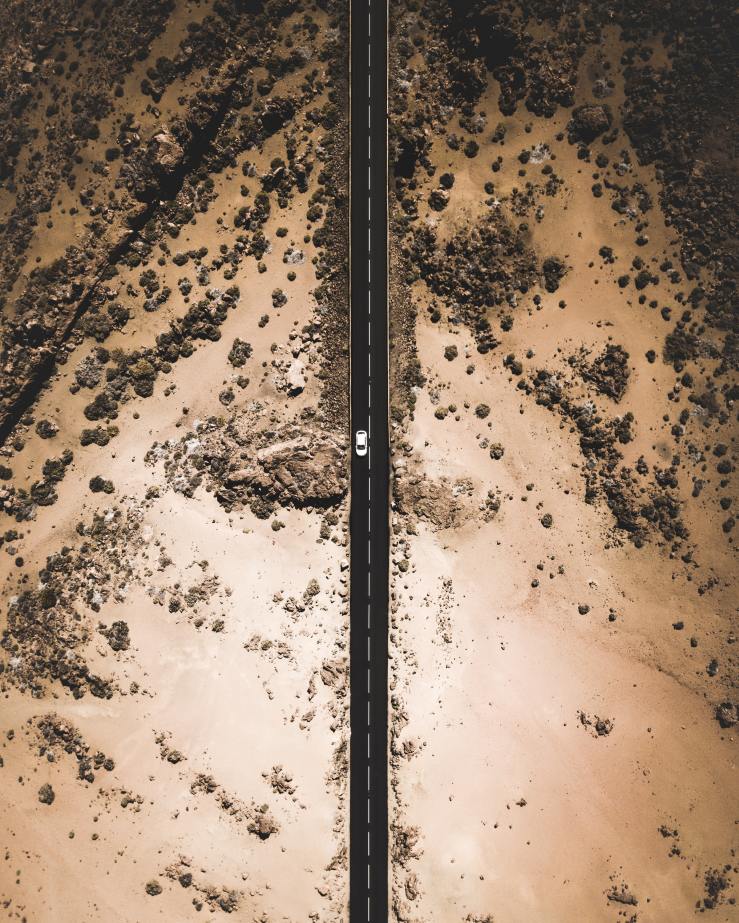
The calling of the saint is not only the call to walk this holy path, it is also the call to create one. We have been given the privilege of making a path for the Lord himself. He has made a way for us, and in so doing, as astonishing as it seems, he invites us to make a way for him. Isaiah prophesies of this spiritual reality when he says, “A voice is calling, ‘Clear the way for the Lord in the wilderness; Make smooth in the desert a highway for our God. Let every valley be lifted up, and every mountain and hill be made low; and let the rough ground become a plain, and the rugged terrain a broad valley; then the glory of the Lord will be revealed, and all flesh will see it together; For the mouth of the Lord has spoken’” (Isaiah 40:3-5).
If there is an ultimate goal for these writings, it is that: to raise up highway workers and to be one. To make smooth in the desert a highway for God alongside others whose hearts cry, “Maranatha!”; to see valleys lifted up and mountains flattened, every ditch filled and every boulder cleared out, a spotless bride ready for her husband, and a world ready for its king. An impossible task, given by the master in whom all things are possible for those who follow in his steps.
This call to walk paths of righteousness and create a path for the Lord has sounded down throughout the centuries to our present moment—let us be found among those who have heeded it. Let the readers of these pages be numbered among those who undertook this grand journey. Together, let us fix our eyes on our prize of immeasurable worth. Let us take the path—take it, and keep it till the very end.
 Paths of Righteousness