Scandals of the American Mind

On January 6th, 2021, Americans witnessed a deplorable spectacle of mob justice as hundreds of citizens surrounded and stormed the Capitol to stop the certification of Joseph Biden to the United States presidency. Video footage from that day depicts a motley crew of individuals crowned in red MAGA hats or holding poles from which Gadsden and TRUMP 2020 flags were hung, while others outfitted in paramilitary equipment such as helmets and walkie-talkies brandished baseball bats or pepper spray canisters or megaphone speakers with which to goad the swelling crowds, all coming together to swiftly overpower a sparse and unprepared police force and break into the palace of American democracy.

Many of the invaders appeared to have been possessed by a combination of rage and glee; a palpable anger in their faces at what they sincerely believed to be a stolen election both sated and fed by elation over what ease they had stormed the capitol. Watching the footage, one wonders how many of them had heads filled with delusions of patriotic grandeur—did they really think they were going to “stop the steal” or arrest Mike Pence for treason? Or did they know their rage, however valid they perceived it to be, was ultimately an exercise in futility? One cannot fully know. What was clear on that day and remains clear at present is that the Capitol Hill riot was just the latest national display of a human principle so basic it scarcely needs mentioning: thoughts and beliefs lead to actions. What starts in the mind does not always stay in the mind; ideas have consequences. How we think as individuals—how we process facts, premises, opinions, and how we formulate beliefs and build conclusions—not only affect our lives, but the lives of many others for good or for ill in magnitudes great and small.

           It is this truth that undergirds the fears of Americans when they hear of the growing influence of movements like QAnon—fears which the events of January 6th for many appeared to validate. Conspiracy theories often strike the rational listener as silly, but terrifying things can happen when what sounds silly or absurd is taken with seriousness. And the more there are people who take such things seriously, the greater the terror that spreads. That is reason enough for us to labor for a correct understanding of QAnon’s spread within evangelicalism and political conservatism and to discern its implications for our nation as whole.

Diagnosing the Diagnosis

           Not too long ago, Christianity Today posted an article detailing a report by the American Enterprise Institute which claimed that a little more than 1 out of 4 evangelicals believe the QAnon conspiracy that former President Trump is “is secretly battling a cabal of pedophile Democrats,” while around half of evangelicals believe that Antifa was behind the January 6th storming of the capital. The article goes on to say: “According to Daniel Cox, director of AEI’s Survey Center on American Life, the report suggests conspiracy theories enjoy a surprising amount of support in general, but white evangelicals appear to be particularly primed to embrace them.”

           That last statement deserves our attention. The insinuation here is that white evangelicals—and as the article later makes clear, “white evangelicals” means politically conservative evangelicals— are a particularly gullible sort; that is, for one reason or another, they possess a dearth in reasoning capabilities in excess of most Americans that lend themselves to being duped on average more than other segments of the population. Basically, it’s a nuanced way of saying conservative evangelicals are more likely to be stupid.

           Of course, to really assess the gravity of that statement one needs to ask, who else is particularly primed to embrace conspiracy theories? Or, to put it another way, if as the article suggests, white evangelicals are primed to embrace falsehoods, what exactly are those things priming them, and are those things lacking in other segments of the American populace? In other words, is this purported inclination towards fake news and outlandish theories which produce hysteria and outrage a disease of conservative evangelicalism, or American society as a whole? Notice what concluding the latter answer is correct does not imply: if true, it does not imply that evangelicalism does not have a problem that needs solving, it just implies that if they do have a problem in need of a solution, it is a jointly-held problem affecting more than just themselves.

           This is important to note for two reasons. First, as outlined in the last post, Many of those sounding the alarm of QAnon’s spread are conservative evangelicalism’s critics and foes. This raises the question of why the alarm is being sounded. Surely it is not out of compassionate concern, as if those on the left are troubled that their ideological opponents are falling prey to misinformation and poor reasoning—they already think evangelicals are dolts and would surmise as much whether or not QAnon ever came into existence. No, much ado is being made over QAnon in large part because of its implications the left find readily available to aim and deploy against evangelicals. QAnon provides easy fodder for the left to say: “See? We told you: look at all those Jesus signs being waved alongside American flags in the storming of the capitol! Evangelicals are dumb, weird, and irrational; and their irrationality makes them dangerous.” In other words, evangelicals believe crazy ideas, which in turn makes them do crazy things.

           Establishing a narrative in which your ideological opponents are (twirling pointer finger at the head) cuckoo is a very helpful tool in being able to dismiss anything they say that runs contrary to your ideological beliefs or political priorities—and perhaps more importantly, getting others to do so as well. You don’t have to do the hard work of subjecting their statements and arguments to critical analysis (which may of course prove your opinions and propositions to be the rationally inferior) and you keep others from engaging in that same reasoning process as well, which may lead to them leaving your side and joining the other.

           Thus it must be understood that those who loathe conservative evangelicalism, or all political conservatives for that matter, have a lot of motivation in framing QAnon as a distinctly conservative problem, which of course, in one sense, it is. And it would be wrong to say that such a narrative is being merely constructed but not believed by many of those who speak it—as stated earlier, there are many Americans who are genuinely afraid of QAnon adherents and a portion of our citizens really do think evangelicals are crazy and a palpable threat to modern society.  

           But if indeed QAnon is merely a symptom of a sickness infecting a much wider swath of Americans, then it still holds that progressives and left-leaning individuals have a vested interest in making sure that such an understanding does not become the dominant mode of comprehending the spread of QAnon, as that type of understanding significantly diminishes the power of the narrative they are trying to construct.

           There is a reason that children’s literature and films of yesteryear had bullies pronouncing kids with braces as “metal mouths” or “railroad faces,” while such portrayals would seem thoroughly trite and unrealistic today. Back then, there was that one kid who had them; now it’s not unusual to have multiple children in any given classroom donning orthodontic correctives. Since bullies work by isolating an individual from the group, and the easiest way to do that is usually by ridiculing them for something in which they are truly unique, orthodontics no longer functions well as bully fodder, since bullying works by highlighting an exclusive difference in an individual as a means of convincing others that he or she should be ostracized from the group. In other words, it’s hard to make a freak of someone when the class president, your best friend, and the girl you like all have glimmering, metallic smiles. In a similar vein, the narrative power of QAnon only works for the left if it is seen exclusively as a pathology of the conservative right. If it is something else, something more diffuse, then the rhetorical wallop of look-at-those-crazy-right-wingers goes out the door.

           So we need to understand that there are highly motivating reasons in our current landscape of ideological warfare for framing the QAnon problem narrowly. And of course, if it is not a narrow problem, then those within media, government, higher education, and so forth that treat it as such do so for the expedience of short-term gain at the expense of the longer term health of our society. Those of us who are committed to bettering our society in the long run must resist such attempts whether we fall more to the right or the left in our political convictions. We must have an accurate understanding of what is fueling movements like QAnon so that we can excise the infirm elements that give rise to it from our midst.

           But as stated earlier, viewing QAnon through a broad lens is not an invitation to view evangelicalism as possessing a clean bill of health. It is right and reasonable on the one hand for conservatism’s defenders to pushback against a narrative dishonestly tailored in a narrow way to lambast their movement, but in so doing they must still own up to any real problems within their ranks, otherwise, they are no better than their detractors. By denying any problems, they too would be peddling a dishonest narrative for the sake of partisan warfare, claiming to possess a level of intellectual and ideological health within in their movement higher than it actually is for the sake of projecting strength and moral superiority against their enemies. But whatever you deny having you will find yourself hard to be rid of.

*Trump supporters after the evacuation of Congress members on January 6th, 2021.

           Returning to our original line of inquiry, are conservative evangelicals a particularly gullible sort among the American populace? If the answer to that is yes, then understanding the spread of QAnon within its midst is fairly easy. It would be to no one’s shock to hear that those most predisposed to being deceived have become deceived by society’s latest tall tale or mass deception. It would be like telling a doctor that an obese, geriatric, and immuno-compromised man died after getting COVID-19, while his Spartan-fit grandson of twenty-two didn’t even need to check in to the hospital; the doctor is not going to be surprised. But if the answer is no, then the question of why exactly QAnon is spreading in conservative circles and what that means for the rest of the country needs to be answered.

Echoes in a Intellectual Desert

           Perhaps the simplest way to get to the bottom of these things is to examine the reasons journalists and other thinkers themselves have proffered for QAnon’s spread in evangelicalism; from there we can see what implications might rightfully be drawn.

           In his recent piece entitled “The Wasting of the Evangelical Mind,” The New Yorker editor Michael Luo blames what he believes to be a long-running streak of anti-intellectualism in American evangelical culture. He writes: “The style of the most popular and influential pastors tend to correlate with shallowness: charisma trumps expertise; scientific authority is often viewed with suspicion. So it is of little surprise that American evangelicals have become vulnerable to demagoguery and misinformation.” Luo bolsters his assessment in large part by referring to the work of Mark Noll, whose seminal book The Scandal of the Evangelical Mind published in 1994 (the title of Luo’s piece is a riff on the book’s title) famously opined, “The scandal of the evangelical mind is there is not much of an evangelical mind.” Noll’s contention, in part, was that Evangelicalism, as the successor movement to the fundamentalists of the early twentieth century, inherited from fundamentalism its deep distrust and opposition to modern intellectual thought.

           Fundamentalism, for those needing a refresher, was a reaction to the liberalism and skepticism that began to take root in the late stages of the nineteenth century, in which many people began to deny the authority and trustworthiness of the scriptures on the basis of science and other post-enlightenment modes of thinking which (supposedly) rendered such events as a literal virgin birth for Jesus untenable for those wishing to walk in the light of scientific truth while maintaining some form of faith practice. Fundamentalists refused to capitulate to the revisions of faith and doctrine modern academic thought allegedly demanded as an inexorable necessity. Their refusal was right of course; not because science and reason are incompatible with faith, rather it is the case that not all that masquerades under the banner of science or reason is really either of those things, as the ghastly horrors of the twentieth century would so ably point out. Nor does it follow that correct premises will invariably lead to correct conclusions, and as it is now, it was then, that there is no shortage of individuals who will bring correct premises to faulty conclusions and then berate those who reject their conclusions as being “anti-science” or backward or whatever.

           Nevertheless, the contention is made that fundamentalists went too far in that they allowed their disdain of modern academia to transform into contempt for the intellectual life itself. Whether or not such characterization is accurate is beyond the scope of this essay; the point is Noll believes this anti-intellectualism has become the cultural norm of evangelicalism, and Luo agrees with him.

           Nor is he the only one to view anti-intellectual tendencies as evangelicalism’s bane. Ed Stetzer, Missiologist and contributing editor of Christianity Today, concludes his 2020 op-ed in USA Today about the rise of QAnon in evangelicalism by also invoking Noll’s work, stating: “If there is anything that represents the scandal of the evangelical mind right now, it’s the gullibility of Christians who need to be discipled into critical thinking about how to engage the world around them. We need to be able to see through the bias and discern conspiracy theories that have risen to the level of messianic religion.”  

           Stetzer’s use of the words “critical thinking” is key here. It is the purported inability or unwillingness to think critically that dogs evangelicals and lies at the heart of QAnon’s spread. Stetzer is not saying evangelicals need to brush up on their Derrida or Weber or what have you, as if their minds required a fresh coat of academic pretentiousness, rather he fears evangelicals lack the tools of thought necessary to effectively “engage the world around them.” Perhaps Luo would agree, though for him critical thinking would involve or would inevitably lead to consulting those of “expertise” and “scientific authority.” That sentiment of course could lead us on an entirely different trail of examining what exactly is meant by “expertise,” since anyone of real acumen would be able to discern that a substantial portion of evangelical ambivalence towards the “experts” has much to do with disagreement over what constitutes one rather than the loathing of a category of people as such. After all, the conflation of ideology with expertise is endemic within circles of higher education today, and many denouncements of ordinary citizens rejecting “the experts” come from priggish elite educators affronted by the fact that a portion of the populace does not consider their Ph.D. in History or Sociology the indisputable grounds by which they must accede to their Marxist beliefs. But to what extent evangelical mistrust of our culture’s elites and their institutions is valid is beyond our present scope.

           In addition to the anti-intellectualism and or lack of critical thinking offered as a possible source of evangelicalism’s flirtations with conspiracy theory, we have the echo chamber proposed as well. Returning to the CT article, we are told:

Asked to explain why white evangelicals appear disproportionately likely to embrace conspiracy theories, Cox noted that, as a group, they do not fit a stereotype of conspiracy theorists as people disconnected from social interaction. Instead, most retain strong connections to various social groups.
But white evangelicals stand out in a different way: The vast majority say some or a lot of their family members (81%) or friends (82%) voted for Trump in the 2020 election—more than any other religious group.
“People who do strongly believe in these things are not more disconnected—they are more politically segregated,” Cox said.
The resulting social echo chamber, he argued, allows conspiracy theories to spread unchecked.”

So, it is evangelicals’ purported political homogeneity, their lack of cross-pollinating political discourse, ideological incest if you will, that is partly to blame for QAnon’s rise.

A Disease in Common

           Taken together, the two maladies would seem to be a very hazardous mix. Shallow-minded, unthinking individuals clustered together without intrusion, eagerly promulgating and reinforcing misinformation alongside shoddy rationales to one another is not bound to produce anything good. Now, setting aside the question of whether these two ills actually plague evangelicalism, let us assume for the moment that they do. The question then becomes, are these two qualities rare to the broader American populace? The answer, of course, is no. The echo chamber and uncritical thinking are by no means the exclusive domain of conservative evangelicals. They are, on the contrary, rapidly becoming hallmarks of our entire society.

           Much has been said over the past twenty years of American’s increasing polarization, what Bill Bishop pithily coined back in 2004 as “the Big Sort;” more and more individuals of like-minded politics are clustering together in a form of self-segregation that is playing out geographically at both the intra-state and inter-state level. The coasts are blue and the middle of the country is red; a state’s urban areas vote democratic and its rural areas vote republican with the suburbs tending to lean one way or the other. Increasingly rare are those members of our Union deemed “purple states,” and it can be argued that even a state’s purple status in many cases belies its own polarization: if a state is made up of a confection of solidly blue and red counties, i.e. if the individual communities that make up the state are not themselves purple, is it really a state resisting the forces of polarization?

           Additionally, the advent of the Internet has accelerated our descent into the echo chamber, the algorithms of social media and YouTube designed to give us more of what we like so that we are subjected to an ever-growing barrage of voices affirming and reinforcing our political views while opposing viewpoints and voices are shut out from our “suggested videos” playlist—not that we’d be open-minded enough listen to them if they came up anyway. And one only needs to take to Twitter to know that authentic dialogue between differing parties and genuine political curiosity are, like the California Condor, endangered American species.

            One could go on with an ever-expanding list of examples of our nation’s polarizing tendencies, but the point is, to anyone paying any attention, it is self-evidently not a distinctively conservative phenomenon.

           And what of the lack of critical thinking and anti-intellectualism? A book’s worth of material would need to be written to adequately chronicle our nation’s wholesale intellectual decline. We have incessant reports every few years of our children’s plummeting test scores, the decline in reading skills or the ability to write a persuasive essay, an increasingly large list of countries that outperform us on math, science, engineering, and so on. The state of our civics education has long been woefully bad, with one out of every four Americans unable to name the three branches of government and over half of our citizens unable to name a single current justice on the supreme court. Our universities, which if anyone is being honest knows are progressive echo-chambers staffed with astronomically high percentages of professors identifying as left-leaning, are filled Gen Z’rs (the least likely of any generation to identify as conservative or evangelical by the way) who demand intellectual discussion be severely curtailed due to a seemingly ever-growing amount of viewpoints deemed too “traumatizing” to listen to. A dearth of critical thinking unfortunately is becoming as American as apple pie.

           It makes much more sense then, (if we are to take the reasons given by those concerned by its rise) to view the spread of QAnon as previously stated as a particular symptom of a social disease infecting our entire body politic.

           For anyone engaged in that ever-more-elusive activity of critical thinking, it would probably cross their mind to point out that if indeed QAnon is merely a particular symptom of a larger social ill, it follows that there should be other symptoms as well. That is to say, the question should be asked: where else then do we see manifestations of poor thinking working in tandem with an echo chamber? Several answers spring to mind, but for the sake of space, we will make mention of one: the spread of critical race theory.

           Here we have a system of belief among progressives that mirrors QAnon in more ways than one might initially think. Both theories deal with nefarious forces that work their ills on the American populace secretly (albeit in different ways) contra to available evidence. For one the nefarious force is a group of “deep state” actors, satanic elites who are embedded in American institutions and secretly working for the nation’s destruction. For the other, it is an unconscious way of thinking (which of course cannot be empirically discovered or verified) that secretly weaves its way through institutions to produce systemic oppression against racial minorities.

           Truth be told, the gullibility of those who believe in CRT is quite astonishing. To reduce the presence of unequal outcomes among various ethnic groups to one variable of analysis is patently asinine. Any sociologist worth his salt (and any man or woman with a modicum of common sense for that matter) knows that a variety of factors are at work in the formation of a particular demographic group’s situation relative to another one. Those that dogmatically claim that all inequality is a result of widespread racism cannot prove their claims and so have taken to declaring that demands for evidence themselves are racist, objectivity and rationality themselves now manifestations of pervasive “whiteness.”

           Indeed, it is arguable that Critical Race Theory constitutes the greatest widespread threat to critical thinking (and irony considering its name) America has ever known. This is because it formulates an impenetrable worldview built around self-validating circular logic. Premise 1: everyone is racist. Premise 2: Any attempts to question or deny the premise that everyone is racist is a manifestation of racism. From these two premises, all attempts to reason with CRT adherents will only reinforce their worldview. Someone will ask: What proof do you have that everyone is racist? What about Nigerians or East Asians who are doing better than white people? By what form of analysis do you know unconscious bias is at work in that white person? All these are legitimate questions those who wish to undertake the search for truth will ask. But under the CRT worldview, those questions merely becoming confirmations of the inquirer’s racism. Once a person enters into CRT world it’s hard to get out.
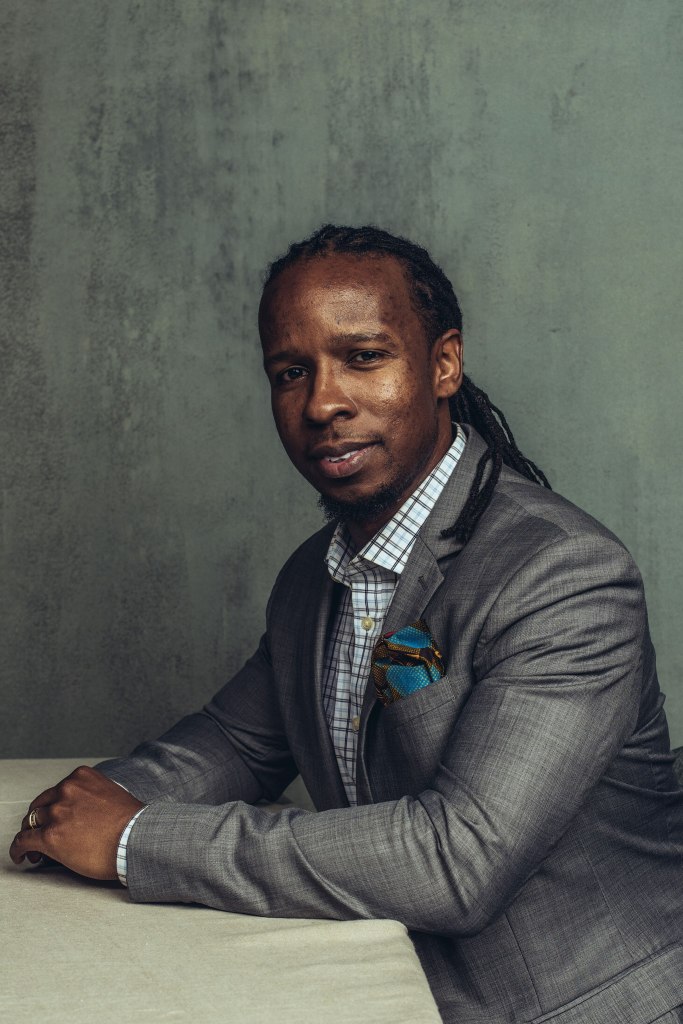
**A portrait of Ibram X. Kendi, currently one the most influential purveyors of C.R.T. in America.

           Which is to say, it sounds like a bit of a cult. And indeed, those that have steeped themselves in “wokeness” have psychological similarities to those under cultic auspices, not least among them the tendency to think they know more than everyone else (they are “woke” while everyone else is sleeping) and to exhibit an overweening sense of superiority because of it. Consider this quote from cult expert Rachel Bernstein: “When people get involved in a movement, collectively, what they’re saying is they want to be connected to each other. They want to have exclusive access to secret information other people don’t have, information they believe the powers that be are keeping from the masses, because it makes them feel protected and empowered. They’re a step ahead of those in society who remain willfully blind. This creates feeling similar to a drug—it’s its own high.”

           Do you have any friends that have gone “woke?” If you do, then you know how apt that statement is in describing them. For our woke friends, the “powers that be” have tried to keep secret through the “myth of meritocracy” and the lie of a colorblind society the reality of systemic racism through “whiteness.” The ones that can’t see it, are to their minds willfully blind, i.e. they are stubbornly holding on to their “privilege,” while as part of the “woke,” they are working together with others in a morally elite and enlightened group, engaging in “allyship” and “doing the work” of advancing equity, crusaders in the great moral cause of our day. The thrill of purpose in such people is self-evident—needing a cause has forever been a perennial desire of the human heart—as all too often is the thrill of feeling oneself to be morally superior, pride our king hamartia.  

           But here’s the kicker: the quote given above was not made in reference to CRT or wokeness; it is from an article in WIRED magazine made in reference to the QAnon movement. The author of the article, commenting on Bernstein’s quote cited earlier says: “This conviction largely inures members to correction, which is a problem for the fact-checking initiatives that platforms are focused on. When Facebook tried adding fact-checking to misinformation, researchers found, counterintuitively, that people doubled down and shared the article more when it was disputed. They don’t want you to know, readers claimed, alleging that Facebook was trying to censor controversial knowledge”(italics the author’s, not my own).

           Basically, the author is pointing out that one of the ways cults work is by taking any opposition to their claims as proof of their veracity. For the QAnon adherent, labeling anything associated with the movement as misinformation is just the secret satanic cabal at work trying to discredit the information so they don’t get exposed. How, one should ask, is that any different from your woke true believer, who claims any attempts to use statistics or logical arguments to question critical race theory’s precepts are proof-positive of a person’s racism and an attempt to uphold an oppressive system? Answer: it’s not.

           In CRT/wokeness you have the same elements of QAnon at work. You have a worldview in which observable reality belies actual reality, one where secret nefarious forces are at work and those who have been awakened to this truth are also initiates to a battle of near cosmic proportions. A global cabal of elites serves as the enemy in one worldview, systemic racism in the other. Additionally, both sets of adherents are likely to have been predisposed to their beliefs to some extent through geographic polarization and the echo chambers of the internet and social media, and both have fallen prey to a state of mind that disrupts their ability to think with rationality and intelligence.

           To clarify: this is not an attempt to make an absolute equivocation between the two movements. Each exhibits distinct and important differences, which we may delve into at a later time. But as two separate and distinct movements they are nonetheless connected like offshoots from a common branch, both springing from a lack of thinking and a proclivity to being duped that is evident in millions of people all across the political spectrum and only growing larger. The dangers from this impoverishing of the mind are manifold and will only increase in number in the days ahead, and those who care about our society must be willing to fight them wherever they see it whether in conservative or progressive circles.

           In that sense then, the right level of analysis for QAnon—that is to say, the one that is truly helpful—is one that goes beyond partisan contempt into a holistic assessment of our populace. After all, a doctor who treats symptoms before he or she has ascertained the cause can prove to be a deadly one. To prescribe pain killers for a patient with reoccurring headaches may seem to be the reasonable thing to do, but if that patient has headaches because of a tumor in their brain, then the doctor’s focus on symptom-treatment to the detriment of discovering what the headaches are symptoms of becomes a form of cruel and negligent medical malpractice. So it is that left-leaning citizens and progressive politicians harping on about the dangers of QAnon for political gain, partisan anger, and self-righteous posturing do incalculable harm to the country they claim to care about.

           This leads us to one final question: how come so many of conservative evangelicalism’s critics do not see the spread of QAnon from this higher plane of thought? The answer: because they themselves exhibit in various degrees the very same qualities that helped give rise to the QAnon movement they so vehemently denounce. Many of the people sounding the alarm over QAnon are the very same ones shrugging their shoulders over the spread of CRT. Their brains turned off, they think CRT is just the latest right-wing bogey-man despite the fact that unlike a host of other polarizing issues, this issue is stirring up intense concern among many prominent thinkers and journalists on the left, not just the right.

These are some of the ones who took to social media on January 6th to voice their indignant outrage and horror over the sick spectacle that was the Capitol Hill riot and yet were the same people blithely tweeting and reposting quotes six months earlier of MLK saying “riots are the language of the unheard” as stores were looted, businesses were burned, and people were gunned down. They are the victims of their own echo chambers and their inability to reason beyond the partisan narrative to which their thoughts have long been shaped. They cannot see that what plagues a segment of those evangelicals and conservatives whom they so abhor plagues them too in their own way.

           To hearken back to Noll, there may indeed be a “scandal of the evangelical mind,” of which the acceptance of QAnon among some evangelicals is its latest vice. But the larger scandal, of which admittedly this essay has only faintly sketched, may be the scandal of the American mind; a scandal which reaches from the ocean blue coasts to the deep red South and back again. Clear-headed thinking is in much shorter supply among the American populace than many realize; how much shorter and how much detriment we will reap from this lack remains to be fully seen. One thing that is clear, however, is that situation appears to be getting worse, and as we stated at the beginning, thoughts and beliefs lead to actions. In a country of worsening minds, then, we should expect to see a worsening of behavior by our citizens, a worsening of decisions made by our leaders, and a worsening quality of shared life as our problems compound and viable solutions to them light up in less and less minds while simultaneously being discarded by a growing number of minds that consider then reject them. Eventually, that will lead us far from the domain of scandal and into the much worse one of tragedy.

This image has an empty alt attribute; its file name is 9f2783ec-a544-4cd1-b101-cac08cdf1e64.jpg

*By Tyler Merbler from USA – DSC09265-2, CC BY 2.0, https://commons.wikimedia.org/w/index.php?curid=98724490
**Oregon State University, CC BY-SA 2.0 https://creativecommons.org/licenses/by-sa/2.0, via Wikimedia Commons


Every Q Needs Its A

There is a trend that has been going on for the last year and a half which needs to be addressed. I am speaking of the incessant and growing chorus of voices that are sounding the alarm or otherwise accusing conservative evangelicalism of increasingly being infiltrated by the QAnon phenomenon. There is much to say about this subject, and I have yet to see it discussed with a multi-faceted level of penetrating analysis. This post assumes a rudimentary understanding of the spread of QAnon on the part of the reader, so if you are unfamiliar, read a few articles on it first. For an excellent one, click here.

           We should start out by acknowledging the phenomenon is real. By real, I mean that there really are social media groups and online forums and videos and blog posts and other avenues of media promulgating a set of theories about the “deep state,” and cabals of sex traffickers, and Trump’s imminent return to the White House, etc. and there really are people swallowing this stuff wholesale, getting outraged and paranoid and taking to social media to pass on the information they have received with some folks are getting in so deep that they are starting to have a worldview completely reshaped and dominated by a QAnon lens. Many of these people are not Christian of course, but some are.

           By way of anecdote, I know of multiple Christians whose parents (also Christians) have come under the sway of QAnon conspiracy theories and I have personally interacted with multiple conservative Christians voicing rhetoric or beliefs tinged in QAnon sentiment and have friends who have as well. And that says something, doesn’t it? It’s one thing to hear something on the news, it is another thing to witness it yourself. You think: this really is happening, I’m seeing it with my own eyes. It’s no longer only the histrionics of the news cycle, it’s real life. In summation: news about individuals believing “fake news” is, as it turns out, not always fake news; and conservative evangelicals shouldn’t dismiss reports of QAnon’s growing influence as nothing more than lefty slander. It’s real. It’s happening.

           But to say that the spread of QAnon is happening does not mean one is suggesting at what magnitude its spread is occurring, nor does acknowledging its existence mean you are acknowledging some pre-determined level of threat that its spread supposedly poses to evangelicalism or greater society or of its implications as to the nature of conservative evangelicalism as a whole; it’s simply to say it exists. This must be noted as it may be the case that some evangelicals are afraid to do the first part because they equate it with the second. Many critics of conservative evangelicals have seized upon QAnon as the latest weapon in their rhetorical arsenal by which they can paint conservatives as dumb, foolish, unreasoning simpletons and conservatives may be tempted to think acknowledging QAnon’s existence is the same as acknowledging the Left’s assertions as to the meaning of QAnon’s existence. But the two are not the same.

           Which brings us to an important line of inquiry: who are the people sounding the alarm over QAnon’s advance in evangelicalism? This is a key question to answer as it is often the case that the loudest voices speaking out about an issue will at least partially inform us on how to view the issue itself. When the CCP is blustering on about how Taiwan has illegitimately broken away and how the nations of the world must respect that there is only “one China,” you can surmise that since Taiwan is a free and democratic nation, and China is not, whatever is coming out of the CCP’s mouth is probably a bunch of crap. Unless you’re into the whole rule-by-tyranny-and-oppression sort of thing.

           In our case, the voices sounding alarm about QAnon and evangelicalism can be broadly sorted into three groups. The first group is your garden-variety, secular, left-leaning journalists. These are the folks who don’t care much about the Church outside of its effects on our nation’s political processes. They don’t identify as Christian, and as such, they only care about the fact that there is a huge block of voters formed by a religious affiliation that tends to vote ruby-red republican—a fact which is a reoccurring subject of their frustration and ire.

           The second batch of people is left-leaning/left-sympathizing, self-professing Christians. These run the gamut of everything from full-on progressive Christians attending churches with rainbow flags hanging from their eaves to Christians with more traditional views who nonetheless find themselves sympathetic or in hearty agreement with the Democratic party and some of its aims like the welfare state, climate change, matters of race, and so on. They may be pro-life and orthodox in their views of sexuality but if so they find those issues of little or, perhaps better said, of exaggerated importance in shaping how they vote, or they may be completely in agreement with the LGBTQ+ cause and radically pro-choice.

           The spectrum of people in this group being so broad, they may view conservative evangelicals as being everything from enemies in the ranks, wolves in sheep’s clothing as it were, to those members of your extended family whom you must begrudgingly accept—their political views perpetual sources of exasperation and even shame. The bottom line is they don’t like the influence or the evidence of political conservatism in the Church and are usually working to remove it at some level.

           The third group would be conservative evangelicals alarmed at QAnon’s spread within their ranks. These folks find the working out of their orthodoxy to be best and most consistent with conservative political priorities: pro-life, pro-marriage, strong borders, freedom of speech, limited government, anti-cancel culture, anti-C.R.T., etc. They may or may not have been Trump supporters, but if they were not, they certainly did not vote for Biden and found Trump’s brand of populism not principally conservative enough, or else his character too compromised to stomach. These individuals are not against conservatism in evangelicalism—on the contrary, they are for it—but they are against a perverted or misshapen conservatism, one formed more by crass emotive appeals and misinformation about the “libs” than principled arguments and ideas and robust use of the facts.

           Of the three groups of voices, this last one seems to be the smallest. The bulk of the voices appear to be coming from groups one and two, which means the majority of this hoopla of the spread of QAnon in conservative evangelicalism is coming from conservative evangelicalism’s critics—those hostile and committed to its demise. That being the case, it is not entirely unreasonable for any common sense conservative Christian to make the tentative conclusion that all this QAnon talk might be just a bunch of overblown lies. After all, when those who hate or dislike you are speaking ill of you, your inclination is to assume they are engaging in slander. But two things preclude us from taking such a simplified view of things.

           The first is, just like the most powerful lies, the most powerful critiques have elements of truth in them, even if in the final balance their conclusions are unwarranted and wrong. A wise person, then, does not immediately toss out a critique whose conclusions he knows to be false; he first extracts whatever is true from the critique so that he can formulate a better conclusion of his own. Take the example of Principal Jones who hates sophomore student Johnny Smith and is predisposed to conclude that Johnny is a stupid kid and a delinquent. His school counselor, Mrs. Brown, who has had many conversations with Johnny, knows his assessment is far off the mark. Jones, however, points to Johnny’s report card of straight F’s and his record of truancy in school as proof for his conclusions. Mrs. Brown, while knowing that Principal Jones’ conclusions are wrong and probably fueled by malice, is nonetheless smart enough not to throw out the facts he has given her and is instead rightly troubled by them. Regardless of Principal Jones’ false conclusions, something wrong is happening to Johnny. Thus, armed with those facts, she ferrets out their true meaning.

           Turns out, Johnny’s bum dad left his infirm mom for a new squeeze, leaving Johnny, his mother, and his two younger sisters short on cash. Johnny’s been working late nights to take care of his mother and siblings, and the exhaustion and lack of time coupled with bouts of severe depression over the situation have caused the otherwise bright-minded Johnny to stop caring about school. Principal Jones had a wrong conclusion, but Johnny had real problems.

           Conservatives, in handling their critics, must first determine whether they are on the receiving end of baseless slander, or the slander of the subtler sort which consists of real problems but wrong conclusions. With regards to QAnon, if it is slander, it is to some extent at least the latter and not the former kind, and that means there are real problems that need diagnosing, however small or large they might turn out in the end to be.

           The second thing which precludes us from completely dismissing concerns of QAnon in evangelicalism is the fact that even if most of the voices are the voices of conservative evangelicalism’s enemies, not all of them are. Some of those voices are the voices of its friends. That is a clear indication that something is probably going wrong that needs addressing. When your enemy tells you your zipper is down he may be lying, but when your friend does, you owe it to him and yourself to cast a downward glance.

           Some among the most zealous of conservative evangelicalism’s culture warriors might protest that such forays into introspection are a waste of time: we’ve got a bunch of progressives who want to overthrow the Constitution, take away our liberties and indoctrinate our children—why waste time nitpicking about some conspiracy theory whose influence is probably overblown anyway? The answer is simple: a good general doesn’t just keep his troops in the right spot focused on the right target, he also dispatches medical offers to investigate whenever there are any credible reports of outbreak in the camp. He knows (like Napoleon learned all too well in his invasion of Russia) that the health of his troops has a lot to do with whether he wins battles or not. Or, to put it as the Apostle Paul did: a little leaven leavens the whole lump of dough. Error left unchecked spreads and grows in destructive power, which is why you don’t ignore it when it is small but instead judiciously excise it from your midst.

           Furthermore, if there is a sickness spreading in your part of town, you’re a fool if you don’t know what its symptoms are and how you can keep yourself from getting exposed to it. You’re also not much help to your friends and may even end up being a vector for their infection. If QAnon is a sickness spreading however slowly in conservative circles, then if you are a conservative you best know what its symptoms are and how to help yourself and others stay free of it.

           If it’s beginning to sound like I am in the third group previously classified, to such charges my reply is: perhaps, and, not quite. The truth is, looking at QAnon as a sickness might not be the best level of analysis, though it’s not a bad one. It may be more germane to see the spread of QAnon as a symptom of a much larger social disease, one to which conservative evangelicals are not solely liable to catch, but one which is infecting various segments of the American populace as a whole, conservatives and progressives alike, in different ways and in different measures. And it is at this level of analysis we will work toward in future posts, by which we may then rightly understand not only the QAnon movement and any attendant dangers it may possess, but the health of American society as a whole.  

           Until then, it is well worth our time to consider that in a society becoming increasingly polarized as ours is, one in which more and more time is devoted exclusively to denigrating and becoming outraged by the other side, it will be an unpopular though not unwise practice to take a look at the moral and intellectual health of our own side from time to time. In the long run, it will be the side that does this best that “wins.”

This image has an empty alt attribute; its file name is 9f2783ec-a544-4cd1-b101-cac08cdf1e64.jpg

When God Goes Out of His Mind Part V

“Thus has the Lord of hosts said, ‘Dispense true justice and practice kindness and compassion each to his brother…'” Zechariah 7:9

Note: this is part five in a series of essays examining the issue of abortion biblically. Click here for part one, here for part two, here for part three, and here for part four.

Dead Justice, Different Justice

Justice looks like something. After first diligently undertaking the task to understand what justice is, it must then be enacted. This is a principle that runs through all the virtues of life. Virtues are not deeds, but no man or woman can claim to possess them without tangibly embodying those virtues, for the virtues themselves rightfully apprehended compel their possessors to action. Faith is something separate from works, yet without works it is dead (James 2:17). The apostle John asks: “Whoever has the world’s goods, and sees his brother in need and closes his heart against him, how does the love of God abide in him?” (1 John 3:17). The implication is that an abiding love would have tangibly met the brother’s needs. This John affirms in the next verse when he says: “Little children, let us not love with word or with tongue, but in deed and truth” (1 John 3:18). Love is not just something we claim to have with our lips, it is something we express in our hands and feet.

            So it is with justice. Our love for God manifests in obeying his commandment to love our neighbor as ourselves, and part of loving our neighbor means rescuing them from oppression and seeking recompense for injustices done to them, just as we also would want to be rescued and have someone fighting on our behalf. Justice, as a derivation of love, is not something merely desired but something done. Like faith, justice without works is dead. And so the time has come for us, as regards the fight against the systemic injustice of abortion, to begin to sketch out what “boots on the ground” look like.  But before we do that, we best take a moment to remind ourselves as to what justice really is and briefly examine some of the current dilemmas and pitfalls Christians face in the pursuit of justice in our present culture.

            Ultimately, as we have taken pains to delineate, justice is most truly a glory of God issue; it is about God being revered and honored as God. Done rightly, the pursuit of justice is a form of worship. It declares that God is worthy of the sacrifices made in its pursuit. This God-centered motivation of justice must be iterated with utmost judiciousness, perhaps to the point of what some might be tempted to claim as theological ad nauseam. The great danger for all Christians wishing to obey God’s command at the present moment to, “let justice roll down like many waters,” is to take the advice of our godless culture on how to do it. Our present society brattles about with wide-ranging claims of what is just and unjust; ours is a culture that has never been so inundated with discourse on justice while simultaneously residing in a spiritual and intellectual drought of understanding as to what justice is. Talks of justice are everywhere; the loudest and far-reaching voices speak of a justice that is inherently man-centered, self-exalting, and self-interested; and unless God’s people are vigilant, our pursuit of justice will mirror the world’s pursuit of justice, which will not be a true pursuit of justice at all.

            There is also the compounded threat of those in the Church who wish to follow the dictates of the culture and will co-opt the biblical language of justice to disguise their allegiance to godlessness and to trick other believers into going astray with them.  To counteract this, we must be as clear and persistent in our articulation of justice as the world is. If the culture is shouting with confidence and constancy in the ears of the saints, we must endeavor to have God’s word manifest as the overpowering thunder that it really is (Psalm 29:3); a voice so loud and penetrating it reduces the shouts of the world into unheeded whispers.

            This essay series has been a humble attempt to be part of that clear articulation, detailing some of the more general and particular contours of biblical justice. While we do not have time to recall all that has been said, what this series has in part attempted to show, and what the Bible self-evidently shows, is that God’s justice and the world’s justice are different. From this principle, we can derive two others that for our present purposes are key to understand. The first is that this difference is a source of revilement from the world, as much as it may become an object of admiration to them. The proverbs tell us that “An unjust man is abominable to the righteous, and he who is upright in the way is abominable to the wicked” (Proverbs 29:17).  John tells us: “the Light has come into the world, and people loved the darkness rather than the Light; for their deeds were evil” (John 3:19). The fallen world is not predisposed to love what comes from God but rather to reject and loathe it; and this is no less true of God’s justice. The second, as already noted, is that a Christian’s pursuit of justice will not look the same as the world’s pursuit of it. Taken together, what we have this: a Christian’s pursuit of justice will be noticeably different from the world’s, and the world won’t very much like what they see.

            Beware dear Christian of pursuing a justice that the world conveniently finds to be vogue. As G.K. Chesterton put it: “Christianity is always out of fashion because it is always sane; and all fashions are mild insanities.” Even at its moral best, the world is never in full lock-step with the tenets and Spirit of our faith, and in a society like ours that has wrenched itself free of much Judeo-Christian thought, the culture will increasingly be given to fashions more aptly described as severe insanities. To be Christian is to be to some extent, larger or lesser, countercultural, and if we are swimming gaily down the culture’s river we can be sure we are relating to the water wrong. We are to be in the world but not of it; in the river, but swimming upstream against its natural tide.

            It should be no wonder then the grave injustice of abortion is not sought by the world as something to be counteracted and abolished. On the contrary, it is celebrated; and those who seek to end its murderous scourge are slandered as being unjust. Obeying God’s command to rescue those who are doomed to death (Proverbs 24:11) in this way will not ingratiate a Christian to the world; no accolades from the culture’s gatekeepers await the Christian who fights against the injustice of abortion, and thus little to no acclaim from unbelieving peers awaits him or her either. Social media posts on this injustice will not ratchet up a flurry of likes, affirming comments, or re-tweets; disparagement and hostility await, as well as the dearth of likes that come from fellow Christians who agree but are too scared of the reproach that comes from giving their pollical sign of agreement.

            And this is why many Christians shrink from fighting it, instead adopting a cause that is more likely to generate favorable feelings from the world and their worldly-minded peers in and outside of the church. It is, unfortunately, the reason why many Christians claim to care about racial justice, particularly in blue states or regions of the country, a combination of cowardice and thirst for human approval rather than genuine biblically inspired concern for racism driving their efforts. Isn’t it supremely convenient when we happen to care and be most vocal about precisely the same things the culture is giving their attention and voice to? Racism is indeed a problem and will only be more so in the days ahead, and it must be challenged by a Church equipped to effectively confront it. But in that arena of justice as well, true Christians will find that the solutions needed to bring healing and recompense will be countercultural, unmet with favor by the activists and influencers who claim to be working towards its erasure. Being a true champion in the fight against racism (that is, one who understands what racism is and how to fight it through a biblical lens) will not make you many friends either.

Old photograph capturing Salmon leaping upstream in Ketchikan, Alaska.

            The true battle against racism will have to be chronicled at another time, but we must understand that many people who have postured themselves as anti-racists have done so out of pretense, in social conformity and because it fashionable, and likewise many Christians have turned a blind eye and deafened themselves to the heart of God on the issue of abortion precisely because it is not.

            We will soon offer up some biblically-informed suggestions as to what tangible action against the injustice of abortion can entail for the believer, how he or she may put the virtue of justice into practice and combat the murder of the unborn through deeds—and through the empowerment of the Holy Spirit be mightily effective in it. But before commencing do so it is important for every disciple of Christ to realize what this justice will look like to much of the world, that is, how it will be received in their eyes, and to make up their minds beforehand to care infinitely more what it looks like in the eyes of God than in the eyes of men. If we launch into the fight against abortion hankering for the world’s acclaim, we will be sorely disappointed. The ways of God are foolishness to the natural man (1 Corinthians 2:14) and what is highly esteemed by humanity is detestable in the sight of God ( Luke 16:15). We must expect the world’s reproach and lack of comprehension to what we do, but if effectiveness is our aim we will find the world’s confusion and anger to be no detriment; believing the world is flat does stop a ship traversing the globe from going round and round, and one’s faulty opinion does not vanquish the efficacy of truth. God’s ways done in God’s power always emerge triumphant and unbeatable when the dust settles.

            Lastly, it is important to note that those who lift their wetted finger to the winds of culture to determine what society will favor them for fighting against never truly become heroes whose actions endure the crucible of history. Heroes are concerned with rescuing the oppressed and down-trodden of society; their ears are attuned to the cries of the helpless, not the praises of people. They well know their efforts to rescue the oppressed will be met with indifference or hostility—if society broadly approved of a hero’s rescue efforts they would not be oppressing the very people the hero is attempting to deliver. Heroes do what is righteous, not what is expedient. They stand against a tide of menacing evils the culture is allowing themselves to get carried along with. They stand alone or in the company of the few. They confront darkness most cannot see or are else too afraid to stand up to. That is what makes them a hero. While their journey is arduous and often lonely, by the brightness of their courage and fortitude others are drawn to their cause, turning men and women into souls that become stones on the scales of justice, accumulating force and weight that eventually tip the scales in favor of righteousness within a society. Some heroes live to see that tipping in their day, others do not, but they know with confidence that their lives given as weight for justice will not be in vain. With these truths in mind, let us now attend to how to practically combat abortion.

The Power of Prayer

            The first response of any Christian to systemic injustice is prayer. The famous maxim of A.J. Gordon applies here to combating abortion: “You can do more than pray after you have prayed; but you can never do more than pray until you have prayed.” To do the work of God requires grace, and God gives grace to the humble, and prayer by its nature is an act of humility. It is a demonstration of need, a recognition that help is required. It starts the undertaking of justice on the right foot: not the foot of pride (Psalm 36:11)—a trust in one’s strength or abilities—but a trust and a need for the strength of God. Every tangible manifestation of battling abortion must first be bathed in prayer—and then sustained by it. Prayer enables the work undertaken to be supplied with divine power, in so far as the work is truly submitted to God and carried out with righteous motives (one cannot use prayer as a sanctifying gloss to cover over works done with fleshly motives or in disobedience to God), and constant prayer ensures the work remains supplied with divine power. Many workers, having begun energized in the Spirit, tire themselves out by resorting to the arm of the flesh. Some never start in the Spirit at all, mistaking their nascent and untested zeal for the inspiration of the Holy Ghost. But those who wish to be successful over the long term in their efforts and last as long as the battle may require will not long neglect the place of prayer.

            But prayer is not only a prerequisite to acts of justice against abortion, it is an act of justice against abortion. In Luke 18, Jesus gives his disciples an important lesson in this regard.

Now He was telling them a parable to show that at all times they ought to pray and not to lose heart, saying, “In a certain city there was a judge who did not fear God and did not respect man. There was a widow in that city, and she kept coming to him, saying, ‘Give me legal protection from my opponent.’ For a while he was unwilling; but afterward he said to himself, ‘Even though I do not fear God nor respect man, yet because this widow bothers me, I will give her legal protection, otherwise by continually coming she will wear me out.’” And the Lord said, “Hear what the unrighteous judge *said; now, will not God bring about justice for His elect who cry to Him day and night, and will He delay long over them? I tell you that He will bring about justice for them quickly. However, when the Son of Man comes, will He find faith on the earth?”
(Luke 18:1-8)*

            Christ’s point is clear: if justice can be extracted from earthly, unrighteous judges through an individual’s persistence, how much more can the sons and daughters of the king whose very throne is founded on justice not fail to receive it through constant asking? Just as the judge has power to grant the widow protection from her enemy with a word from his mouth, so does God have the power to end oppression and wickedness with a decree from his lips. In the same way a prosecutor goes to the court to pursue justice for the victimized, so do we as God’s people go to the heavenly court to petition the judge of all the earth for justice against particular abominations. And Christ promises that when we do so persistently our efforts will pay off and justice will be served—with haste (Luke 18:8). The principle here is that persistent prayer brings speedy justice. Many political battles in state legislatures and in the courts have been and are currently being fought over the legality of abortion. These battles are important and necessary. But the most important place to seek justice is at the throne of God, and only prayer brings us there. Those who wish to see justice in the realm of abortion must thus give themselves to constant prayer.

            Prayer is also a weapon wielded in the realm of the spirit. Every Christian is a soldier in a war waged, “not against flesh and blood, but against the rulers, against the powers, against the world forces of this darkness, against the spiritual forces of wickedness in the heavenly places” (Ephesians 6:12). What these forces in heavenly places are, we are given little concrete information. We know Satan is the “prince of the power of the air” (Ephesians 2:2) and that he took a third of the angels with him in his rebellion (Revelation 12:4), and that angels war in the heavens for the destinies of nations (Daniel 10:13, 20). We know that there are “unclean spirits” which love to torment and afflict humans and work towards their death (Matt 17:15, Luke 9:39). Furthermore, we know that the murdering of infants is something undertaken to honor demons (Psalm 106:37-38), and that the prerogative of Satan is to kill, steal and destroy (John 10:10) and that Satan has been a murderer from the beginning (John 8:44). A biblical understanding of abortion, therefore, recognizes that the embeddedness of abortion in our society is something satanically enforced and inspired; it cannot be rooted out of society through appeals to rationality or tireless political activism alone. It must be confronted on a spiritual level in the arena of prayer and fasting where the saints wrestle with cosmic deities.

            Such notions no doubt strike many western ears as foolish, but Christians understand that humans neglect the realm of the spirit to their own peril. The unseen realm is, true to its designation, unseen; but it is very much real. This is not a call to superstition or fruitless speculation of things we barely understand. It is a call, however, to acknowledge plainly what the scriptures tell us and the ways to which the materialism and empiricism of the West may dispose us to treat these portions of scripture less seriously than we ought and to engage these mysteries in a spirit of humility and Christian duty. These spiritual enemies are real and we must war with them. Make no mistake: as a murderer from the beginning, the cultural, legal, and economic apparatus of abortion is of Satan’s kingdom. Victories gained in this arena are territories taken from him. It is by the Spirit of God and not man’s wisdom or might that Satan’s kingdom is expelled and the kingdom of Christ advances (Matthew 12:28), and it is by prayer the Spirit’s power is both accessed and wielded (Eph. 6:18, Rom. 8:26).

            No Christian with the most rudimentary understanding that they have become soldiers in Christ will neglect the weapon of prayer. To do so is to not be engaged in the fight. And certainly no Christian who has been gripped by the grief and zealousness in the heart of God as concerns the litany of the world’s injustices will do so either. To at once both truly behold the horror of an injustice like abortion and to hear the promised power of prayer against it and then do nothing to apprehend its sure-given victories is unconscionable and unthinkable. In a world as dark as ours and as those who have received the lofty promises of prayer’s effect, to not engage in the activity of intercession is to be as derelict as the soldier who deserts comrade and commander at the battle line, as callous as the mother who does not feed a starving infant from her milk-filled breast. Real believers, when confronted with injustice, get on their knees and pray.

Individualized Compassion (Stopping for the One)

            In ancient Rome, unwanted infants were discarded by members of society who found them burdensome or undesirable, left to die in the woods from exposure or the ravaging of wild beasts, or else to be snatched up by those who would rear them to be slaves or prostitutes.1 Girls in particular were likely to be victims of infant abandonment, as they were considered to be less profitable in bringing economic support to the families that bore them.2 In defiance of this low regard for human life, Roman Christians, recognizing the preciousness of those made in the image of God and of God’s zeal for the defenseless and the orphan, rescued these unwanted children from garbage heaps and other common sites of abandonment, adopting them as their own.3

            Rather than being met with acclaim or even indifference for their acts of compassion, so wayward was Roman society that it remonstrated the Christians for such deeds, many of its denizens finding the Christians’ rescue efforts as odious to the point that saving infants was actually made illegal for a period.4 Such attitudes make for an elucidating parallel to our own times where pro-life advocates are often viewed with the same contempt. Ours is a society not merely indifferent to slaughtering children, but hostile to those who wish to stop or abate the bloodshed. From the early Church’s rescuing of infants, the present-day Church inherits a long-standing pedigree of care for the marginalized and oppressed, as well as an acute understanding that Christ-like compassion has long been countercultural and we should not be surprised to find society at odds with our attempts to care for the vulnerable.

            The early Church, confronted with an embedded inhumanity in its culture, and without the promise of aid from institutions or state, rushed in to fill a great void of care and need. While, as we shall later see, the Church did not neglect to make use of its power to solve infanticide on a macro-level when such opportunities arose,5 they did not let immanent inability of producing systemic change prevent them from administering as much justice and compassion as they could to needy children. They took to heart seriously their Master’s injunction to love their neighbor as their self, treating each tossed away infant like the Good Samaritan did the victim of bandits left bleeding on the side of the road. In doing so, they witnessed to the eternal fact that the LORD is a God who cares for the individual; his destitute cries reach his ears and her miseries and mistreatments are observed by his eyes with care and zealous concern.

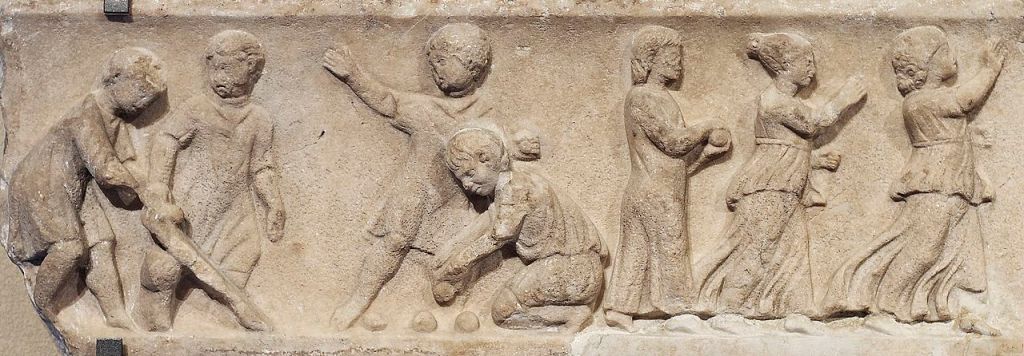
A piece of Roman artwork from 2nd century A.D. depicting children playing ball games, likely from a sarcophagus.

            The early Church’s deeds also testify to the biblical reality that injustice is an individualized experience, as much it may also be a systemic one; systemic injustices exist because and only because individuals are being oppressed, and thus justice is something fought for on behalf of individuals. Where systemic injustice truly exists, it is not being meted out to some amorphous, abstracted, and indiscernible body of people, but to individual souls with singular lives, names, and faces. In today’s milieu, much emphasis (and not entirely wrong in so doing) is placed on systemic solutions to the malaises of society, but as followers of Christ we must never forget that justice and compassion starts with the individual in front of you, with the soul in your neighborhood that needs rescuing, and the sacrifices made to help that soul are infinitely precious to God and eminently valuable in performing regardless of whether such actions appear to produce nothing more than most minuscule of tears in the fabric of injustice. When the electricity goes out in a city on a cold winter’s night, we do not let the fact that we are unable to restore power to the entire city grid prevent us from going door to door with blankets and hand-warmers and flashlights and such—we do what we can to alleviate the suffering of individuals, recognizing the inherent dignity of doing so. In short, we do not let an inability to make a systemic difference prevent us from making an individual one.

            Such must be the Church’s attitude with abortion. While—and let this be abundantly clear—we must strive to bring a systemic end to abortion, we must never let the absence of a possible and imminent solution prevent us from rescuing as many victims of the system as we can. That “many” might not look like much. It may look like convincing one mother out of hundreds entering abortion clinics to not terminate their child. It may entail a family pledging to raise two children who were given up for adoption instead of aborted by their biological mothers. The devil in such circumstances would whisper in our ears that such actions are pitiful when considered to scale. What good is standing outside an abortion clinic two hours a week for ten years for a cumulative amount of over a thousand hours of one’s life and only rescuing a dozen babies, when thousands more were killed in that same duration? What good does one little adoption do (especially with all sacrifices of time and finances) when millions of children will be killed in the same span of years it takes to raise that child? The devil always tries to boast of his numbers in order to get us to despair of our own.

            But we must remember that every Christian act of rescuing a child from abortion is a manifestation of the saving power of God; it is a revealing of the heart of the Everlasting Father. How can one put a price tag on something like that? If every child is made in God’s image, then the worth of our rescue is not calculated by numbers. Let us contrast two examples of the crime of arson to cement our understanding of this. If an arsonist sets fire to a paper factory, the brave attempts of an individual to rush in and save reams of paper would seem only absurd. Whether he recovered twenty reams out of ten thousand or two, his rescues would be insignificant to the total amount of loss and the company would not be celebrating the measly amount of paper he saved from the flames but rather lamenting the staggering financial losses they incurred. Moreover, the act itself would not be admirable—why bother risking your life for a handful of reams? If the individual had been able to put out the fire entirely and save the factory, that act may have been worthy of some esteem. But in the absence of such ability, being brave for a few reams of paper is both foolish and frivolous.

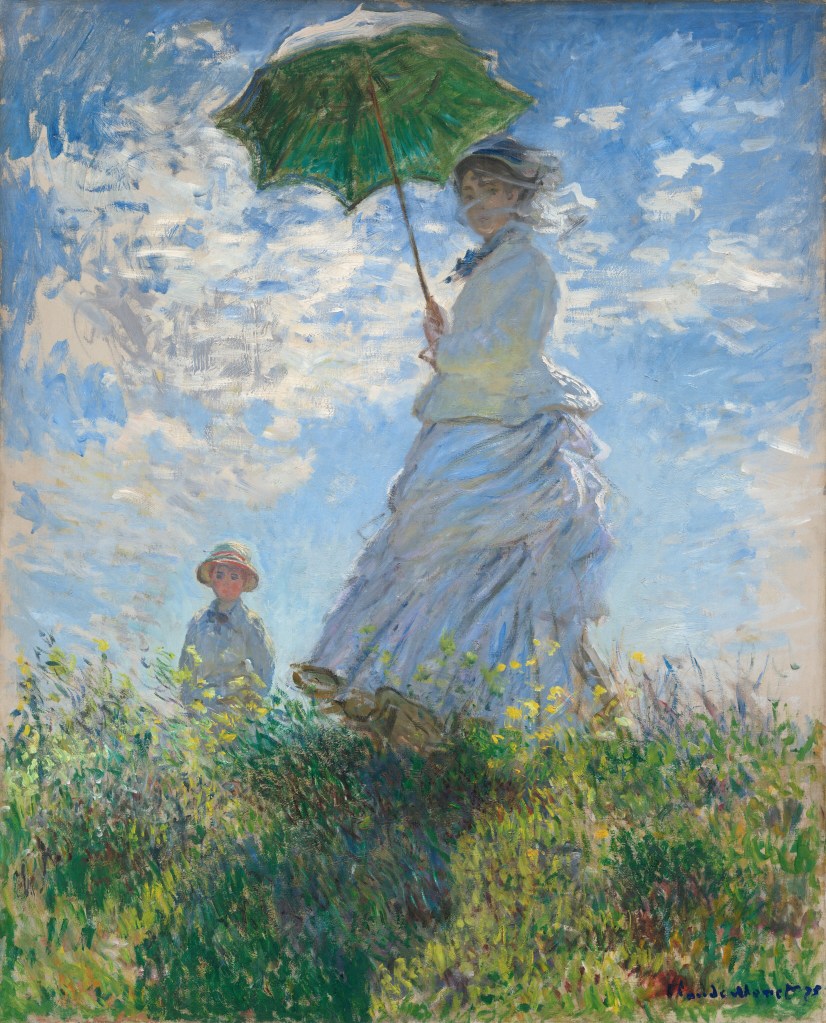
            But what if an arsonist sets fire to a world-renowned museum? And, in the panic of rising flames, a curator rushes in and comes back out of the smoke with one single Monet? The terrible fact that most of the priceless holdings of the museum—world-renowned masterpieces—were destroyed in the fire would certainly cause great grief. But rescuing that sole painting would not be disparaged in any way but rather celebrated, and cherished all the more bittersweetly because it alone escaped the fire. No one would think that the Monet was not worthy of being rescued simply because all the other paintings were consigned to the flames.

            The devil is like the museum arsonist. The greatest Artist of all existence has made millions of self-portraits, each in its own right a masterpiece. Many may be lost by the murderous fire of abortion, but everyone rescued is a cause for great joy, and the value of their rescue is independent of how many others are lost or saved. This truth is a great bulwark to the lies and discouragement of the enemy. A single child saved is infinitely valuable to God, as are our efforts to save one. Our God is a God who leaves the ninety-nine sheep to find the one. His dwelling place is inhabited with those who strike up the band and uncork the champagne at the repentance of a single sinner—how infinitely precious is a single soul to God! We must never let the magnitude of lives left untouched by our efforts obscure the unfathomable magnitude of touching one individual life for the glory of God.

Woman with a Parasol – Madame Monet and Her Son, by Claude Monet.

            Furthermore, we must realize that small-scale acts of compassion are never as small as they seem. The repercussions of justice done to one individual can have far-reaching consequences beyond imagining. The word of God itself testifies of this. Moses was one child, bravely rescued from the systemic injustice of Egyptian infanticide (Exodus. 2:2). This one act, this small protest, this seemingly tiny rebellion against a towering malevolence led to the shaking of Egypt. It was the tiny crack in the dam leading to a deluge of pent-up justice that liberated the oppressed masses and the vanquishing of tyrannical forces. Likewise, one child saved from the murderous spree of Athaliah led to both a dethroning of wickedness and a renewed period of national justice and peace (2 Kings 11:2, 17-21, 12:1-3).

            Even if the individuals we touch never lead to such visible and climatic change, the repercussions of our acts are still incalculable. Apart from the immediate impact on the individual shown compassion, who is to know how many other actions of compassion that single act inspired or led to, or the size and scope of them? Picture a great and renowned music composer, a progenitor of some of the world’s most beloved and timeless pieces who was instilled with love for music by his grandmother. Surely without the grandmother there would be no great composer and no sublime works of music? But what about the grandmother’s school teacher who first awakened her to the beauty of music? And that school teacher’s uncle who in turn did the same for him? The arcs of our lives, small and provincial as they may seem, are never really small or provincial, and our actions are rippling out through time generating causes only eternity will fully reveal.

            To belabor this point a little longer, we would be amiss without pointing out that the force of our acts are not only measured in their individuality but by the collective force to which they belong. The systemic injustice of abortion, after all, is upheld by individuals. It remains a system because of individual secretaries scheduling individual appointments in individual abortion clinics within individual cities, to be seen by individual abortionists. Each employee of an abortion clinic knows that neither staying nor leaving their line of work is likely to change much on a macro-level, and that the upholding of abortion rights and accessibility does not rest solely on any one of their shoulders—and yet it is jointly upheld by them just the same.

            So we must realize it is only our willingness to be an individual that—if it is all God allows—saves a few unborn children each year, that in turn brings about the rescuing of thousands of children; that it is in all of us humbly taking our place with hammer and chisel against the great edifice of abortion that this fortress of death will one day crumble. Our individual acts of compassion may seem a pail of water poured out on one small plot in a vast desert land, but collectively they can become the torrential rains of justice God desires the land to be inundated with—if only enough people do their seemingly small acts. Alone, our efforts may seem to be the scantest wisp of a cloud, together they can become a dark and tumid thunderhead.

            There are many concrete actions Christians can take to this end. One is to volunteer some of their time at a crisis pregnancy center that provides free resources like ultrasounds so that women can see their growing baby. Ultrasounds have long been a thorn to the abortion industry—when a woman witnesses the obvious humanity of the life inside her she becomes less inclined to kill it. These centers also offer abortion-reversal pills which counteract the effects of the abortion pill mifepristone (RU-486), allowing women who have had a change of heart after taking the pill to save their unborn baby’s life.6 Many also provide free counseling services to help women navigate the emotional duress that comes from having an unplanned pregnancy (especially those in poverty or other challenging domestic circumstances) with the aim of bringing hope to women who are afraid they will be unable to handle going through with their pregnancy. One of the devil’s main devices is the power of fear which he uses to prey upon women and tempt them into killing their child. Dispelling fear from a woman’s heart often leads to the rescuing of a child’s life.

            Crisis pregnancy centers are also often able to help struggling mothers get connected with social services or other non-profits to help assuage any financial difficulties a mother may have that would incline her towards an abortion; they provide diapers, formula, and other much-needed postpartum supplies. as well. Taken together, they are havens of hope that provide women with practical and emotional help and a touch of care from individuals genuinely committed not just to the safety of the unborn child but the well-being of the mother’s soul. 

            Another way to reach individuals with the justice of God is through sidewalk counseling. This involves standing outside or near abortion clinics to lovingly counsel women not to kill their children. Counselors come armed with the truth and a heart of compassion (not self-righteous judgment) to urgently persuade women to choose life instead. The abortion industry thrives on lies and deceit; lies about the physical and psychological health risks of getting an abortion, misinformation about the biological development of a fetus, false narratives of female independence and unborn children as career-crushers and misery-makers and detriments to the soul’s personal happiness. The abortion industry lies by saying it cares about women when in fact it only uses them for monetary gain, and most of all it lies when it tells women that what is inside them is not a human life and can be terminated with no consequence—no guilt, no residue of shame, no wrong done. Sidewalk counselors are on the frontlines of this battle against systemic murder, confronting these lies with love and truth to save children just before their mother delivers them into the jaws of death. They are literally fulfilling the command of Proverbs 24:11 to deliver those being taken to death and to hold back those staggering to slaughter. 7

            Adoption is another powerful way of dismantling abortion on an individual level. Like the infanticide of Roman times, the act of abortion speaks two messages over a child: you are not wanted, and you are not valuable. And with every terminated pregnancy those words are not only spoken over that child but function as a discourse to the world at large, suggesting and inviting others to see unborn children the same way and in turn speak the same two things over them. Adoption as an action speaks the very reverse of those words. It says to a child: you are wanted, and you are valuable in the eyes of God. And it too serves as a discourse to the world about what children are and how they should be treated; it is an embodied statement proclaiming a radically different view of the worth of a child and the lengths to which we should go to not only allow an unborn child to enter the world but to welcome its entrance with gladness, care, and love.

            When we agree to adopt a child that would otherwise be aborted we not only rescue the child, we powerfully refute abortion’s lie. What was one person’s “mistake” now becomes another’s cherished blessing; what was once an inconvenience to keep now becomes someone others have gladly inconvenienced themselves to keep. Abortion tells society: your own child is not even worth the cost of being kept alive. Adoption tells society: a stranger’s child is worth the cost of being raised as your cherished own.

             Adoption in its truest sense is not merely a couple wanting a child someone else did not want or could not take care of; it is agreeing with the heart and mind of God over that child’s life. The child is an image-bearer that he created, one that he desires would come to know his mercy and love. It is his precious in his sight. When a husband and wife adopt a child they are not saying we decided you were valuable to us, first and foremost they are simply affirming what is already and most consequently true: you are valuable to God. If one truly values God, then he or she will value what he values; in this way, adoption becomes a form of worship to God.

A scene from a child’s sarcophagus, depicting the mourning of a child. Rome 2nd century AD.

            The aforementioned activities are no doubt just a few of the many ways compassion can be put into action on behalf of the unborn. It should be added that in addition to the sacrifice of one’s time and bodily presence in these activities one can add their monetary support to reputable organizations and individuals actively involved in such work. The abortion apparatus is well-funded with financial support from governments, with the fundraising efforts of non-profits, with the benevolence of secular philanthropists and the super-wealthy (such as Warren Buffett), as well as the money collected from medical-insurance companies and out-of-pocket costs by abortion providers—it is a monetarily well-oiled machine of death. In contrast, many pregnancy centers must make do with lean budgets that hamper their ability to acquire full-time staff and restrict the breadth and quantity of resources provided and many willing couples are impeded from adoption by the costs of the fees involved. There is no doubt many more children could be saved if Western believers were less materialistic and more interested in using their wealth to transform lives.

            It is also true that many in the Church and our consumerist society use the giving of money as a way of avoiding the more inconvenient and uncomfortable methods of seeking justice that require direct use of our time and hands. As this is too easy a trap to fall into, we must caution against any believer from too easily and hastily determining that giving money is the only way they have been called by God to bring justice to the issue of abortion. The Good Samaritan, our model for giving justice to our neighbor, included money in his response when he paid the innkeeper but he also bandaged the roadside victim and set him on his donkey to bring him to the inn; he got his money involved as well as his time and personal presence. We would do well to heed his example and be wary of straying far from it.

            This is not to say everyone must give of their time and money in equal measures or amounts. The makeup of our means, circumstances, and callings are endless in variation and we must not judge or presume disobedience on the part of one person or the other because they gave little here or little there or much. We must simply be aware that all of us are called to take up our crosses and live lives of manifested sacrificial love and there is a tendency in all of us that goes against that—our flesh which kicks against discomfort and sacrifice and looks desirously at the path of ease and smallest loss.

Conclusion

            There are two more indispensable and biblically-mandated ways all of us who wish to obey God’s commandment to demonstrate justice against the evil of abortion must engage in; these will be the subject of Part VI. For now, dear Christ-follower, if your heart burns to see justice unleashed in the realm of abortion, get on your knees and pray. Devote the time you were spending on that Netflix series or some other recreational endeavor instead to the mighty work of intercession; give God greater persistence than the widow gave to the judge—you have greater grounds for confidence than she did. And better yet, don’t do it alone; gather with other believers who have heeded the call to seek the Judge in the place of united prayer.

            Then, go and reach out to the frightened and confused mother; intervene to rescue the life of the unborn child in front of you, angered but undeterred by the knowledge that so many others may not elude the jaws of death. Be Christ to the mother or child he has put in front of you, knowing that regardless of how few or many do likewise as your Lord he is worthy of your witness. Know well also that when enough of Christ’s Body is Christ to the person in front of them, Christ becomes who he is to untold thousands: Savior and Redeemer—rescuer from regret, from sin, from death.

This image has an empty alt attribute; its file name is 9f2783ec-a544-4cd1-b101-cac08cdf1e64.jpg
Notes

1 The practice of infant exposure is well attested to in ancient literature; in historical chronicles, in works of philosophy, and in plays and legends. Oedipus, mythological King of Thebes, was left abandoned as an infant; so too were the legendary founders of Rome, Remus and Romulus—said to have survived by sucking from the nursing breasts of a female wolf. Cicero and Seneca seemed to have advocated for the practice, and both Plato and Aristotle promote some version of the practice in their works too, though in their case it can be argued to be part of a utopian or future moral vision, and may or may not cohere to the practices of their times. Suetonius and Plutarch also make mention of the practices in their historical works along with other recorded records.

2 See: Shelley, Bruce. Church History in Plain Language. 4th ed., e-book, Thomas Nelson Publishers, 2012, pp. 43, 100.

3 Sometimes, Christians could do little more than give these abandoned infants a proper burial. Inscriptions of buried children in Christian catacombs revealed that some were victims of exposure and infanticide. The Christian’s belief in the imago Dei was reflected in their concerns of treating the body as something worthy of a respectable burial. The pagan emperor Julian is noted to have said that it was “the kindness of Christians to strangers, their care for the burial of their dead and the sobriety of their lifestyle” that helped advance the spread of their religion (See his letter to Arsacius).

4 See: Shelley, Bruce. Church History in Plain Language. 4th ed., e-book, Thomas Nelson Publishers, 2012, pp. 100.

5 Starting with reforms made by Emperor Constantine and culminating in the outlawing of infanticide by Emperor Valentinian, Christians were eventually able to use their influence to persuade rulers to enact laws against the killing of infants and thus bring justice on a broad societal level.

6 A little less than half of all abortions given by Planned Parenthood are now medical abortions (as opposed to surgical ones), and nationwide medically induced abortions account for more than a third of all abortions performed. See: https://www.reuters.com/article/us-usa-healthcare-abortion-exclusive/exclusive-abortion-by-prescription-now-rivals-surgery-for-u-s-women-idUSKBN12V0CC And: https://www.guttmacher.org/evidence-you-can-use/medication-abortion

7 Again, these actions of compassion are not only directed at the infant, they are also directed at the mother. Abortion preys on the despondent, the confused, the fearful, the desperate and the vulnerable. Many women who get an abortion are pressured to do so, whether by their family or the man who impregnated them, and it is not uncommon to find that the woman wants to keep her baby but feels trapped in a situation where she is compelled by others to kill it. In our post-sexual revolution culture, women increasingly find themselves impregnated by men who have no intention of providing emotional and financial support for the child they have procreated; we have far too many men who shirk fatherhood at all costs and who treat women as something to be discarded after being sexually used. Raising a child alone is a daunting task even for those of ample means and the loving support of a family, and for those of little means and no one to rely on it can take on a specter of catastrophic quality. We must neither downplay nor deny the victimhood of the mother in such situations as we are there to help her too along with her child. We understand, however, that the best way to help her is not to rationalize or excuse her desire to have an abortion, but to persuade her not to make the child she is carrying a victim of her own. That will only add to her misery in the long-run, not alleviate it, as the mistreatment a person receives is never cured by mistreating another.

*Unless noted, all scripture quotations taken from the NASB. Copyright by The Lockman Foundation.

When God Goes Out Of His Mind Part IV

“For he will deliver the needy when he cries for help, the afflicted also, and him who has no helper. He will have compassion on the poor and needy, and the lives of the needy he will save. He will rescue their life from oppression and violence, And their blood will be precious in his sight…” Psalm 72:12-14


Note: this is part four in a series of essays examining the issue of abortion biblically. Click here for part one, here for part two, and here for part three.

Hero Making

True Christianity lends itself to heroics. Rightly understood and lived out, no other system of belief is more apt to foment acts of bravery and rescuing among mankind. From Corrie Ten Boom’s hiding of the Jews and Dietrich Bonheoffer’s clandestine church and resistance efforts under Nazi rule to Brother Andrew’s Bible smuggling and Jim Eliot’s outreach to violent indigenous tribes; to the tireless and protracted efforts of John Newton and William Wilberforce to the end British slave trade or the extraordinary lives of St. Francis and St. Patrick, the Christian faith has no shortage of personages, ancient or modern, worthy of the title hero.

            Indeed, the origins of the word “hero” itself find their closest fulfillment in the annals of God’s written word. Taken from a root word in Greek that meant “defender; protector,” the word hero originally meant one who was a demi-god: part man, part divine; a person endowed with supernatural strength or ability used in the service of righteousness to protect and rescue others. Throughout disparate centuries and cultures, stories of men and women engaged in deeds of outsized bravery and righteousness have captured the minds of children and elders alike; tales of individuals who by their great strength and marvelous powers aid the oppressed and vanquish agents of darkness whether they be kings, raiders, or monsters. Men and women of outsized stock who stand apart from the rest of humanity; otherworldly, they seem, and often quite literally are, divine.1

            No demi-god, Christ was God himself come down in human flesh to grant humanity a mighty deliverance from the unbreakable shackles of sin. He exceeds the heroic ideal—what humanity had dimly hoped for was not enough. No hybrid being would suffice for deliverance from doom; mankind needed one among them fully man and yet fully God. Brimming with love in his heart and undaunted in the face of death and the spiritual agony of the cross, Christ undertook the greatest display of love and bravery the cosmos will ever behold and accomplished the greatest feat of rescuing time will ever see, triumphing over the powers of darkness once and forever. He is the King of kings and the Lord of lords, and to that, we might add, he is the Hero of heroes. All true acts of heroism are but shadows cast by the light of his own. Because humanity has been made in the image of God, at our best moments, pale reflections of what he is the substance of shine through.

    If the Christian is called to pursue acts of justice—acts of deliverance and advocacy for the oppressed—as we have contended he or she is, then he or she is called to display this heroic nature of Christ. Fighting against injustice and oppression is not a task fit for the weak or cowardly, it requires bravery and strength. One must have both the power necessary to be effective over forces of injustice and the courage to use such power in the face of suffering and daunting opposition. One quality is not much good without the other; a hero has both. Thus, the call to pursue justice, and more particularly to our purposes, the call to rescue the unborn, is a call to heroics. If God has commanded us to “deliver those who are being taken away to death” (Proverbs 24:11), then he has commanded us to engage in heroism. How to be such a people we shall undertake to explain.

Achilles, from a detail of a 300 B.C. pottery painting.

            As we chronicled at the conclusion of the last essay, the failure to pursue justice is ultimately a failure to pursue Christ-likeness. Implicit in that statement is the assumption we have the ability to pursue Christ-likeness, as failure implies something other than mere inability. The young boy grieves himself over his sixth consecutive strikeout in the little league games in a manner he does not when he spreads his arms and leaps from the roof of his house in an attempt to fly. The former deals with possibilities, the latter does not. Truth be told, the pursuit of Christ-likeness is more in line with the boy’s rooftop aspirations than it is with his home-plate endeavors. It requires of us something we don’t have in and of ourselves—something contrary to who we are. The boy needs a set of wings; we need a new nature. Just as he cannot set sail to the skies without those feathered appendages, so are we unable to ascend to heaven’s lofty heights of heroism without a deliverance from sin and transformation of soul. And only God can supply it.

            The story of the gospel is that there is only one hero. There is only one able to rescue and render justice for the world’s evils. And none of us qualify. Sin had made the whole of mankind both prisoners and villains—or, perhaps better said—prisoners to being the villain.2 The gospel starts with the terrifying truth that God comes to enact justice, not on our behalf, but on his behalf against his adversaries, who are those who have broken his laws and besmirched his glory. And man, in his natural state, is God’s foe. What a wretched state to dwell in! Sin was what enslaved us and what we needed rescuing from, and yet sin was what made us enemies to the only one with the power to rescue us. We were like convicts with a terminal disease whose judge was also our doctor, the only cure for our sickness residing in the hands of our executioner.

             A true hero is both compassionate and just. But when Satan tempted Eve and Adam fell, he tried to strip the world the chance of ever beholding one. He put God in the ultimate conundrum: spare humanity and be unjust, or destroy humanity and render sin more consequential than mercy, which is an aspect of love. But the Almighty cannot be beaten. Taking the punishment for our sins, Christ satisfied the justice of God; his death freed us from sin’s enslavement and healed us to live lives of righteousness (1 Peter 2:24). Our executioner sat in our electric chair and gave us our medicine—justice and mercy accomplished in one act.

            This is the good news, and it holds implications for us. All salvation and justice come from God alone. In need of rescue, we were unable to save ourselves or others; as villains, we lacked the ability to bring justice to the world’s myriad evils, standing condemned as those who must receive Justice’s inescapable and fatal blow ourselves. As pertains justice, God looked down on the earth and saw that there was no man able to bring it, so he put on his war garments and went to dispense it himself (Isaiah 59:15-18, Isaiah 63:3-6). He says of his quest for justice, “from the peoples there was no man with Me” (Isa 63:3). Salvation, deliverance, and judgment were undertaken by him and him alone. Why do we start here? Because the first step to true heroism is recognizing that there is and will always be only one who is truly heroic: Christ. Only Christ had the love, courage and power necessary to save; the rest of us needed saving. Left to ourselves, we only had the power, perhaps, to choose which particular flavor of villainy we wanted to aspire to. To be anything other than the prisoner and villain is a miracle wrought by the heroic work of Christ.

Gospel Responders

            What that necessarily implies is that any and all works of heroism we undertake are derivative of his own; all acts of saving have as their origin and their possibility the salvation that comes from Jesus Christ. Why do we as God’s people rescue others? Why do we intervene on behalf of the unborn? Why are we able to? Because God has already rescued us. His rescue is the source of our ability and the motivation behind our own. Hence, all true justice is done in response to the gospel.  

            By this, we mean that for Christians, pursuing justice is an expression of gospel gratefulness. We have dealt at length with the grievous consequences that await those who fail to pursue justice and how our inaction to the shedding of blood makes us complicit in it and positions us to be recipients of a terrifying divine judgment. Such truths produce a holy fear in us that banishes our inactivity and complacency—and they are meant to; it is the fear of the LORD that starts and keeps us on the path of wise living (Proverbs 9:10). But as Christians we must take pains to understand that God does not desire us to act only because we are afraid of his judgments; he wants us to part ways with our inaction because we love him and have a heartfelt desire to be like him. In gratefulness for what He did on the cross, we are to freely give him our glad service. In adoration for who he is, we are to make him the object of our earnest emulation. Thus our fight against injustices and our effort to rescue others is one of thankful imitation. After all, is it not so that the heroes that receive our highest venerations are the ones we aspire to imitate?

            By saying all true justice is a response to the gospel, we are also speaking of causality: true justice is the result of the gospel and an expression of the gospel—and hence an expansion of the gospel’s work. In other words, acts of true justice embody and carry within themselves the message of the gospel and are themselves manifestations of God’s saving power. Every form of deliverance and every act of compassion has the gospel as its genesis and is designed to be an expression of the gospel because whatever we do, we are only doing it because of what Christ did. Without the work of Christ on the cross, there would be no work for his disciples to attend to. And, if the gospel is the real reason for our work, then in our work we will not fail to let people know the reason. Deeds always beg the question of motives, and even when not explicitly asked, those who are highly motivated by the love of something or someone cannot help but confess to others the raison d’être of their actions—to do otherwise would seem to be a betrayal to the object of their love. So it is that if the love of Christ on the cross compels us to works of justice, we will want the recipients of those works both to know his love and to know that it is love for him that motivated us to perform them. Every outstretched hand lifted up from a miry clay, every hurt man or woman held and bandaged by the saints, in asking, “Why did you do this?” should hear from a follower of Christ’s mouth: “Because this is what Jesus did for me; I am here to help you only because he has sent me.”3

            The importance of this cannot be overstated. As his people, God sends us out not to bring people into our rescuing, but into his. The heralding of the gospel is telling others what Christ has done for us so that he might do it for them. We do not bring people to salvation—Christ does, but he uses us as a means to bring the lost to himself. And so with every other form of rescue. To God belong deliverances from death (Psalm 68:20). The poor and needy are fed and rescued by his hands (Psalm 146:7, 68:10, 109:31). While instances of supernatural intervention are often portrayed only as unmediated encounters between God and the person helped (or else with some assistance from angelic beings), the truth is that the help a saint offers is no less supernatural. As many have pointed out, if the Church is the body of Christ, then we are his hands and his feet, which means that behind our footsteps and outstretched arms are his own. If Bob’s hands build the cabin, then the builder of the cabin is Bob. It follows then that if Christ’s hands feed the poor, then the one who has fed the poor is Christ. Thus, in all the work of the Church, Christ is working.

            If our rescuing is both made possible by and done in response to his rescue of us, and if our works of justice are acts of obedience conducted as servants in response to the commands of a king, then it is not accurate to claim we have rescued or rendered justice for anyone—Christ has, through us. Each action of deliverance and justice is just the latest in a series of dominoes to fall which began their cascade at the cross—they are part of the onward sweep of his love and saving power across space and time, Calvary the site of detonation blast that forever extends outward by the activity of the saints.

            None of this is meant to distance us from the urgency of taking action or blunt our responsibility to work justice and rescues—it is meant to frame it. In reflecting on his work among the apostles, Paul did not shy away from declaring what he had done: “I labored even more than all of them.” But to such a declaration was joined the addendum, “yet not I, but the grace of God with me” (1 Corinthians 15:9-10). Prior and more fundamental to the “I” of his labor was a “not I,” one for whom the credit of labor was more rightfully due. Our labor against injustice must be vigorous, but reverentially and humbly recognized as empowered by the vigor of another.  

            Many a Christian has had as part of their journey the realization that while they claim to be saved by grace alone, by their deeds and attitudes it is evident they have been under the gospel of works, seeking to gain the favor and acceptance of God their creedal statements already claim they have been bestowed with. In a similar manner, increasingly unnoticed perhaps in our time, Christians can proclaim Christ is the solution for others while acting and living as if they are the answer to mankind’s ills.

A man points to the secret door beneath the closet shelves in Corrie Ten Boom’s bedroom. The damaged wall was a false one built to hide Jews who would crawl through the secret door and stand shoulder to shoulder to escape detection from Gestapo.

             Nowhere is this more evident in our present hour than in the multitude of calls to action on behalf of that ever so amorphous term, “social justice.” Such a topic cannot be delved into at any great length right now for our present purposes, but suffice it to say, the myriad of causes under the umbrella of social justice, legitimate and illegitimate, too often have as their key ingredient and tenet a belief in the power of human will and effort to bring forth justice and redemption. In many Christian circles where social justice has become the locus of church engagement, the name of Christ may be invoked and his example held up as a model of inspiration, but as a source of power, he is squarely in the background; what man can do takes the stage—front and center. But when man’s ability is the focus, man is what will be trusted in, and man is what will be worshipped. Whenever this happens a true pursuit of justice has ceased.

            This distinction is no small one. It is not a case of splitting hairs—it is everything. For in it lies the divide between an authentic pursuit of justice and a false one. The call to justice is a call to action. We must get up and get involved. But knowing why we act, and knowing why we are able to act is critical and foundational. Misstep here and the heeding of the call will have been in vain. The work of justice is not done to earn us favor with God (his favor is something we already have and can never earn) and it is not done to make us look or feel valuable or important—it is not a vehicle for self-glory. It is not about what we can do or accomplish by our efforts; it is about what Christ has accomplished, and what he can do through redeemed vessels purchased by his blood.

            Hence, in our confrontation with the horrors of abortion, saving the unborn must never become a vehicle for self-righteousness, it should always be done as a response and an expression of the gospel from those who have joyfully received its tidings. For every child saved from the pill, the vacuum, the forceps, and the knife; and for every mother lovingly counseled out of fear and selfishness from a decision one day she will sooner or later regret; when they ask their rescuers “Why?” they should receive one answer: “Because Christ did the same for me.” We rescue the unborn because Christ rescued us. And in our rescues, we bring them into his rescuing.

Superpowers

            In Luke 4, Jesus enters Nazareth’s synagogue, unrolls the scroll of Isaiah, and reads:

18 “The Spirit of the Lord is upon Me,
Because He anointed Me to preach the gospel to the poor.
He has sent Me to proclaim release to the captives,
And recovery of sight to the blind,
To set free those who are oppressed,
19 To proclaim the favorable year of the Lord.
(Luke 4:18-19)*

            After closing the scroll, Jesus declares, “Today this Scripture has been fulfilled in your hearing” (Luke 4:21). The Spirit of the Lord was upon Jesus for a purpose. He was the Christ, the “anointed one,” and the ministry Jesus was anointed for was one of rescue and deliverance. Jesus was the hero Israel had been waiting for. And “waiting for” must be emphasized. They had Moses to lead them out of Egypt, Gideon to rescue them from the Midianites, Sampson and David to deliver them from the Philistines, Esther and Mordecai to save them from the decree of Haman the Amalekite—but none were the promised Messiah who would liberate and rule his people with peace and justice. From Israel’s time in the promise land to their exile and return under Persian, then Greek, then Roman rule, their history was one of much oppression with seasons of reprieve that fostered temporary or partial deliverance by the hands of the men and women God had raised up. But the one who would bring total and lasting freedom had yet to come, and his arrival was anxiously longed for generation after generation, century after century, until the day Christ set foot in that Nazarene synagogue. It had taken centuries for the Hero to come.

            Embedded in the idea of heroism is rarity. If society has heroes dime-a-dozen then there is no need to venerate them, nor are they to be sought and wished for with any great intensity. Since they are always around when you need them, your need for them will not be very great, and the myriad forms of hydra-headed wickedness will have been hacked to julienne-sized pieces of darkness by the efficient overkill of a thousand swords. The narrative appeal of a place like Batman’s Gotham is that there is one Batman and a thousand villains to contend with; a thousand Batmans with ten villains in town would not be any child’s favorite comic. This is because such a lopsided power dynamic does not conform to our intuitions of reality. The earth is a dark place; sufferings wrought by a plethora of evils abound. The Scriptures themselves declare that “darkness will cover the earth and deep darkness the people” (Isaiah 60:2), and that “the whole world lies in the power of the evil one” (1 John 5:19). For humanity, darkness pervades; and in its shroud, we search for glimpses of light. When a hero appears, it is an event of utmost significance.

            It should stun us all the more then, that as his people, Christ has ordained that we be like Him. At ancient Antioch, the followers of the Way were first called “Christians,” that is, “little Christs.” Having entered the world and ascended back to Heaven, Christ did not intend for his presence on earth to be a quantitatively singular event; the whole world was to be filled with people who displayed His glory. Until his second coming that event will remain qualitatively singular, yet despite this, we are still told by Christ that his people, his “little Christs,” are called to do the same works he did while on the earth and even greater ones.

            How can this be? The same Spirit that dwelt inside of Christ and descended upon him when he rose out of the Jordan is the same Spirit he promised to pour on his disciples for divine empowerment and the same Spirit now taking up residence in each of his children’s hearts. This Spirit is now within and upon his followers, who are “little anointed ones.” And guess what? The divinely-empowered task has not changed. We are still called to preach the gospel to the poor and proclaim that release to the captives has come through the shed blood of the Messiah. And, we are still called to, “set free those who are oppressed.” The Spirit conforms us to Christ’s image, both in character and deed. We are to think and feel as Jesus thought and felt, and we have been given what Jesus was given so that we can do what Jesus would do. The rarest of all beings, now that he has come, is supposed to seem to the world a little less rare in encountering.

            This is a wonder of the gospel. We were once villains; the Hero has rescued us­—and the nature of his rescuing was to take our villainous souls and transform them into heroic ones. Christ the hero came and stood alone. But now that he has come, he is no longer alone. His victory over darkness has now unleashed Christ-in-miniatures all over the earth, reborn with a new nature capable of true heroism—the boy on the roof can now fly. Christ now stands as the Hero all true heroes look up to, and unlike the demigods of Greek mythology, these heroes are mere humans—but God lives inside them. In this regard, the necessity implied within those myths—that we are in need of divine humans to rescue us—was not far from the truth. Divinity and humanity comingled once walked the earth, and walks it still; inside the hearts of the humble, unassuming men and women all across the earth whom he has come to dwell in. They are now the earth’s heroes—simply, and only—because the Hero lives in them.

Portrait of William Wilberforce, a Christian abolitionist who was instrumental in ending the British slave-trade. By Karl Anton Hickel.

            That, dear Christ-follower, includes you. While the dangers of self-glorification that could arise from a perverted embrace of this truth are real and evident, there remains the greater danger of dishonoring God and robbing him of his glory from neglecting it. We must not devalue the Spirit of God by devaluing the implications of the Spirit of God being inside and upon us. Through Christ, we have been called to perform valiant, mighty, and effective deeds. To live a life other than this is to live in opposition to who he has created us to be. The world lies under the power of the evil one; a dark pall of hopelessness and cruelty surrounds the lives of untold many; and in every country, town, and city lurk those whose souls have been twisted into an ever-darkening resemblance to the image of Satan—a lion, prowling around in search of those whom they may devour. Into this miasma he has sent you, just as the Father has sent him (John 20:21), to be to the world as a star, burning clear and refulgent against the blackness of night (Philippians 2:15).

            We do him no honor by shrinking from the sending. We are what we are only by his hands, there is no room for boasting, and indeed to be what God intends for us to be can only come through a deep and abiding humility that well understands the words of the Lord: “Apart from me you can do nothing.” It is was in the moment that Peter, overwhelmed by the holiness of the one who called him said, “Go away from me Lord, for I am a sinful man!” But to this, he was told: “Do not fear, from now on you will be catching men” (Luke 5:8-11). So it is that when we recognize what we are apart from Christ, we can begin to become what we are when we are with Christ.

            In Job 29, the eponymous sufferer declares:

11 “For when the ear heard, it called me blessed,
And when the eye saw, it gave witness of me,
12 Because I delivered the poor who cried for help,
And the orphan who had no helper.
13 The blessing of the one ready to perish came upon me,
And I made the widow’s heart sing for joy.
14 “I put on righteousness, and it clothed me;
My justice was like a robe and a turban.
15 
“I was eyes to the blind
And feet to the lame.
16 “I was a father to the needy,
And I investigated the case which I did not know.
17 “I broke the jaws of the wicked
And snatched the prey from his teeth.

(Job 29:11-17)

            Because of Christ’s Spirit, what Job said of himself can now be what we say of ourselves—if we choose to live it. Justice can be our clothing—not just for special occasions, but our daily wear. When the Spirit of God is upon us we can break the jaws of the wicked; we can shatter the sharp teeth of the abortion industry and its pervasive culture of death that in greed and without mercy devours the unborn and tears at the souls of women and men. We can rescue victims out of their clenching grasp. The unborn that stood ready to perish can grow up and become the tongues that bless God and bless us.

Ex Fide Fortis

            Abortion is a deeply entrenched evil within society, maintained and guarded by the forces of hell. But the spirit of Christ is mightier, and “greater is He that is in you than he that is in the world” (1 John 4:4). This is no rah-rah-summons or pep rally. Confronting great evil requires great courage, and the truth is, only Christians are justified in possessing it. While God requires utmost humility in ourselves, that humility is meant to be expressed in utmost confidence in him. If he is to have within us the heroic hearts he is worthy of, he must have a people who believe that his mighty power to save comes not only to us but is able to come to others through us.

            In his zeal to rescue the unborn and stop the shedding of their blood, God is looking for men and women who feel woefully unequipped in themselves to do anything about it. He is not looking for self-assured crusaders to jump with him into the fray. Truth be told, if we are not overwhelmed by the colossal magnitude of this systemic evil to the point of near-despair, we are not seeing as we ought. It should be despairing enough to stand in front of one abortion clinic and watch dozens of men and women walk in to destroy their child, let alone to contemplate that such a scene is happening simultaneously with the one being witnessed in thousands of other cities across the country, and to know these daily horrors are celebrated and given ideological justification in our newspapers, television shows, schools, and even our pulpits. Such realities, rightly contemplated, bring men to their knees.

            Yet in that place despair does not have to remain. Systemic evils force us to look beyond ourselves—beyond our capabilities and strength, to have a clear vision of the one who says, “Is anything too difficult for Me?” (Jeremiah 32:27). We lift our eyes to the mountains and ask where help can come from, and in so doing we receive an understanding that the one we serve is the one who causes the mountains to melt like wax and the one who puts words in our mouths that can uproot mountains and send them plummeting into the sea.

            After all, the world’s true heroes (those whom the world was not worthy of) have always been defined by their great trust and unshakable faith in the Lord. It is was by faith that they conquered kingdoms, shut the mouths of lions, quenched the power of fire and from weakness became strong (Hebrews 11:33-34). As the warrior-king and hero David exclaimed, “For by You I can run upon a troop; and by my God I can leap over a wall” (Psalm 18:29). David’s confidence in performing these heroic feats stem from three words: “by my God.” In seeking to rescue the unborn, God is looking for individuals who will say those three words, then live by them. When commanded by God to rescue the unborn, obedient disciples who know they do not have what it takes will earnestly ask for the Spirit to be given to them, and this God will supply—in lavish measure. They will go forth to their work in great faith and great power, and their work will not be in vain.

            The truth is, like heroes, such people remain rare—far rarer than God has intended. He did not crush his only beloved son and promise the gift of Spirit to make for himself a people who act and live as if they were feebly endued by it. There was never meant to be an aristocratic divide in the Christian faith—a small group of individuals who truly know and live by his power and a swelling mass of commoners who do not. There is a multitude of assignments and callings in the kingdom, but the power of the Holy Spirit is to mark and enable them all. As there are many parts in the body and yet all parts depend on oxygen to survive, so is it that none of Christ’s body and its various parts have been designed to function without the Spirit’s power. Yet far too many of us live as if our air were cut off.

            The world needs Christians who live otherwise. The unborn need men and women who believe God is mighty to save—and will not quit knocking on heaven’s door until they became conduits of his mighty salvation. Above all, God is, not in need of, but wholly worthy and deserving of, individuals who seek to be used by him in matters of justice, not first and foremost for the sake of the world’s inhabitants, but the sake of his glory; knowing that, ultimately, justice is a matter of God getting the glory due his name, and that rarity of heroism in his people should be sought as a thing to make less rare, precisely because in being made less rare, God will be glorified all the more, and men will give thanks and praise to the only one worthy of it (Matthew 5:16). If our hearts burn to be such men and women, we need do nothing more than bow our knees and stare at the cross. If we gaze upon Christ and him crucified long enough to catch a true glimpse, our hearts will break, and nothing will dissuade us from praying for holy power and staying on our knees till it arrives. When it does, we shall rise up and take our stand for the oppressed and unborn.

Notes

1 Take for example Homer’s Achilles or the Greek legends of Hercules. Both were the products of humans coupling with the divine; the former by a human king and water goddess, the latter by Zeus and a woman. Such beings were entirely fictional; whatever personages that may have inspired them, figures like Achilles and Hercules never walked the earth. Yet the longings of the human heart captured by the imaginative tales about them are quite real, revealing over millennia the collective longing of the human race for a savior, one who is divine and yet present among us in our sufferings. In short, they reveal a veiled longing for Christ.

2 Romans 5:6-11 elaborates this state quite well along with succinctly explaining the saving work of Jesus Christ. In verse 6 it says: “For while we were still helpless, at the right time Christ died for the ungodly.” Christ did not die to lend us a helping hand or give us a holiness boost as it were, like a child who needs a bit of help to climb over a fence. Our state was one of complete helplessness, imprisoned without any hope of freeing ourselves from bondage to sin. Romans 6:17-18 says that before Christ we were slaves to sin, that is, we were not voluntary servants who granted or withdrew our obedience to sin based on our own whims so much as we were forced to obey sin’s injunctions like a slave would. For a volunteer, his or her will is preeminent and instrumental in their actions, for the slave his or her will is of no consequence. What they would like to do has no bearing on what they must do and will do because they are slaves to someone else. The good news is that Christ has freed us from sin and made us slaves to righteousness (verse 18). Verse 10 of Romans 5 says: “For if while we were enemies we were reconciled to God through the death of His Son, much more, having been reconciled, we shall be saved by His life.” Our imprisonment to sin meant that Christ died for us not while we were his friends, but while we were still his foes. Before he saved us, we were indeed prisoners to being the villain.

3 Because he has sent me. Christians are “sent ones.” That means we did not send ourselves. And because we did not send ourselves, we do not get the credit for whatever work we do while we are sent; the one who sent us does. When a convict on death row is granted a last-minute stay from the execution chamber by the governor, the convict does not make the warden who comes to halt the execution process the object of his gratitude. He gives thanks to the governor whose authority the warden was under and bound to. So it is with us. We are under the authority of another. And like the warden, we are not the source of a man’s salvation, just an instrument in which it is carried out.

*Unless noted, all scripture quotations taken from the NASB. Copyright by The Lockman Foundation.

** The title image is taken from a 14th century manuscript of The Golden Legend, a series of hagiographies. The picture depicts the legendary St. George, of whom little is factually known, in his most legendary of acts: slaying the dragon and freeing the princess to whom the dragon was given as a human sacrifice.

When God Goes Out of His Mind Part III

“Rescue the weak and needy; deliver them out of the hand of the wicked…” Psalm 82:4.

Note: this is part three in a series of essays examining the issue of abortion biblically. Click here for part one, and here for part two. Content warning: this essay contains a graphic photo that may be unsettling for some.

The Cost of the Concubine

It has been three days of carnage. Your brothers, relatives, and friends, along with sixty-five thousand other men, lay strewn about the countryside, their bodies split open, pierced through with arrows, their heads crushed by sling stones or decapitated from their necks. You weep for their deaths and you weep because you have just won a war you never wanted to fight, one waged not against your enemies but your own countrymen. Though your eyes are clouded by tears, in your heart there is clarity—the war was right. It could have been avoided, but its avoidance would have been a grievous sin.

            Such was the state of mind of countless Hebrew men during an episode in the book of Judges. In its twentieth chapter, civil war breaks out between the tribe of Benjamin and the other tribes of Israel. It is a bloody conflict that culminates in the near extinguishment of the Benjamite tribe from among the sons of Israel. What led to such an extreme and costly tragedy? As it turns out, it was little more than the refusal of the people to bring a single crime to justice.

            In Judges 19, a Levite traveling with his concubine through Israel comes to the town of Gibeah in the territory of Benjamin; he accepts the offer of an elderly gentleman to have him and his concubine sojourn within his dwelling for the night. All appears to be well and merry as the Levite and his concubine sup and enjoy the hospitality of their host, yet unbeknownst to them, worthless men with cold hearts and burning lust have slunk out from their homes and surrounded the house. Pounding on the door, they make their presence known, along with their demand: they want the Levite brought outside so they can gang-rape him.

            There’s a bit of argumentation between the old man and the band of degenerates, but everything is settled when the Levite seizes his concubine and selfishly throws her out like like a bone to a pack of stray and rabid dogs. Until the break of dawn she is raped over and over again with such violence that when they are finally finished with her, she staggers back to the house, collapses in its doorway, and breathes her last. When the morning comes, the Levite, finding her dead, takes her back home. We are told:

29 When he entered his house, he took a knife and laid hold of his concubine and cut her in twelve pieces, limb by limb, and sent her throughout the territory of Israel. 30 All who saw it said, “Nothing like this has ever happened or been seen from the day when the sons of Israel came up from the land of Egypt to this day. Consider it, take counsel and speak up!”
(Judges 19:29-30)*

            What the men of Gibeah did was so ghastly and wicked that even after cutting the woman into twelve separate pieces, the tribes could examine the portion of her body sent to them and ascertain by looking at it that she had been the victim of unfathomable abuse. The crime galvanizes the entire nation to unite as one man and seek justice for the gang-raped and murdered concubine. The allied tribes send a message to the tribe of Benjamin: “What is this wickedness that has taken place among you? Now then, deliver up the men, the worthless fellows in Gibeah, that we may put them to death and remove this wickedness from Israel” (Judges 20:12-13).

            The request was a reasonable one that the tribe of Benjamin themselves should have been eager to carry out. What kind of people would not want to see swift justice dealt out to those worthless men, let alone tolerate people of that sort dwelling among them? Inexplicably, however, the tribe of Benjamin refuses; they decide to protect the men of Gibeah and gloss over their misdeeds, taking up arms to fight against the rest of the nation in the process. With civil war looming, why didn’t the rest of Israel just back down? Why not just leave the Benjamites alone? What the men of Gibeah did was beyond horrendous, but was avenging the mistreatment and murder of one life worth the spilled blood of thousands of others?

“The Laborer of Gibeah Offering Hospitality by Pieter de Grebber

            The fact of the matter is, the request made by the tribes was not only a reasonable request, it was a necessary one. They needed to put those men of Gibeah to death. It was the only way to, as they said, “remove this wickedness from Israel.” As we saw last time, God requires justice for the shedding of innocent blood. Bloodshed brings bloodguilt, and bloodguilt can only be atoned for by bloodshed.  When a people fail to render justice for bloodshed, they too become marked with bloodguilt. In this manner, a nation becomes quickly polluted with blood and their land defiled with wicked abominations. Injustice and inaction mix together to form a deadly brew that poisons entire societies. God had made it clear in the Torah that when a nation becomes defiled, ruinous calamities from his own hand are not far behind. So the rest of the tribes really didn’t have a choice in the matter. Even if they were not driven by holy outrage and a zeal to carry out the LORD’s ordinances, they would have been disobeying at their own peril. The price for failing to pursue justice is very high indeed. Yet, as Judges 19-21 shows us, that does not mean the price for pursuing justice will be cheap. It can, as we shall see, be quite costly.

Clean Hands, Clear Eyes

            As followers of Christ, we must know what to do when faced with the shedding of innocent blood. For his namesake, and for the sake of our souls that will one day stand before his throne for judgment (1 Peter 1:17), we must know exactly what is required of us. This is true of all forms of bloodshed, but especially so of abortion, since it is without contest the greatest source of blood-pollution in our nation and many other nations of the world today. If God destroys entire societies over the shedding of innocent blood, then we are in urgent need of having a divinely-prescribed response.

            The twenty-first chapter of Deuteronomy provides a good starting place to understand what is required of us. It says:

 “If a slain person is found lying in the open country in the land which the Lord your God gives you to possess, and it is not known who has struck him, then your elders and your judges shall go out and measure the distance to the cities which are around the slain one. It shall be that the city which is nearest to the slain man, that is, the elders of that city, shall take a heifer of the herd, which has not been worked and which has not pulled in a yoke; and the elders of that city shall bring the heifer down to a valley with running water, which has not been plowed or sown, and shall break the heifer’s neck there in the valley. Then the priests, the sons of Levi, shall come near, for the Lord your God has chosen them to serve Him and to bless in the name of the Lord; and every dispute and every assault shall be settled by them. All the elders of that city which is nearest to the slain man shall wash their hands over the heifer whose neck was broken in the valley; and they shall answer and say, ‘Our hands did not shed this blood, nor did our eyes see it. Forgive Your people Israel whom You have redeemed, O Lord, and do not place the guilt of innocent blood in the midst of Your people Israel.’ And the bloodguiltiness shall be forgiven them. So you shall remove the guilt of innocent blood from your midst, when you do what is right in the eyes of the Lord.
(Deuteronomy 21:1-9)

            Here the Lord details how the Israelites are to free themselves from the bloodguilt of an unsolvable crime. They know that there has been a transgressor in their midst but they have no way of bringing him or her to justice. Hence, the usual form of atonement, which involves shedding the perpetrator’s blood, cannot be done. In this case, a heifer is killed—perhaps as a substitute for the life of the unknown assailant—and the elders and Levites intercede on behalf of the nation, asking for mercy and forgiveness over the blood that has been shed.

            This passage provides many principles on how a people are to handle bloodguilt, but for our purposes, we shall draw our attention to the statement made by the elders in verse seven. To have their land freed from the guilt of shed blood, the elders, who stand as representatives for the entire community, had to be able to truthfully confess two things: one, that they did not shed the blood; and two, that they did not see it. Not only did they have to claim abstention from the act; they had to profess a lack of knowledge as to its going on. They could be neither actors nor witnesses to the deed. Then and only then would the bloodguiltiness be forgiven them.1

Justice and Divine Vengeance Pursuing Crime by Pierre-Paul Prud’hon

            It is easy to see why this is the case. If they were witnesses to the shedding of innocent blood and did not try to stop it, or, being unable to stop it, did nothing afterward to bring the transgressor to justice, they would be complicit in the bloodshed. What their eyes saw demanded a response from them. In this case, their failure to participate in the act does not absolve them because their failure to intervene in the act condemns them. Clean hands do not absolve you of slack hands when your eyes witness evil. Remember the reaction of the tribes of Israel when they saw the dead concubine’s body? The witness requires a response. For those who witnessed but did not participate, their hands were soiled with blood not by what they did, but by what they refrained from doing.2

            This joint innocence of hands and eyes hearkens back to the principles of bloodshed elucidated within the previous essay in this series, which detailed how the sin of bloodshed can be committed through active and intentional participation or acts of negligence. In one case, it is an action that brings bloodguilt; in the other it is inaction. Bloodguilt comes both from committing murder and from failing to bring the act of murder to justice. But as we see here and as we shall see from other scriptures as well, it also comes from failing to intervene. This is because the pursuit of justice is not simply something done after an evil is committed; it also involves what individuals do while an evil is being committed.

Christian Bloodguilt

            The straightforward implication of Deuteronomy  21:7 is that if you knew that the shedding of innocent blood was going on and you did nothing about it, you have bloodguilt. If it has not dawned on the reader yet, let it be made explicit: many people who believe abortion is wrong and who recoil at the thought of ever doing it have the bloodguilt of abortion on their hands. This tragically includes many people within the Church. Few, if any of us in the Church can say, “Our eyes did not see it,” even if hopefully most of us can say, “Our hands did not shed this blood.” Too many of us have mistaken moral disgust at the shedding of innocent blood and a personal commitment not to engage in it as absolution in the matter. But unlike the elders, we cannot wash our hands over the slain heifer; we are not unaware of what is going on.

            We know there are centers all over this nation where people are lawfully murdering their children every day. We know that justice is not being sought for those murders. We know that right now, there are politicians in our state and nation’s capital using their power to ensure that the slaughter of unborn children remains unabated and unhindered and even broadened in scope. We know that there are corporations and various organizations pouring in millions of dollars every year to ensure this legal, systemic apparatus of murder is well-funded and successful. The question is, what are we doing with all this knowledge? Sadly, the answer for too many of us is—not much.

            Do we feel the weight of this? Or even now, are we so lethargic in heart that we cannot be stirred to conviction? Dearest Christ-follower, mark deep within your soul: bloodguilt is not just on those who shed blood, but on those who do nothing to halt it and who do not labor for the fruition of justice.

            The first order of business for the people of God, then—in seeking to respond rightly to the shedding of innocent blood—is to deal with our own bloodguilt. We must repent for the ways our hands are stained. For some it is the confession of both having had an abortion (directly as the mother, or indirectly as the father of the child, or as someone who encouraged or pressured a woman to do so) and of not seeking justice for the unborn; for others, it will simply be a repentance of their inaction and complacency.

             But let not those guilty of only the latter and not the former be preoccupied with whatever great measure of guilt they suppose those who have had an abortion carry. A man about to stand trial for murdering one person does not reason that he shall be acquitted due to another having killed two, and he would be foolish to plead for mercy by pointing out the greater severity of the other man’s crime. One does not escape dreadful consequences by comparing another man’s bloodguilt with his own. So it is with us. In the fear of God and with genuine anguish over own bloodguilt, we must rend our hearts and not our garments and confess to God that our eyes have seen and we are guilty of inaction. We must not look firstly to others and what they have or have not done; the first task is to look at ourselves until our heart breaks.

An Inescapable Commission

            Our repentance in this matter is not simply to absolve ourselves of all the abortions that have already happened in our nation; it is just as much to ready us to adopt a posture of action that will prevent more bloodguilt from being heaped on our heads. As John the prophet exhorts us, true repentance bears fruit (Luke 3:8). It is not just grief over past behavior; it is a change in behavior for the present moment and the future. And in our present moment, unborn children are being slaughtered every day.

            In this regard, Proverbs 24:11-12 are key verses that show us what the response of God’s people to the horror of abortion is supposed to be—and what God will do to those who do not respond.

11 Deliver those who are being taken away to death,
And those who are staggering to slaughter, Oh hold them back.
12 If you say, “See, we did not know this,”
Does He not consider it who weighs the hearts?
And does He not know it who keeps your soul?
And will He not render to man according to his work?
(Proverbs 24:11-12)

            We know that everyday unborn children are being taken away to death. And God makes clear in that situation that it is not enough to just say we did not personally participate in the killing. What God requires of us when we see people staggering to slaughter is to hold them back. To intervene. To get right in the middle of their march toward the cliff’s edge, dig in our feet, and with arms spread out, halt the advance. To stand between the victim and the killer and their instruments of death and say, “Not on my watch!”

            When we see a Planned Parenthood clinic on a street block in our city; when we see councilmen or senators or mayors seeking to keep the murder of the unborn legal; when see pastors blaspheming the name of Christ by saying God is pro-choice; God has a word for us: “Deliver those who are being taken away to death.” There are certain commissions for the people of God that are automatic. When we see a group of people being taken away to the slaughter, in that very moment, God commissions us to be a deliverer. When the lives of innocent people are at stake you don’t get to decide whether you opt in or not—you’re in. Taking action on a situation like abortion, then, is not a nice and noble option; it is a sacred duty, bound up with our identity as one whom by the blood of the lamb is righteous. Inaction is off the table. Because we have seen, we must act. To do otherwise is to be under the bloodguilt that pollutes nations and brings God’s horrible and mighty wrath.

Blind & Far Away

            Of course, it would be very convenient for us if we could say that our eyes have not seen the evils of abortion. If knowledge necessitates action, then ignorance would seem perhaps to validate inaction, and many people not wanting the burden placed upon them of having to do something will be tempted to claim ignorance in these matters. This is precisely what verse twelve is getting at. God recognizes that there will be people who will want to claim, “See, we did not know this.” But to uttering words like this we are warned: “Does He not consider it who weighs the hearts? And does He not know it who keeps your soul? And will He not render to man according to his work?” In effect, God is saying, “Don’t pull that on me—I won’t fall for it!” He will see right through our protestations of ignorance and he will judge us for doing nothing. If we say, “Our eyes didn’t see it,” he will say, “No—your eyes did.”

No. 281 of the “Sonderkommando Photographs,” pictures secretly taken and smuggled out of the Nazi Auschwitz concentration camp. After being led to the gas chamber, Jewish victims were stripped of hair, jewelry, and teeth fillings, then cremated. When the crematoria were full, bodies were burned in outside pits as depicted in this photograph.

            The pattern of thought outlined in verse twelve is unfortunately common to history and human nature. In the face of every ongoing atrocity, there has been a temptation for people to blind themselves to the horror of what is really going on so that they are not faced with the responsibility of doing something about it. This has proven to be true with slavery and with the lynchings and other Jim Crow injustices of the South, as well as the Holocaust and other genocides throughout the 20th century. People within the nations those atrocities were committed too often looked away or feigned ignorance. Why?

            The sad and simple reason people do not want to do anything about the shedding of innocent blood is that humans have a tendency towards selfishness, and an impactful response to the shedding of innocent blood will often not just be inconvenient, it will often time be costly— sometimes to a tragic and stupendously large degree. Such was the case of the concubine: a righteous, God-honoring response cost the nation a civil war. While the cost of pursuing justice may rarely reach such agonizing heights, standing up to an evil that has firmly entrenched itself within society is never a walk in the park. It breeds fierce opposition, it is laborious, and above all else, it requires self-sacrifice—not just of time, but of resources and often one’s reputation as well; at times it endangers oneself and one’s family, and may ultimately result in the high price of their life and your own. No wonder many try to pretend they don’t see what is going on. The glory and nobility embedded within the word “justice” are not tasted of easily, for all that we romanticize its pursuit and for all the casual veneration we bestow upon it; it is not a cheaply worn glamour; its glory is a Christ-shaped one—one wrought by suffering. And if there is one thing humans are tempted to loathe more than the suffering of others, it is their own.

            As it pertains to abortion, this willful blindness does not take the shape of outright denial of its existence—as if one had lived under a rock their whole life and had never heard what abortion was. Rather, it is accomplished by means of moral obfuscation; of stripping abortion of its moral horror and turning it into something ambiguous and complex so that a response against it is no longer required—or by simply appealing to the sheer normality of it. It is hard for the human heart to remain horrified by what is commonplace, especially when there is ample sand for which to bury our heads in and we are able to go about our day to day lives without having to think about it or see it.

            This obfuscation is found in the litany of everyday expressions and rebuttals surrounding the issue of abortion: “You know, it’s not that black and white; whose going to support the mother? What if she cannot afford it?” Or, “What about the lack of availability of contraceptives? What about maternity leave?” Or, “No woman comes to this decision easily,”—as if the economic hardship or the intensity of the deliberative process somehow renders the moral status of killing another innocent human being uncertain. By drowning the issue of abortion in a sea of nuances, we attempt to stop the heart of its diabolism that beats loud and clear so we don’t have to listen to it. We turn simple arithmetic—a concise syllogism of moral logic2—into a calculus problem, long and difficult to solve3. We twist it into something our consciences can feel justified to ignore.

            We see this desire to ignore injustice and therefore avoid responsibility to take action in the parable of the Good Samaritan. If you remember in Luke 10, Jesus tells the story of a man robbed and severely beaten while traveling to Jericho. He is left wounded and bleeding and “half dead” on the road. When a priest later travels down the road, he sees this man who has just suffered a horrible crime and decides to pass by him by crossing over to the other side. A Levite later comes and does the same. What were they doing? They were trying to create as much distance from the man and themselves as they could so as to avoid the responsibility of helping him and the guilt of not doing anything about it. If you recall from Deuteronomy 21, it was the city nearest to the slain victim whose elders had to sacrifice the heifer. Here, both the priest and Levite go out of their way (literally) to artificially create less proximity to an injustice. They did want not the burden a righteous response would bring. The very people who were supposed to represent God to their nation proved themselves to have a disposition contrary to his heart that burns with compassion and justice.

            When we scroll by social-media posts about abortion without stopping to ponder the horror of it all; when we try to console ourselves that there are many legitimate causes to be part of and of course, we can’t be part of them all; when we allow ourselves to be deluded by society’s arguments in defiance of the clear weight of scriptures so that abortion is transformed into a murky, morally ambiguous subject, we do the same thing as the Levite and priest. We create distance for ourselves that would not be there if we walked truthfully and allowed ourselves to see the bloody injustice on our path lying right at our feet. We claim blindness to avoid God’s commission of intervention and deliverance—and this God sees.

Love is the Price We Pay

            Inaction in the face of injustice was one of the main and abiding concerns of the Old Testament prophets, and the repeated failure to come to the aid of the afflicted and mistreated was one of the main reasons God ultimately decided to judge the nations of Israel and Judah. Prayer, worship, and forms of religious ceremony however rigorously undertaken did not produce pleasure in the heart of God but rather exasperation and disgust in his people when they were done in concert with idleness towards injustice. Amos reveals the heart of the Lord when he declares by his Spirit:

21 “I hate, I reject your festivals,
Nor do I delight in your solemn assemblies.
22 “Even though you offer up to Me burnt offerings and your grain offerings,
I will not accept them;
And I will not even look at the peace offerings of your fatlings.
23 “Take away from Me the noise of your songs;
I will not even listen to the sound of your harps.
24 “But let justice roll down like waters
And righteousness like an ever-flowing stream.
(Amos 5:21-24)

            God’s call for his people was to pursue justice with such vigor and dedication that justice would seem to be inundating the land like a rainstorm that soaks the ground. They were to contend for righteousness to manifest in their nation with the constancy and power of a river that never stops flowing. This was not to be done in place of their gatherings of prayer, worship and instruction, but rather pursued in tandem with those other forms of devotion. All of them were to be included holistically in a life poured out to God in an act of spiritual worship. Justice was never meant to be an optional expression of a godly man or woman’s devotion, it was always meant to be part of the integrated whole of their obedience and loving service to Christ.

8He has told you, O man, what is good;
And what does the Lord require of you
But to do justice, to love kindness,
And to walk humbly with your God?
(Micah 6:8)


17 Learn to do good;
Seek justice,
Reprove the ruthless,
Defend the orphan,
Plead for the widow.
(Isaiah 1:17)

            What then, as it pertains to abortion, is God looking for? The seeking and doing of justice is required of us—but what does that look like? The particulars of pursuing justice and intervening in the lives of the unborn will be chronicled in more depth at a later time— the ways both biblical and practical we can get involved—but the truth is, while there are concrete steps we can and should take, the exact expression of justice over the issue of abortion will look different for each person. What matters more than the actions themselves is the spirit and attributes that attend them.

            In Luke 10, Jesus contrasts the deeds of the priest and Levite (those who shirk from their God-given duty of pursuing justice) with the actions of the Good Samaritan.

33 But a Samaritan, who was on a journey, came upon him; and when he saw him, he felt compassion34 and came to him and bandaged up his wounds, pouring oil and wine on them; and he put him on his own beast, and brought him to an inn and took care of him. 35 On the next day he took out two denarii and gave them to the innkeeper and said, ‘Take care of him; and whatever more you spend, when I return I will repay you.
(Luke 10:33-35)

            Notice first, that the Samaritan was on a journey; he was not wandering about in his spare time looking to be a good-doer, he was involved in conducting the affairs of his life just as much as you and I; his actions were therefore inconvenient and interruptive to his daily life. Second, his actions were not done with dry or begrudging obedience to the dictates of his religion; they were deeds animated by love. Third, his actions were costly; they cost him his time and money. And here it is important that we mark the character of his cost. How much did the Samaritan pay? As much as was needed for a full recovery. The Samaritan did not tell the innkeeper, “Well, I’ve done my part, now it’s up to you to bear some of the cost and see to it that he is restored.” On the contrary, the Samaritan’s commitment was to see it through to completion.

The Good Samaritan by Ferdinand Hodler

            Our response to injustice should be likewise. It must cost us something; something of ourselves must be sacrificed. It must be rooted in love and seen through to the end—for that is the type of cost love pays; love perseveres, it stays constant and implacable, it gives as much as is needed to satisfy its aim. Love never quits, and as such, it never fails. In the final estimation, the pursuit of true justice looks like the one who pursued it perfectly: Christ our Lord. Before the cross, untold billions stood as enemies of God. Mankind’s embrace of sin constituted a heinous rebellion against the Lord fully deserving of devastating recompense. How to right this cosmic injustice? It would have been wholly just if Christ had condemned the whole of humanity to everlasting torment for rebellion against his Father. Instead, he rendered justice by offering himself as a guilt offering; he was pierced for our transgressions, he let the Father crush him for our iniquities (Isaiah 53:5-6,10). His pursuit of justice was one of self-sacrifice, and what can those of us who are truly grateful for it do but humbly strive to walk in the same way?

            In the end, we must realize our failure to pursue justice is a failure to be like Christ. He intervened at a great cost to himself to hold us back from the slaughter of sin and the second death—even though he would have been just in letting us perish. How much more then, should we be willing to heed his call to prevent the innocent from perishing and obey his command to see justice rain down upon the earth?  In our sins, we were just as helpless as unborn children before the forceps and knife of the abortionist, and God intervened and rescued us. Dare we tell him in return that we cannot be bothered to help rescue the unborn? Like the civil war Israel fought to avenge the wickedness of Gibeah, pursuing justice for the unborn and intervening for their deliverance may prove costly, but whatever its price, it will never come close to the price Christ paid for our deliverance and the satisfying of the Father’s perfect justice.

            For the Christian, repentance is not just the exchange of one set of actions for another, repentance is ultimately the realignment of the self to its death and the imitation of Christ. All our pursuits of justice must start and end here; our throwing off of inaction and a robust commitment to deliverance and justice-seeking must take shape within our commitment to be like Christ. With renewed adoration for who he is and what he has done, let us ask the Lord to conform us to his image and ready us to be vessels of deliverance and justice for the unborn in whatever way he so desires. If we pray with sincerity, there is no doubt he will give us what we ask.

Notes

1 For this observation, along with so many others in this essay and the last, I am heavily indebted to John Ensor and his book Innocent Blood, which succinctly, powerfully—and, most important—biblically, details bloodshed and the Christian response to it. His thoughts have proved to be a large tributary to the river of my own in developing a biblical perspective on abortion.

2 In judges 21, after the civil war had been completed, the Israelites inquired if there were any among them who had not come to fight against Benjamin. It was found that none of the inhabitants of Jabesh-Gilead had fought. They had witnessed the evil but had not responded to it. Accordingly, Israel went up and slaughtered every man, child, and woman who had relations with a man. See Judges 21:5-11.

3 As referenced in part one of this series, Scott Klussendorf gives a succinct syllogism concerning the grave immorality of abortion: “Premise 1: It is wrong to intentionally kill innocent human beings. Premise 2: Abortion intentionally kills innocent human beings. Conclusion: Therefore, abortion is morally wrong.”

4 This is not to say that issues arising from abortion or the issues that feed it are without complexity. How to help an unemployed, single mother of two, with nothing more than a high school education, who has been abandoned by her boyfriend and the father of her third and currently gestating child is never a straightforward or quick endeavor; she is the victim of a confluence of social ills, each one on its own dauntingly difficult to address at a systemic level. Solving the question of abortion’s morality is an easy one; solving all the societal difficulties and pressures that may tempt one into having an abortion is a different matter. But the difficulty of entrenched structural maladies has no bearing on the wickedness of the act of abortion itself and the corresponding moral imperative to intervene and stop it.
Our society is currently plagued by a morass of sexual addictions and dysfunctions that have no doubt lent themselves to the sickening high statistics of harassment, rape and abuse in this country; but no one dares suggest—unless they want to subject themselves to near-universal outrage and scorn—that the prevalence of these addictions and dysfunctions in any shape or form excuses or blunts the incalculable evil of rape and sexual abuse. Cultural and societal environments can make it easier or harder for different evils to grow, but one cannot use the climate to misclassify the fruit it helps bear. Instead, we should use the ease or difficulty in which immorality grows to diagnose the moral health of the culture itself. Utilizing this approach, it is beyond plain that our nation and society is desperately sick.

*Unless noted, all scripture quotations taken from the NASB. Copyright by The Lockman Foundation.

When God Goes Out of His Mind Part II

There are six things which the Lord hates, yes, seven which are an abomination to Him: haughty eyes, a lying tongue, and hands that shed innocent blood…” (Proverbs 6:16-17)

Yahweh’s Portraits

Note: this is part two in a series of essays examining the issue of abortion biblically. For part one, click here.

“Let there be light.” If creation is likened to a symphonic composition, then these words are the grandest of overtures. The earth is shapeless chaos, all “welter and waste,” as Robert Alter translates it, darkness is spread over the primeval deep and then—God.  With one utterance of his voice comes a burst of a quintillion rays of light, a sudden flare of brilliance that forever cleaves darkness from its totality and omnipresence. The One that was there in the beginning because he precedes it has just set in motion the nascent universe. He is just getting started.

            The sky is torn asunder from the waters with another word from his mouth. The roiling seas are bounded and stone and dirt and sand stretch out over the face of the planet. Green spreads like wildfire, forests and meadows and jungles and swamps sprouting up, space is jeweled with stars and swirling planets, the seas are filled with rainbowed coral and swimming life, the clouds wander slow as avian creatures flit, pinwheel and swoop beneath their white-domed bodies, and the earth teems with the skittering and slithering of creeping creatures, the stalk of paws and the prance of hooves—this panoply of life marching on through the progression of endless day and night in the slow turn of the earth.

            And then—the culmination. The long-anticipated crescendo of string and brass and cymbal. The final set of slashes from the conductor’s wand. The stroke before the artist puts down the brush and the writer his pen. All this unfathomable display of power has been buildup, all this marvelous glory-work the swell and rise of the symphony toward the climax before the Almighty rests from his labor. In all this dazzling display of life and creative genius, God still has one last crowning masterpiece to make. On the sixth day, his voice rings out:

           26 “Let Us make man in Our image, according to Our likeness; and let them rule over the fish of the sea and over the birds of the sky and over the cattle and over all the earth, and over every creeping thing that creeps on the earth.”
(Genesis 1:26)*

            As stated at the conclusion in part one of this series, in creating mankind, God as the master artist has fashioned billions of unique portraits of himself. As created beings, humans display the glory of God in a special way. Every other created thing brings glory to God as the Creator by testifying of his power and genius. The blooming desert rose, the shimmering aurora borealis, the enormity and grace of the blue whale, the spine of Himalayan mountains across Asia—all point to a creator powerful and wise. Humans are different. We too testify of God’s power like the rest of creation, but we also image him. We bear resemblance to God himself. Here we tread on great mysteries too wonderful for us to fully comprehend. To say too little or too much about this is to risk blasphemy. Though we are but dust, in our nature is something inescapably divine that testifies: God—God is like this.

            The mind cannot fully understand the stature God has given to mankind. In a sense, God has staked the reputation of his beauty on us.1 Imagine, if you would, meeting someone whose beauty you so absolutely adore, you are compelled with great urgency and emotional force to show the whole world how marvelous they are, and the only way you get to do that is by drawing a portrait of them. So much would depend on getting that portrait right. It would have to capture and clearly show the beauties of that person in such a way that the observer is immediately drawn in by what he or she sees and would testify with their own lips that the person in the portrait is beautiful, the beauty being self-evident. In a way, that is what God did with us. He chose humanity to bear his image to the rest of creation and to one another.

            Through the fall, this imaging has been tarnished—but not destroyed. It is like a painting at the Louvre that has been attacked with dark ink by a vandal; the fullness of what it was is gone, but amid the inkblots, sections of its brilliance and beauty still shine through. God’s image is still borne by every human being who strides across the stage of existence.

Imago Dei & Iustitia

             In Genesis 9, God makes a covenant with Noah and his descendants where this image-bearing reality of humanity is again noted. God says:

3“Every moving thing that is alive shall be food for you; I give all to you, as I gave the green plant. 4Only you shall not eat flesh with its life, that is, its blood. 5Surely I will require your lifeblood; from every beast I will require it. And from every man, from every man’s brother I will require the life of man. 6“Whoever sheds man’s blood, by man his blood shall be shed, for in the image of God He made man.”
(Genesis 9:3-6)

            Here we see God separating mankind from the rest of creation. God tells Noah and his descendants they may shed the blood of any creature they want and eat it, just so long as they do not ingest its blood since the life of the animal resides in it. But the blood of another man? Noah and his descendants cannot shed that, because man bears God’s image. Animals are governed by one set of rules, humans by another; one bears the image of God and the other does not2. In this passage, a principle of justice is established that whenever a human shed’s another person’s blood, that man or woman must also have their blood shed. Whoever commits murder must themselves be killed. Again, notice the reason God gives for why shedding human blood is wrong: “For in the image of God He made man.”

            The image-bearing nature of humanity is one of the fundamental tenets necessary to having a just society. As Genesis 9 reveals to us, any true understanding of justice cannot be separated from this reality theologians refer to as the imago Dei. This is true with the injustice of abortion and with bloodshed in general. Before we can begin to fathom how truly grievous the mistreatment of man is, we must grasp what he is. Throughout the ages, the individual man and woman has been treated as everything from an expendable creature whose loss of life or deprivation of liberties is of no consequence or tragedy—a cog in the machine, a nameless grunt in a king’s war—to something worthy of deification. We have viewed one another as both ants and gods. In our current cultural milieu, we have paradoxically adopted the view of man as nothing more than a highly evolved animal while at the same time heaping a largesse of self-importance upon ourselves, with our generation’s unbridled narcissism the subject of many dismayed sociologists and psychologists. As many philosophers and thinkers have noted, we have bestowed ourselves with a dignity that demands fair treatment and respect for human rights, while simultaneously unfettering ourselves from the ontological realities that justify it (the existence of God). Sooner or later our moral and logical incoherence is going to crack. We will either return to more solid moorings or embrace the terrifying conclusions of our atheistic logic.

From The Creation of Adam by Michaelangelo

            Man is neither God nor ant. Our worth and value are great but they are not self-derived. What we are is completely bound up in what we have been created to be by the Creator. He has chosen us to bear his image, and since he is the most beautiful being in all of existence, the purpose of humanity is to reflect and emanate God’s glory; we are to be the clearest picture of what God is—outside of God himself. What then, could be more heinous than to kill such beings? As we noted last time, to assert the right to take portraits of God and destroy them is to embody the nemesis of beauty itself.

            In any culture, the outrage directed at the destruction of any given thing is commensurate with the value of the thing destroyed. A driver distracted by his phone is given little or no umbrage for running over a squirrel; he is vilified if it causes him not to see the toddler running after the stray ball in the road. We barely notice the crude graffiti sprayed on the walls of the underpass, yet we would be incensed were we to find it defacing the city’s statue of MLK or sprayed across the ceiling of the Sistine Chapel. How great, then, should our outrage be when one of God’s image-bearers is destroyed? If creation is a symphony, then to kill another human being is to bring in a hundred chalkboards and rake them with fingernails at the climax.

            All true justice is God-centered. True justice is not firstly man getting what he deserves or is owed, it is God getting what he is owed as God. We see this reality manifest within the words of Genesis 9 where God is in effect telling humanity: “When you shed another human being’s blood without cause you are not treating me rightly, because a human bears my image, and by killing him or her you dishonor me.” At its heart, the murder of another human is a glory-of-God issue, not a glory-of-man issue. The concept of the imago Dei becomes twisted in all sorts of ways when the dignity and value of a human being is separated from a greater emphasis on the reality from which human dignity derives from and is contingent upon: God’s glory and his surpassing worthiness. Indeed, far too many people acknowledge man’s image-bearing qualities in a decidedly anthropocentric manner. In doing so, they run the risk of committing the grave sin outlined in Romans 1 of exchanging, “the glory of the incorruptible God for an image in the form of corruptible man,” and worshipping and serving, “the creature rather than the Creator, who is blessed forever” and as such stand under the wrath of God (Romans 1:18-25). The fundamental flaw of so many of the justice movements today—which prevent them from being authentic pursuits of justice—is the man-centered nature of their endeavors. The pursuit of true justice starts from the recognition of God’s glory, and has as its end this recognition restored. As we explore more deeply the sin of bloodshed, we must keep this besmirching of God’s glory front and center.

Bloodshed & Bloodguilt

            We can summarize the principle of justice outlined in Genesis 9 as follows: bloodshed brings bloodguilt, and bloodguilt can only be atoned for by bloodshed. This is the best way to sum up what is meant when God says, “whoever sheds man’s blood, by man his blood shall be shed.” As we shall see, this principle is reaffirmed many times throughout the scriptures.

            It is worth noting before delving further that not all forms of human bloodshed are sins that incur bloodguilt. This is evident within the principle of justice concerning bloodshed itself, since to bring justice for shedding a man’s blood a man’s blood must also be shed; and were this prohibition absolute, those who undertook the execution of justice would themselves be guilty, trapping all humanity in a circular prison of guilt with those who did not execute justice guilty of not rendering it, and those that did finding themselves guilty of an injustice of their own. But as we are told in Romans 13, civil authorities wield the power of the sword and do so as, “servants of God.” War does not necessarily bring bloodguilt, nor do legitimate cases of self-defense or accidents, and God himself sets up cities of refuge where those who have killed human life in such instances may escape from those who in the heat of vengeance would want to retaliate in kind ( see Exodus 21:12-14, Deuteronomy 19:1-13 and Numbers 35:6-28).

Fight with Cudgels by Francisco Goya

            Broadly speaking, the sin of bloodshed is committed in two ways. The first, is through active and intentional participation. It is the breaking of the sixth commandment in Exodus 20:13 that says, “You shall not murder.” It is committed by those who “act presumptuously toward his neighbor, so as to kill him craftily” (Exodus 21:14), and by those who push another in hatred or strike them down in enmity (Numbers 35:21), and by those who conspire and aid those who do it (Proverbs 1:10-16).

            The second way is through acts of negligence. In Exodus 21, the law states: “If an ox gores a man or a woman to death, the ox shall surely be stoned and its flesh shall not be eaten; but the owner of the ox shall go unpunished. If, however, an ox was previously in the habit of goring and its owner has been warned, yet he does not confine it and it kills a man or a woman, the ox shall be stoned and its owner also shall be put to death.” (Exodus 21:28). In Deuteronomy 22:8, God says, “When you build a new house, you shall make a parapet for your roof, so that you will not bring bloodguilt on your house if anyone falls from it.”

            Inaction is itself an action, and scriptures like these show us that certain types of inactivity can be wicked. When our recklessness leads to death, or we fail to take reasonable precautions to protect our fellow men, God holds us guilty for the loss of life. Like the crime of murder, this type of bloodguilt brings punishment in a modern society. A drunk driver who had no intention of killing anyone is still held liable for the death of the one they struck, and a daycare provider who leaves a loaded firearm within reach of a child will go to jail if that firearm is handled and discharged. Their lack of intention to kill does not absolve them from the bloodguilt; rather, bloodguilt is brought upon them from their utter lack of responsibility and sheer negligence. By leaving people blatantly in harm’s way, they are held responsible as the ones who inflicted the harm. For wrongfully causing the death of beings that bear his image, God requires the ultimate penalty from them in return. That bloodguilt is something incurred both by active and passive actions, is critical to a biblical understanding of justice and anyone seeking righteousness for themselves and their society.

            The thirty-fifth chapter of Numbers contains several keys necessary for us to know the nature of bloodguilt and how to properly deal with bloodshed. It reads:

30 “‘If anyone kills a person, the murderer shall be put to death at the evidence of witnesses, but no person shall be put to death on the testimony of one witness. 31 Moreover, you shall not take ransom for the life of a murderer who is guilty of death, but he shall surely be put to death. 32 You shall not take ransom for him who has fled to his city of refuge, that he may return to live in the land before the death of the priest33 So you shall not pollute the land in which you are; for blood pollutes the land and no expiation can be made for the land for the blood that is shed on it, except by the blood of him who shed it. 34 You shall not defile the land in which you live, in the midst of which I dwell; for I the Lord am dwelling in the midst of the sons of Israel.’”
(Numbers 35:30-34)

            The principle set forth in Genesis 9 is here reaffirmed: bloodshed brings bloodguilt, and bloodguilt can only be atoned for by bloodshed; with the word “only” being emphasized here. God makes clear that the Israelites are not allowed to use an alternative punishment for the sin of bloodshed. A ransom, no matter how costly, will not suffice; only the shed blood of the perpetrator will do. This is how serious killing another human being is to God.

            We also learn that murder pollutes the land the blood was shed on. In other words, the sin of bloodshed does not just have a spiritually corrosive effect on the individual who is guilty of it—it affects the entire nation in which the sin was committed. Bloodshed is a communal affair. It does not just effect the victim by the loss of their life, and the murderer by the warping of their soul, and by the grief and loss brought to those who knew and loved the victim; it extends outwards into the whole community and beyond to the entire nation. When there is no proper expiation for the crime, the land and the people in it become defiled.

            One thing that must not escape our notice are the two ways a nation can be polluted by blood. The first way, of course, is by those who shed the blood. But blood pollution also comes by those who allow the shedding of innocent blood to go unmet with justice. In verses 31-33, God tells the Israelites that if they do not bring the murderer to justice, they are polluting the land with blood even though they themselves have not killed anyone; by failing to execute justice, they have in effect joined with that man or woman in polluting the land and have brought bloodguilt upon themselves.

            Here again, we see the dual nature of the sin of bloodshed. It is slightly different in this scenario, but the essence is the same. One part of bloodguilt comes from doing something, the other part comes from neglecting to do something. Both bring the sin of bloodshed upon a people and pollute the land.

The Doom of Defilement

            A spiritually defiled land certainly does not sound like the most pleasant of realities, but just how dire are the consequences of a land that has been polluted by blood? In Leviticus 18, the terrifying answer is given to us.

20 You shall not have intercourse with your neighbor’s wife, to be defiled with her. 21 You shall not give any of your offspring to offer them to Molech, nor shall you profane the name of your God; I am the Lord. 22 You shall not lie with a male as one lies with a female; it is an abomination. 23 Also you shall not have intercourse with any animal to be defiled with it, nor shall any woman stand before an animal to mate with it; it is a perversion. 24 ‘Do not defile yourselves by any of these things; for by all these the nations which I am casting out before you have become defiled. 25 For the land has become defiled, therefore I have brought its punishment upon it, so the land has spewed out its inhabitants. 26 But as for you, you are to keep My statutes and My judgments and shall not do any of these abominations, neither the native, nor the alien who sojourns among you 27 (for the men of the land who have been before you have done all these abominations, and the land has become defiled); 28 so that the land will not spew you out, should you defile it, as it has spewed out the nation which has been before you
(Leviticus 18:20-28).

            As they are readying themselves to enter the promise land, God informs the Israelites that the current inhabitants they are about to conquer have been given over to judgment because of all the abominations they have committed; God warns Israel that the same fate will befall them if they practice those things. Because of those abominations, the land of the Canaanites, Hivites, Jebusites etc. became defiled, and forced God as the one who is the arbiter of justice to bring punishment upon them. The land “spewed” out these gentile nations, and we are later told what that spewing looked like: “In the cities of these peoples that the Lord your God is giving you as an inheritance, you shall not leave alive anything that breathes” (Deut. 20:16). “Thus Joshua struck all the land, the hill country and the Negev and the lowland and the slopes and all their kings. He left no survivor, but he utterly destroyed all who breathed, just as the Lord, the God of Israel, had commanded” (Josh. 10:40).

            What were these abominations that led to such a ruthless and terrifying destruction?  The whole eighteenth chapter of Leviticus (including the verses preceding the section we have read from) is basically one long list of various sins of sexual immorality and perversion. Then, right in the midst of this litany of sexual sins we are told in verse 21, “You shall not give any of your offspring to offer them to Molech.” Alongside gross sexual immorality, we are told that the abomination of child sacrifice—the murdering of children—is what brought a “spewing” from the land.

            Unfortunately, the Israelites failed to heed God’s warning. In Psalm 106 we are told concerning the nation:

34 They did not destroy the peoples,
As the Lord commanded them,
35 But they mingled with the nations
And learned their practices,
36 And served their idols,
Which became a snare to them.
37 They even sacrificed their sons and their daughters to the demons,
38 And shed innocent blood,
The blood of their sons and their daughters,
Whom they sacrificed to the idols of Canaan;
And the land was polluted with the blood.
39 
Thus they became unclean in their practices,
And played the harlot in their deeds.
(Psalm 106:34-39)

            What God described in Numbers 35 became a reality: the land became polluted with innocent blood. And the victims were not adults but the most helpless and defenseless among them—their children. The land was polluted with the blood of infants3. What happens next should not come as a surprise.

40 Therefore the anger of the Lord was kindled against His people
And He abhorred His inheritance.
41 Then He gave them into the hand of the nations,
And those who hated them ruled over them.
42 Their enemies also oppressed them,
And they were subdued under their power.
(Psalm 106:40-42).

            When a nation pollutes itself with innocent blood, it is only a matter of time before grave and unspeakable calamities are brought down upon it. This is the reality that God sets forth in his holy word. He is a God of justice and his word cannot be broken—he will be true to it. For any Christian that would seek the welfare of the nation in which he or she resides, keeping the land free from the pollution of innocent blood should be a top priority. To claim otherwise is to engage in folly and lose one’s saltiness (Matthew 5:13). God’s glory must remain the highest priority in seeking justice, but the horrifying consequences of a nation polluted by bloodguilt provide a potent motivator for its pursuit.

“Destruction” from The Course of Empire series by Thomas Cole

American Bloodguilt

            When we look at our nation today and ask ourselves how our land is being polluted by blood, it is indisputable what is bringing bloodguilt on our nation more than anything else: the murdering of our unborn children. Abortion is the defining justice issue of our time. There is nothing that comes even close in comparison.

            To illustrate this, let us look at some recent figures of bloodshed in our nation. According to the FBI, in 2017, the United States had around 17,284 murders4. These murders are those defined in our nation as the killing of innocent human beings born and living outside of the womb; they do not reflect lives still in gestation. We must note that our society will actively seek justice for this type of killing—we will strive to find out who committed the crime, arrest them, and have them prosecuted and punished. Of these seventeen thousand plus murders, around sixty-one percent were solved; cleared by arrests or other means5. While that is good news, it also means that thirty-nine percent remained unsolved. Justice may have been sought, but it was not able to be accomplished. And sadly, there were probably unreported killings in which no justice was sought at all. Is it safe to say, then, that there is some bloodguilt on our nation through “murder” as our nation legally defines it? Sure. There is probably some.

            But now, let us look at the murder of unborn children. In that same year of 2017, according to the Guttmacher Institute, a pro-choice organization, there were approximately 862,320 abortions6. Let that staggering number of unborn children murdered in a single year sink in. Close to one million babies slaughtered and no justice brought for their deaths. There could be no justice, because those murders were legal, and in many homes across America those murders were celebrated; they were defended and lauded under a false notion of female empowerment and autonomy. Seventeen thousand cases of bloodshed where at least an attempt at expiation of the crime was made, versus the slaughter of nearly nine hundred thousand lives where no expiation was attempted—let the reader do the math and tremble.

            To understand the gravity of the bloodguilt that is in the United States, one must wrap their minds around more than just the staggering number of babies murdered every year, as outrageous as it is. What makes the issue of abortion so unique and so abominable, and an injustice set above every other injustice in our nation is the principle set forth in Numbers 35: a nation is polluted with blood not just by those who do the killing, but also by those who fail to bring justice for the ones whose blood has been shed.

            So the abortionist who performs the procedure and the woman who receives the procedure bring blood pollution to our nation; but so does the woman who stands up and says, “I have three kids and I have never had an abortion but I support my fellow woman’s right to choose.” So does the man who says, “I have never pressured my wife or my girlfriend to get an abortion but I support a woman’s right to do what she wants with her body.” God looks at all of them and says, “all of you have polluted the land with innocent blood.”

            Do we see the multiplying effect of this? Abortion spreads the pollution of blood over a nation like nothing else. Every year there are hundreds of thousands of murdered children, and if that was not abominable enough, every year there are tens of millions of Americans indifferent to their murder, or else celebrating and fighting for the right to murder them. There is nothing else that even comes close to this. What other form of bloodshed is legal in our country? What other form of bloodshed exists where no justice is sought, but is rather defended and proudly lauded?

This photo, along with the one below the title, are works by lunar caustic. CC BY 2.0

            Much of the Church’s indifference to abortion springs from this failure to understand bloodguilt and how it spreads in a society. People believe their hands are clean because they themselves have not shed blood. They do not understand that failing to pursue justice for bloodshed brings bloodguilt as well. Many impassioned voices have risen in recent years to speak out against unjust police killings, and while the cultural narrative around this issue is a topic of great controversy, it must be unequivocally stated that where legitimately unjust shootings have indeed taken place, the pursuit of justice is a good and necessary thing. Black or white, young or old, the killing of an innocent human being who bears the imago Dei is a deeply evil action and an assault against God himself. But for anyone who tries to speak out on the issue of shedding innocent blood or any other injustice in America and yet is silent, or even worse, supportive of abortion, there is only one thing to be said of them: innocent blood is on their hands. They themselves have polluted the land with blood. They are not seekers of justice, but purveyors of its antithesis.

Rendezvousing with Wrath

            Abortion drenches the land with innocent blood and we know what happens to a nation polluted by bloodguilt: judgment. Calamities too fearful to even imagine will be foisted upon them. Therefore I have brought its punishment upon it so that the land has spewed out its inhabitants. Bloodshed causes bloodguilt. And what is the only way to cleanse the land? Shed the blood of those performed and those who tolerated bloodshed.

            Of the Almighty Judge, Psalm 9:12 says, “For He who requires blood remembers them; He does not forget the cry of the afflicted.” Remember what God tells Cain in Genesis 4? “The voice of your brother’s blood is crying to Me from the ground.” Shed blood does not just speak—it yells. It makes a scene. And God notices. God hears the cry of the unborn and will avenge them. He will exact it by spilling the blood of those laden with the guilt of their spilt blood. For a God whose execution of justice is perfect, blood is not optional; it is a requirement. That should terrify all of us.

            Make no mistake: the judgments of God are coming to America. They are coming not only for the abortions we have committed, but also for our failure to seek and render justice for each of those abortions. We have tolerated bloodshed. We have celebrated bloodshed. We have supported and allowed bloodshed to continue. That is a sure and certain recipe for doom.

            2nd Kings 24:3-4 informs us that God sent different nations against the nation of Judah to destroy it, “because of the sins of Manasseh, according to all that he had done, and also for the innocent blood which he shed, for he filled Jerusalem with innocent blood; and the Lord would not forgive.” In some ways, it would seem too late to rectify this problem. We have gone too far and too long on a path of destruction. The soil of our nation is soaked with more innocent blood than nearly every other nation in the history of humanity. It would appear that the ship cannot turn around without striking the ice. While the mercy of God is as vast as the sea, so is his commitment to justice (Psalm 36:6).

            Yet time remains. Utter ruin has not come upon us yet. It would be arrogant to think our nation will emerge from our persistent abominations unscathed with no blow of recompense dealt to us. But in swiftly turning from evil and by vigorously pursuing justice, we may receive far less calamity than we deserve and even become recipients of a measure of mercy that is tremendous. We are, by virtue of God’s patience, already swimming in it. Though he burns daily with a righteous indignation we can scarcely fathom (Psalm 7:11), he is slow to act on it (2 Peter 3:9). He restrains himself and waits in the hope we might turn to him. God promises that, “as for the wickedness of the wicked, he will not stumble because of it in the day when he turns from his wickedness,” and that, “none of his sins that he has committed will be remembered against him” (Ezekiel 33:12,16). God’s heart to pardon is truly incredible, but we must not trifle with it; lest we find ourselves spoken of like Manasseh’s Jerusalem—it was filled with innocent blood, “and the Lord would not forgive.”

            If there is to be any hope of mercy for our nation, the Church, as always, must lead the way in positioning ourselves to receive it. Regardless of whether mercy will be granted us, as God’s people, we should be zealous for justice to be accomplished in our land. The innocent blood of those who bear God’s image should not fall apart from the unified cry of outrage and steadfast intervention of the Church. With the weight of bloodguilt our nation carries, how do we as God’s people respond? That is the urgent subject we shall undertake to explain next.

Notes

1 Not in fullness or exaction of course. Mere man could never fully display God’s glory. Only one man has ever done so and he, unlike other men, was also fully God. Concerning Christ, Hebrews tells us: “He is the radiance of His glory and the exact representation of His nature” (Hebrews 1:3) and Paul says that, “in Him all the fullness of Deity dwells in bodily form” (Colossians 2:9). Christ as both fully man and fully God alone perfectly fulfills this call to image God. Remarkably though, a day will come when having seen Him perfectly (what theologians term the “Beatific Vision”), all of Christ’s followers will be transformed into his likeness and finally fulfill humanity’s call to image God in the fullness of what he intended.

2 It is worth noting that while there is nothing wrong with the vegetarian or vegan lifestyle for reasons of health and diet, as a moral conviction it is morally suspect, precisely because taken as a conviction, it will have the effect of blurring the bright line God himself has drawn between the animal kingdom and humanity.  Moral Veganism and Vegetarianism  bestow an unbiblical type of dignity upon animals that diminishes the uniqueness of humanity by insisting that animal lives be respected in the same way as human lives. Such diminishment slights God himself, whose image humans bear. In matters of life it is paramount that we do not blur the line between beast and man; Genesis 9 may give us the freedom of diet, but it forbids equivocation.

3 As Psalm 106:37 shows us, the murdering of infants is part of the regimen of demon worship. Little wonder; something so gross and insidious could only be demonically inspired. It is with great astonishment, then, that a Christian could be found indifferent and even supportive of abortion. To those who are, we must lovingly but firmly characterize their support of abortion for what is: demonic. That such a characterization may be deemed offensive is completely extraneous to the truth. To support abortion is little different than entering a church and attempting to lead the congregants in a hymn dedicated to Satan.  

4 https://ucr.fbi.gov/crime-in-the-u.s/2017/crime-in-the-u.s.-2017/tables/table-1

5 https://ucr.fbi.gov/crime-in-the-u.s/2017/crime-in-the-u.s.-2017/topic-pages/clearances

6 https://www.guttmacher.org/report/abortion-incidence-service-availability-us-2017#

*Unless noted, all scripture quotations taken from the NASB. Copyright by The Lockman Foundation.

When God Goes Out Of His Mind Part I

“…they have filled this place with the blood of the innocent and have built the high places of Baal to burn their sons in the fire as burnt offerings to Baal, a thing which I never commanded or spoke of, nor did it ever enter My mind…” Jeremiah 19:4-5.

Introduction

There is no such thing as a pro-choice Christian. To make such an incendiary statement from the outset may strike one as being unnecessarily alienating to readers of a less polemical persuasion, but there is simply no way of getting around it—it is the truth. It is true in the same way that there is no such thing as a pro-rape Christian, or a pro-slavery Christian, or a pro-murder Christian; to hold such views is to be in such blatant defiance of the clear testimony of Scripture, and the character of Christianity, as to render a profession of faith in such circumstances both glaringly absurd and blasphemous.

            A more measured approach to this claim may be considered prudent—to state it at the conclusion and not the introduction of this work, but the pressure and insistence from our culture to not speak forthrightly on this issue is itself a sinister tactic, one which aids the perpetuation of this global injustice, and as such must be resisted. To veil an abomination is itself abominable. Evil thrives when Christians are timid with the truth. To beat around the bush concerning abortion is to suggest the Bible is morally opaque about it, and that is false. The Bible is clear as to what abortion is and how God feels about it; we need not and cannot obfuscate the matter. Abortion is a monstrous abomination, a deeply vile act that grieves and arouses the fierce anger of God like few others can; it is an evil so great that left unresolved, will eventually destroy the civilization it has found tolerance in. This series of essays will aim to show biblically why this is so.

            To the one who is already put-off by this opening salvo, an earnest plea is given: withhold your judgment until the end; the claim will be amply substantiated by scripture. If you truly love Christ and follow him, that is the only metric that will matter to you. These essays are written for the benefit and up-building of those who have pledged to seek first his kingdom and righteousness, not to placate and bestow validation to those charlatans with itching ears, those Christians in name only, who seek out teaching that is in accordance with their own desires. Such people, Paul tells us, are to be refuted (Titus 1:9), and we will do our best with the clear and rigorous presentation of the truth to do just that.

The Fulcrum of Contention

             In the Old Testament, the people of God were given ten commandments to keep. There were of course other commandments in addition to these, but the ten commandments were the most basic protocols for Israel to abide by—a sort of “Obeying God 101” course. Anyone making a claim to basic piety would acknowledge that these commandments were to be obeyed, and no person who denied their authority would reasonably be considered to be a follower of Yahweh. This was true in ancient Israel’s time, it was true in the time of the Roman empire with those who followed Yahweh’s Son, and it is true in our time as well.

            The sixth of these commandments contains the injunction, “thou shall not murder,” and any person claiming to follow Christ who says murder is permissible is beyond question not part of the household of God. There are nuanced disagreements between adherents of Orthodox Christianity on a variety of theological and ecclesiological topics and what fidelity to the scriptures looks like in such circumstances—murder is not one of them. To advocate, defend or commit murder with no repentance puts one squarely outside the faith. It is for this reason we maintain that there is no such thing as a pro-choice Christian because to be pro-murder and pro-abortion are the same things.

          Scott Klusendorf, a well known pro-life apologist, lays out his case against abortion in a simple syllogism:


Premise 1: It is wrong to intentionally kill innocent human beings.
Premise 2: Abortion intentionally kills innocent human beings.
Conclusion: Therefore, abortion is morally wrong.1

            Any reasonable human—believer or not—would agree that murder is wrong, and should not be committed. Why then would someone take umbrage at another for claiming that one cannot be pro-choice just as one cannot be pro-murder? Obviously, they believe the equivalency to be false. Every human with a modicum of morality would have to submit that, assuming both premises are accurate, the conclusion given is not only true—it does not go far enough. The conclusion does not delineate the gravity of its moral wrongness; and given the premises, abortion is not morally wrong as stealing a pack of gum from the liquor store is wrong, it is wrong in the way an assailant walking up behind a stranger and shooting them dead in the head would be. Of course, that is not how everyone feels about abortion—which means one of Klusendorf’s premises is in dispute.

            It cannot be the first premise (unless, perhaps, you are a sociopath,) which means it is the second that our society is in contention with. And not the premise as a whole, for few would object that abortion is intentional, and that it kills something, it is the nature of what is killed that is in question. The moral claims of both sides’ most ardent defenders hinge on the nature of what is growing inside a woman’s womb. Is it merely, as some say, “a clump of cells,” or is it as Klusendorf asserts, an innocent human being in the same way a two-month-year-old boy or twenty-two-year old woman would be, or is it something in between those proposed realities?

            Virtually all embryologists agree that human embryos are just that—human. This is certainly true at a chromosomal and DNA level; as the markers which distinguish between species, they are fixed from the very moment of conception. The chromosomal makeup of a thirty-year-old woman is the same she possessed when she was nothing more than a zygote. It follows that disputing a fetus’s humanity on the basis of species is unscientific, illogical and wrong. Many pro-choice people, however, do not dispute a fetus’s classification as human in this regard, but the objection is made that fetuses are not persons. That is, they are not human beings in the full sense of the word, lacking in their unborn state different qualities that are necessary to be afforded the dignity and rights of a human being born outside the womb. In other words, speciation is not disputed; personhood is.

            This is not a scientific objection but a philosophical one, and it comes as no surprise that the list of requisite qualities absent from an unborn human differs among individuals of the pro-choice persuasion. When does a biological human become a “person?” There is no clear way to answer this question among advocates of abortion. Some contend personhood is conferred when a human being has self-awareness or the capacity to communicate, along the lines of Mary Anne Warren’s cognitive criteria2, or that personhood comes when a human being possesses sentience (the ability to feel pleasure and pain) as the philosopher Peter Singer argues3; others subscribe to a social criterion, in which a person has been deemed to be so by the judgment of society or by “mattering” to someone. And still others adopt different biological markers, such as when a fetus becomes “viable,” or when it has a heartbeat, or when brainwaves can be detected.

            All of these positions can be robustly refuted through such arguments as the SLED test4 and other defenses as to why conception as the start of human personhood is the most sound argument, both on a rational and philosophical-moral basis. The approach of our argument, however, is being conducted on biblical grounds. Reason, ethics, science, and all the pro-life arguments that can be gleaned from them, are great and indispensable resources, especially when dialoguing with individuals who do not hold to the Bible as their ultimate authority. But for the true Christian, it is God’s word that is supposed to shape our perspective on the world—first and foremost and on a fundamental level. The way we perceive the world should be through Scripture, and the way we react to what we perceive should be catalyzed by its words. Our reactions should not be catalyzed first and foremost by science or reason or natural law. Such things can supplement and fortify our scripture-wrought convictions; they should not create them. The Bible will thus be our guide to understanding personhood.

Biblical Personhood

            A classic text in this regard is Psalm 139. Under the inspiration of the Holy Spirit, David writes:

13 For You formed my inward parts;
You wove me in my mother’s womb.
14 I will give thanks to You, for I am fearfully and wonderfully made;
Wonderful are Your works,
And my soul knows it very well.
15 My frame was not hidden from You,
When I was made in secret,
And skillfully wrought in the depths of the earth;
16 Your eyes have seen my unformed substance;
And in Your book were all written
The days that were ordained for me,
When as yet there was not one of them.
(Psalm 139:13-16)*

             This passage reveals something very important about personhood: people are people to God before they are born. Whatever the world may say in regards to when a human is given personhood, the Bible is clear that it is something already bestowed upon them while they are in the womb. The fashioning of the inward parts and the weaving together of a human body are poetic phrases showcasing God’s skill and intentionality as Creator in the multiplying of cells and the formation of an embryo and fetus; they convey a womb-work that God both orchestrates and oversees, and it is a particular work with a particular result in mind. God is not an abstract artist, hurling random cans of paint onto a canvas wondering what is going to come of it; he is a painter of portraits.

This photo, along with the one below the title, are works by lunar caustic. CC BY 2.0

            Notice how many times David says “my” in the quoted passage: “my inward parts,” “my frame,” “my unformed substance;” he is emphasizing the personal, not the generalized. When David declares, “Your eyes have seen my unformed substance,” and, “my frame was not hidden from You when I was made in secret,” he is indicating that God does not look at a zygote and see it as a “clump of cells,” but rather as a distinct person. What God beheld and what God worked upon in the womb was David, not something extraneous to himself.

            In fact, the passage reveals an understanding of personhood that goes beyond the moment of conception—that is to say, one that goes before it. After saying, “Your eyes have seen my unformed substance,” David also exclaims, “And in Your book were all written the days that were ordained for me, when as yet there was not one of them.” This is a statement with tremendous implications. It shows that the womb-work God oversees is conducted in light of a prior work from himself—the writing of a book in which all the days of the individual he is creating have already been determined. This means that when God beholds the “unformed substance” of a zygote or embryo, he does so with the knowledge of all that person is; he is at once beholding their unformed substance and all the moments of their lived personhood—their triumphs and mistakes, their fears and hopes, the people they will love and their impact upon others—he sees every event that will shape their life.

            This was certainly the case with David. God did not wait until David was born, and, suddenly realizing that was previously just a collection of cells in a woman’s body was now a person, decide to retroactively write in a book the number of days David would live upon the earth. David was a person in the heart of God before he ever left the womb. His conception, formation and birth were all part of a long previously ordained plan, and each stage of his existence was an object of God’s intentionality for him as a person. The weaving of David’s body in his mother’s womb was done by God in light of whom he knew and wanted David to be. David was a person to God, so God formed and made him—not the other way around.

            We see this same principle at work with the prophet Jeremiah. In the first chapter of the book belonging to his name, we read:

Now the word of the Lord came to me saying,
“Before I formed you in the womb I knew you,
And before you were born I consecrated you;
I have appointed you a prophet to the nations.”
(Jeremiah 1:4-5)

            The Lord tells Jeremiah that before he took the initiative to form Jeremiah in the womb, he already knew him. He knew him, not the person he was going to become or be, but the person that he already is and was in the eyes of God. And as a person in the eyes of God, Jeremiah was already given a calling and a destiny to be a prophet to the nations. Again, we see the intentionality God displays towards people even before they are born. They don’t become individuals with distinct gifts and purposes after exiting the womb; they start that way prior to any entrance into the womb, and God fashions them in the womb to fit those very gifts and purposes. In this schema of personhood, birth is not the start of a person, but simply the start of a person’s life outside the womb. Inside the mother, they were a person with a developing body, and before that, they were a person without a body entirely, but a person nonetheless in the heart of God.

            Those of this world would posit that every human being walking the earth and experiencing this life are doing so by sheer happenstance. The milestones of human life—choosing a career path, falling in love, starting a family—all are merely products of chance and nature running its course. The Scriptures show us that a person’s life experiences are not just the result of a random sperm fertilizing a random egg, but are in fact the outworking of something ordained by God before that person was even conceived. From the moment an ovum is fertilized, and that work of being woven together in the womb begins, God is looking at a unique human individual, and he is shaping that unique being into existence by his very own hands.

            Lest anyone object, this intentionality by God is not something reserved for David or Jeremiah alone. In Isaiah, the Lord speaks to the nation of Israel, which consists of millions of people, and he informs them that he is the LORD, “who made you” and “who formed you in the womb” (Isaiah 44:2, 24). What does that mean? It means this intentionality in the creation of a person is not an exception to the rule, it is the rule. He tells Israel as well that he has carried them “from the womb” (Isaiah 46:3), indicating that his investment, concern, and care for them did not start after their maternal egress, but was with them throughout the entire gestational period.

            The Bible is also replete with instances of the purposes of individuals being delineated like David and Jeremiah before that person was born or even conceived, as we see in the lives of Isaac, Jacob, Esau, Samson, John the Baptist, and Christ himself. While modern society rails against the notion of anyone being forced to carry an “unplanned” pregnancy to term, the matter of the fact is God has plans for each child in the womb. An unexpected and unwanted pregnancy may fall outside the scope of human sovereignty, but it remains squarely within God’s own.

            From what we have learned of personhood so far, it is clear, biblically speaking, that abortion kills a person, and as such, is an act of murder, no qualitatively different than killing a human outside the womb. If any believer would dispute this claim, he or she would have to allow that were the virgin Mary to have aborted the divinely conceived fetus of Jesus, she would have committed no wrong. To be sure, knowing beforehand that the life inside her womb would one day become the Messiah and save humanity from their sins would certainly make her abortion particularly selfish, and perhaps wrong in that regard, but the right to an abortion is not defined by its proponents as something contingent on what kind of life the fetus will come to have or live, it is defined as a right a woman can use whenever and however she wants, and to deny her this right is defined as an axiomatic evil. Mary would be no law-breaker of the sixth commandment if she aborted the embryonic Jesus under a different conception of personhood than the one we have so far detailed.

 The Basis of Human Equality

            There are a few more passages that we must examine to press our case. In Job 31, the vexed and righteous sufferer gives us a powerful statement on the nature of human equality. He says,

13 “If I have despised the claim of my male or female slaves
When they filed a complaint against me,
14 What then could I do when God arises?
And when He calls me to account, what will I answer Him?
15 “Did not He who made me in the womb make him,
And the same one fashion us in the womb?
(Job 31:13-15)

            As even the most negligent student of history knows, the past and present are replete with instances of human mistreatment and cruelty, erroneously justified on the basis of differences in race, creed or class. History shows that when personhood is bestowed or diminished on the basis of these attributes, inhumane treatment becomes morally permissible on fallacious terms. We see this in the Nazi designation of Jews as “subhuman,” and in the institution of chattel slavery where governments even designated individuals as “three-fifth’s a person.” The wealthy assert superiority to the poor, the colonizers over the colonized, one race over the other, and thus rationalize their subjugation of them. It is a repeated refrain in human history. In the annals of humanity, personhood has proved itself to be a fairly fluid concept, one especially malleable to suit the preferences of those in power—the equal treatment of individuals is a hard-fought yet precariously held ideal that has been absent for many stretches of it. It must be vigilantly grasped by any people who have obtained it, lest it slip from their hands.

            Western society has only in the last seventy years decided on a definition of personhood that ostensibly prevents such atrocities from reoccurring. We have by and large embraced the notion that people are entitled to equal treatment, not on the basis of their skin or some other factor, but by the simple virtue of them being human. Personhood is bestowed, respected and defended on the basis of common humanity; not class, race, creed or any other marker. Job’s conception of human equality is very much like our modern conception of it. In the preceding passage from Job, we see the unequal treatment of humans based on these markers denounced as illegitimate. Job points out that as a wealthy man, he cannot mistreat individuals simply because they hold a lower economic status within society. At root, they both share a common humanity, and Job believes denying this common humanity will incur judgment from God.

            But it is worth noting where Job believes human equality is derived from. According to Job, common humanity begins in the womb. The same God who fashioned Job in the womb is also the same God who fashioned Job’s servant in the womb, and it is this fact that necessitates Job’s fair and equal treatment of his servant. When it comes to personhood and the moral obligations it entails, what they were in the womb is the only metric that matters to God. We treat people equally because of common humanity; and according to the Bible, the grounds of our common humanity is the womb-work of God. It is not grounded in race or class, and neither is it grounded in some designated time after birth. Our common humanity, and thus our right to not be killed, abused or mistreated, follows us from the womb on forward. To abort a fetus is to deny him or her the rights God says he or she intrinsically has. It is, at its core, to engage in the same tactics found in Jewish concentration camps and among Southern slave owners—to treat something human as less-than. God looks upon it with the same anger and disgust as he did those other abominations; his framework for personhood, as laid out in Job, has not changed.

New Testament Examples

            The lack of distinction between the personhood of born and unborn humans is something we find in the New Testament as well. In Luke 1:15, the angel Gabriel tells Zacharias that his son John the Baptist will be, “filled with the Holy Spirit while yet in his mother’s womb.”  For the Christian, this statement carries huge implications. Only those that have a body and a soul can be recipients of the Spirit’s infilling. God does not fill inanimate objects with his Spirit; nor does he fill other forms of life like animals or vegetation. The only thing God fills with his Spirit is a person. To fill an unborn fetus with his own Spirit is to accord it the same level of personhood the disciples possessed in the upper room on the day of Pentecost.

Mary & Elizabeth in “The Visitation” by Il Guercino

            Later on, in Luke 1:41, we are told, “When Elizabeth [John’s mom] heard Mary’s greeting, the baby leaped in her womb.” Elizabeth tells Mary in verse 44, “When the sound of your greeting reached my ears, the baby leaped in my womb for joy.” The first thing to note is that Luke is treating what is in Elizabeth’s womb as a person who has emotions. Mary’s greeting made John respond with a display of joy. The reason for this, as detailed in verses 42-43, is that preborn John recognized that Mary was carrying the Messiah within her womb. In the same way the newly born Jesus produced feelings of thanksgiving and joy in both Simeon and Anna, when through the empowerment of the Holy Spirit they recognized he was the Messiah (Luke 2:25-38), so too does preborn John rejoice at preborn Jesus through the Holy Spirit.

            The second thing to take notice of is that the word “baby” in verses 41 and 44 is the same in Greek as the word translated “baby” in Luke 2:16, where it says, “they came in a hurry and found their way to Mary and Joseph and the baby as He lay in the manger.” Luke, who is writing under the inspiration of the Holy Spirit, uses the same word for what is in the womb as what is outside the womb. In one situation, the child lays in the manger; in the other, cradled within his mother. No distinction is made because there is none. A change of location and repose is not a change of personhood.

            “Thou shall not murder.” Any true believer of Jesus Christ affirms this command. It is written in God’s holy Word. And it is this very same word that delineates how we are to conceptualize who is murdered. Who is a person, that upon committing no wrong and having their blood shed, becomes a victim of murder? The Bible’s resounding answer on personhood is that it is something fully intact from the moment a human is conceived within the womb. Wherever abortion is committed then, the sixth commandment is broken.

Vandals of Glory

            Before closing, we must return to Psalm 139. In the topic of abortion, there is an underlying question that everyone is answering, pro-life or pro-choice advocates alike: What has transpired, and is transpiring, in the womb of a pregnant woman? For the abortion advocate, the answer is nothing inherently worthy of protection. What is happening in the womb is up to the woman to define. If she determines it is a clump of multiplying cells that she wants to rid herself of, then it is. If she determines it is her child that she is going to name, nurture and raise to adulthood, then it is. The worth and personhood of an unborn child are up to the woman to bestow or take away. In allowing the woman to become the final arbiter of what life in the womb is and what is to be done with it, those who advocate for abortion place mankind in the role of God.

            If you ask a pro-life person this question, they are going to say that what has transpired in the womb is the beginning of life for an actual person; and what is transpiring is the developing of that person’s body; and therefore, since abortion is the killing of a human life, it is wrong. Biblically, this answer is true but incomplete. When a Christian sees a pregnant woman, and is asked: what has transpired, and is transpiring, in the womb that pregnant woman? According to Psalm 139:13-15, the believer in Jesus Christ should answer: the active and intentional workmanship of God. In declaring himself formed, woven and skillfully wrought by the Lord, David shows us that the conception and development of a child is not a hands-off process; God is intimately involved. As servants of Christ, it is imperative to not only include this as part of our understanding about abortion, but to start here.

            Too often, abortion is vilified as merely an assault against a human being and the truth is neglected that it is also an assault against God himself. Abortion is not just murder; it is the disruption of the active and intentional hand of God. The womb is not just the starting place of human life; it is a divinely chosen workshop for the Creator of the entire universe to make and fashion the apex of his creation, which are beings that bear his image. When people mess with what is in the womb, they are going into God’s workshop and destroying his project. Abortion, as an act, declares to God: “what you are forming and weaving together, I am going to dismember and pull apart.” To adopt such a posture against God is outrageous. It is to level an assault against God’s sovereign right as Creator. It is a supreme act of arrogance, one of not only rebellion but of contempt and utter disdain for his glory and holiness.

            Ultimately abortion is not just the taking of human life; it is the rejection and replacement of God. The idea that undergirds abortion is one in which human will is absolute. When a woman says, “My body, my choice,” what she is really saying, is, “I am sovereign.” Those that support abortion and those that commit it purport to sit on a throne God alone can occupy, and this frame of mind can only be rightfully described in one way—satanic. True justice is not man-centered but Christ-centered; it seeks to not only rectify the evil inflicted upon another human being, it seeks to rectify the besmirching of the glory of God whose image that human bore. As Christians then, we must oppose abortion not just for its murderous nature, but also for its brazen assault against God’s glory.

            The womb is a place of wonder. It is a stage to showcase a creator at the heights of his genius, an artist at the peak of his powers. Think of it: out of the entwinement of limbs, a union of hearts and bodies, comes the entwinement of two cells; a force of life is wrought, detonating in a flurry of division that rushes on with miraculous construction, building a temple that can contain the glory of God himself and housing a soul that can learn mercy, hate evil, delight in justice, revel in beauty, and love so fiercely that it even lays down his or her life for the sake of another. The womb is a place where God creates beings that look like himself.

            As the most beautiful being in all existence, and as the greatest artist in all eternity, what else could rightfully possess the title of the greatest artistic endeavor undertaken, the most magnificent display of creative genius, than to create billions of unique portraits of yourself? And what would more fully embody the nemesis of Beauty than to assert the right to take those portraits and destroy them? Apart from Satan, little else.

Notes

1 https://www.desiringgod.org/articles/the-question-abortion-advocates-wont-answer
See the sub-heading, “The Simple, Irrefutable Logic of Life.”

2https://www.qcc.cuny.edu/socialsciences/ppecorino/medical_ethics_text/Chapter_8_Abortion/Reading_Warren_Moral_Legal_Status_of_Abortion.htm
Warren has five conditions for personhood; the ability to communicate and self-awareness are numbers four and five, respectively.

3 Singer claims quite astonishingly that, “Other things being equal, there is less reason for objecting to the use of an early human embryo, a being that has no brain, no consciousness and no preferences of any kind, than there is for objecting to research on rats, who are sentient beings capable of preferring not to be in situations that are painful or frightening to them.”
See: https://www.utilitarian.net/singer/by/19990821.htm

4 https://www.str.org/w/why-abortion-is-unjust-discrimination#.Xj2PPxNKjq1

*Unless noted, all scripture quotations taken from the NASB. Copyright by The Lockman Foundation.

Disruptions

Disruption. It’s as fitting as any word to denote what has happened in 2020. Perhaps never in human history have the plans of so many been disturbed and interrupted. While life never quite goes the way we thought it would, this has been the year that no one expected. The COVID-19 pandemic has thrown our world into disarray. How should we understand what has come upon us?

          If we want to discover the work of God in human affairs, we could do worse than to look at all the ways they are disrupted, both at an individual and macrocosmic level. What we find in the Bible is that God is not just with us in the midst of our disturbances; he is often the source of them. When it comes to human experience, God is the disrupter par excellence. Nothing was more disruptive to the world than the coming of the carpenter from Nazareth. Death itself was dealt a death blow on the cross; Christ’s sacrifice was the disruption of humanity’s appointment with total doom. And while the cross is the highest expression of God’s disruptive hand in human affairs, it is by no means the only one. We would do well to ask the Jordan River about the time he cut off her flow of water, making her pause in one restrained heap at the city of Adam; or to ask the Sun about the day he was frozen from his daily course at Joshua’s injunction; these can testify to us firsthand. We could hear Nebuchadnezzar’s testimony as well, when the watcher issued the decree of the holy ones concerning his derangement and suspension as ruler over Babylon, or the testimony of Sodom’s citizens’ sudden (and permanent) disruption of their day to day lives. Truth be told, time would fail us were we to adequately chronicle the ways Yahweh works disruption in the earth.

            This perspective is the one we must carry over when seeking to ponder and address what has been one of the most dramatic and pervasive disruptions to our lives in recent memory: the global and rapid spread of COVID-19. Has anything so thoroughly and quickly upended the routines of countless people? The regular rhythms of life scarcely reflected upon—morning commutes, happy hour with the coworkers, leg day at the gym—halted. Our seminal human events—weddings, baby showers, (let us not forget the millennial addition of gender reveals), birthdays and funerals—reduced to zoom calls or the sparsest of socially-distanced attendance. When the packed train cars languish of riders, the school desks sit empty, the ballparks stand famished of cheering fans, and the downtown avenues with their bistros, pubs and cafes are eerily subdued at evening, things have been disrupted indeed. To say nothing of the lives that have been tragically cut off by this plague. The question we must ask ourselves: where is God in all this?

God is Judge

            We would do well to begin with this lately unpopular but biblical truth: plagues are something God has a history of sending our way ( Lev 26:26, Deut 28:58-61, 5 2 Sam 24:15, 2 Chron 21:15,18, Amos 4:10, Rev 15:1, 16:2). It is on his own list of prescribed judgments against nations; it is part of the mighty, fearful arsenal of his wrath. When plagues are deployed, the astute disciple of Christ is inclined to assume His judgments are in the earth. Why might God send a plague across the globe as judgment?  The same reason he has sent plagues and other forms of his wrath to mankind throughout millennia: sin, wickedness, rebellion against God, the worship of other gods, or the denial of God altogether. The world is near filled to the brim with all of it1.

            From the torture and labor camps inflicted upon the Uighur people by China, to the Islamic enslavement of women in Africa, to the systematic murder of unborn children in Europe and North America, we have given God no shortage of things to be incensed about, nor a shortage of reasons to compel him to intervene as a good, compassionate, and justice-loving God. Indeed, when one begins to truly ponder the incalculable amount of evil being wrought in the earth, it becomes astonishing that God has not already obliterated us entirely. This reveals the stupendous, merciful patience of the Father.

            If God is good, then evil must be dealt with. Sin must be stopped. One way to do that is to destroy those committing sin, another way is to get those who are sinning to cease doing so, to turn from their wicked ways. God’s judgments have the utility of accomplishing both of these, by the destruction of some, and by provoking the repentance of others—as God in His sovereign wisdom portions out—so that sin is vanquished. Thus one chief reason God brings judgments to the earth and allows calamities to occur is so that men and women might repent. His heart is that none would perish, that mankind would be reconciled to His love through the blood of His son, in whom alone there is forgiveness of sins.

        In this regard, God is like a parent who spanks their young child for repeatedly and blindly running out into the street, despite being told not to. The spank is hurtful, an action of discipline for an act of disobedience, but its impetus is not one of mere spite, but love for the child. It has the preservation of the child’s life as its end. God, who knows that sin will destroy us, does not let us dart freely into the street without his warning and reproof. He sends his judgments to reveal to us that we need him and that we are not okay. He uses them to teach us righteousness (Isaiah 26:9-10, Psalm 119:67, 71).

            If there is one thing God is up to in this pandemic, it is the extending of this invitation to humanity to repent. Teeming masses need a restoration of right relationship with God. Is the Lord giddy over the misery and death COVID-19 has produced? Certainly not! But has this calamity been permitted by the decree of his mouth? Most definitely (Lamentations 3:33; 37-38). And in it all, a holy and merciful God is calling out to the inhabitants of the earth: Repent! You may not like your sporting events canceled, you may not like your businesses shut down, you may not like the loss of a loved one or an added threat to your own life, but far worse things than these will come upon you if you don’t turn and get right with me. Stiff medicine? Perhaps; though more unpleasant medicine could be given. But as stiff as the medicine may be, it is administered by the Great Physician; the most loving and skilled doctor of them all. He is disrupting our lives so that we might get right with him.

Disrupting the Narrative

            There is also another reason why God sends his judgments into the world, and while it is not unrelated to the aforementioned ones, it is a reason worth drawing out into distinction, as this reason for judgment is particularly pertinent if we want to understand what God is doing in sending or allowing the spread of COVID-19. In studying the scriptures, we find the Lord’s judgments also come as refutations to a false and world-wide narrative that pervades humanity’s fallen existence. And the refuting of this narrative is certainly part of God’s plan for the pandemic.

The recent Lightening Complex fires in California are another type of disruption God has worked in the earth.
“Forest Fire” by ArtofVisuals CC BY-NC-SA 2.0

            In 2nd Peter 3, the apostle lets us in on a bit of last days rhetoric; the type of thinking that will pervade many minds, the sentiments that will be expressed from person to person. He tells us: “Know this first of all, that in the last days mockers will come with their mocking, following after their own lusts, and saying, ‘Where is the promise of His coming? For ever since the fathers fell asleep, all continues just as it was from the beginning of creation’” (2 Peter 3:3-4)*.

            There is a story being pushed about our lives and the nature of our existence. This story is that life, in essence, is unchanging; what it is, is what it has always been, and what it has always been, is what it will always be. And notice what life is, in these mockers conception of it; it is conspicuously absent of one person in particular—God. Whatever continuity and rhythm life offers us, it is devoid of him. He is not active in it, and the idea that He would come and end it— that he would inject himself into the affairs of human history by his return, and bring about the consummation of the ages—is a laughable one.

            But what does Peter says in response to this? Such scoffers, the apostle notes, have left out some very inconvenient facts from their narrative, facts that as it turns out, destroy all credence to their story. “For when they maintain this, it escapes their notice that by the word of God the heavens existed long ago and the earth was formed out of water and by water, through which the world at that time was destroyed, being flooded with water. But by His word the present heavens and earth are being reserved for fire, kept for the day of judgment and destruction of ungodly men” (2 Peter 3:5-7).

            Human history is not one of lives lived and lost, devoid of God’s activity or intervention, with everyone going his or her own way, living as best befits their fancies or judgments; human history is one shaped by God’s creative and interfering hand. We are not alone; God is watching, and he is able to interject himself into all our doings. This, of course, is untenable for those who are set on “following after their lusts;” such realities must “escape their notice,” that is, be ignored and denied, so that the illusory basis for the chasing after of their lusts can go unhindered— sinning is so much more fun if God isn’t around. A godless world allows one to feel at ease with being godless. As wicked creatures, we are invested in the maintaining of this false narrative not just as a bulwark against the reality of God, but also against those who would assert an alternative narrative (and a true one at that) of God’s existence. The wicked must make sure those who assert such a narrative are scorned.

            What throws a wrench in their false narrative? What rains on the world’s sunny, sin-indulgent parade of godlessness? What vindicates the righteous and their harangued assertions?  Peter’s answer: the judgments of God. The flood, that premier ancient catastrophe, was the ultimate refutation of its time to the lie that God is not involved in our lives. God saw the wickedness of men, he was aware of every intent of the thoughts of their hearts, he noticed, and he decided to act—he disrupted their lives (Genesis 6:5-7).

            Just as the parting of the Red Sea is often the emblematic example of God’s redemptive nature and saving power in the scriptures, one can say the flood, (along with the destruction of Sodom and Gomorrah), is emblematic of God’s wrathful nature and willingness to judge; it stands as a representative example of the myriad of calamities God has unleashed on the earth. What we must understand is that what holds true for the flood holds true for all his judgments; each time God releases a judgment on the world, each time he disrupts our lives, he is simultaneously disrupting the godless narrative we as humanity have conjured for ourselves—a conception of our existence that depends on his nonexistence, or else his absence and lack of intervention. 

            Notice too, the question posed by the mockers, on which their false narrative rests: “Where is the promise of His coming? For ever since the fathers fell asleep, all continues just as it was from the beginning of creation.” In other words: “That whole idea of Jesus coming back someday? Of ending the world as we know it and judging us for all our deeds? Doubtful. Ridiculous. Absurd. Silly. A fairytale—and a very nasty one at that. Nope,” the scoffers say, “no God is coming to judge us or stop us, everything is carrying on the way it has always been; we can live and do what we want.” The idea of final intervention is ridiculed and dismissed.

            Hence, God’s disruptive judgments refute not just the godless narrative of a world without his involvement, they are disruptions which refute a narrative that denies the ultimate disruption; namely, the return of Jesus. Those chasing after their lusts, those indulging their sinful tendencies and loving it, loathe above all else the notion they might be stopped, or that their gaieties will be put to a forcible end. They detest too, the notion that their activities will be judged and, found unacceptable, that their souls will then be the recipients of divine, inescapable punishment. Having made the prince of the power of the air their king; they seethe at the idea of bending the knee to anyone else. But God is proclaiming to them through this pandemic as he has through other disruptions—you will. In our present crisis with COVID-19, God is once again taking aim at this false narrative and the denial of his second coming and the end of the world.

Average Day Apocalypse

            It is no accident out of all the disruptive judgments from the Bible Peter could have picked, he chose that ruinous deluge. Jesus Himself likened the days of his return to that antediluvian period in the earth. In referencing the flood in his rebuttal to the mockers of Christ’s second coming, Peter no doubt was recalling the words Jesus himself spoke to him and his fellow apostles:

“For the coming of the Son of Man will be just like the days of Noah. For as in those days before the flood they were eating and drinking, marrying and giving in marriage, until the day that Noah entered the ark, and they did not understand until the flood came and took them all away; so will the coming of the Son of Man be. Then there will be two men in the field; one will be taken and one will be left. Two women will be grinding at the mill; one will be taken and one will be left. Therefore be on the alert, for you do not know which day your Lord is coming” (Matthew 24:37-42).

            Much has been made of the seeming strangeness and unprecedented chaos that attends the period just before Christ’s return. Stars fall from the heavens (Mark 13:25), earthquakes and famines plague various places (Mark 13:8), locusts from the bottomless pit with scorpion-like tails torture men and women for five months (Revelation 9:5), and blood as high as the horse bridle flows for hundreds of miles (Revelation 14:20). But one fact that often seems overlooked in the Church’s collective consciousness concerning all things apocalyptic is the sheer normality of things preceding Christ’s return.

             In Noah’s day, people were eating and drinking and getting married. In the days of Lot (the other man whose days Christ compares his return to) people were selling and buying, building and planting (Luke 17:28). The mundane and regular, the everyday routines and rituals of life—Jesus tells us such things will persist until the day of His return. What does a probable day of Jesus’ return look like? It looks like two women grinding at a mill, like two men working in a field, like the festive pour of wine at a wedding feast. In other words, it looks like construction workers setting beams high up on a new city sky rise, it looks like a teenager lazily scrolling on his phone as he sits on the bus, it looks like a group of families clapping heartily as a little girl celebrates her sixth birthday and blows the candles out—it looks like life as we know it. Life as we know it, suddenly and unexpectedly disrupted. When God shows up, when he disrupts, it always comes as a bit of a surprise to the world, both in his interim interventions and in his final one.

            “But be sure of this, that if the head of the house had known at what time of the night the thief was coming, he would have been on the alert and would not have allowed his house to be broken into. For this reason you also must be ready; for the Son of Man is coming at an hour when you do not think He will.” (Matthew 24:43-44).

The Deluge, Francis Danby

            The current pandemic arrived like a thief in the night, and it certainly came apart from the world’s alert and ready expectation. Just like Christ’s prophesied return, many people had warned that a worldwide pandemic would eventually come, but when it finally did, we were taken off guard. It came at an hour we did not anticipate. And it changed everything. One day everything was going on about as normal, the next day business as usual was halted. The connectedness of twenty-first-century life has allowed the world to experience its day to day undertakings concurrently interrupted at a level unimaginable in any century before it. Life and its routines as we had grown accustomed to it showed itself to be exceedingly flimsy, the edifice it stood upon as durable as an aging, rickety, sea and sun-beaten harbor dock, the weight of one novel coronavirus away from being tipped sideways.

            The return of Christ will come more swiftly than all of this, and end the rhythm of our daily lives more thoroughly and with more finality then COVID-19 ever could.  Like the world before the onset of COVID-19, we will be dazedly plodding on when the sky is split, and the Son of Man comes in the cloud. Everything will be carrying on as per usual, and then in a moment everything will shut down. Our current crisis is an invaluable reminder from God of this.

Crashing the Party

             For those old enough to remember, many 90’s sitcoms that were centered around families would have an episode in which the plot involved an illicit teenage house party. Each show had its own particular variation, but the plot would go something like this: the parents of the family have to leave for the weekend, or else will be out extremely late for a night. The reasons given are varied: an annual company party, a business trip, a reunion of old friends from college. The parents have a stern talk with their teenage son or daughter, in which they admonish them to be responsible and refrain from foolishness while they are gone; sometimes pledges are even procured from their child to ensure no one will be over the house. The teenager consents, but the moment the parents are safely away, the touch-tone phone is lifted from its receiver and calls are quickly made.

            Cue the next scene, and there is a bumping party going on in the house; teenagers are crammed together in the living room, swaying to the music, a random couple is making out on the couch, drinks are being served up with gusto in the kitchen. Often some unruly elements are introduced: teens that were not invited show up, and usually prove to be of the rowdy sort; mom’s vases are knocked over and broken, or else vomited into; and if not in totality, then at least in part, the party slips beyond the teenager’s control.

            Invariably, the parents return home ahead of schedule. The plug of the thumping speaker set is unceremoniously pulled and a fading drone of sound is heard as power is lost; the son or daughter turns away from the conversation they were having, a look of mortification on their face. “Mom? Dad? What are you doing here?” Busted. Dad begins to yell and clear out the crowd and the sullen teenage guests quickly leave the house. The best friend, usually the last guest to leave, turns to the son or daughter and says rather dramatically: “You’re so dead,” and then leaves the teen to face the ire and discipline of his or her parents alone.

            Such a plotline is not altogether incongruous with humanity and its relationship to God. There is a lie that Dad is away for the weekend, that we can break his rules and party on his planet and not get caught. But God will show up at an unexpected moment and pull the plug on the illicit festivities. Then comes the reckoning.

            God loves to crash our parties. He has no problem putting a damper on all our sinful merrymaking. In Jeremiah, he warns his people of a day coming where because of their sins he will, “make to cease from the cities of Judah and from the streets of Jerusalem the voice of joy and the voice of gladness, the voice of the bridegroom and the voice of the bride” (Jeremiah 7:34); a sentiment expressed throughout Jeremiah’s ministry (25:10, 16:9, 48:33). We see God at work ending all the fun again in the book of Revelation, destroying the symbolic Babylon and its hold over the nations at the end of the age.

            “And the sound of harpists and musicians and flute-players and trumpeters will not be heard in you any longer; and no craftsman of any craft will be found in you any longer; and the sound of a mill will not be heard in you any longer; and the light of a lamp will not shine in you any longer; and the voice of the bridegroom and bride will not be heard in you any longer; for your merchants were the great men of the earth, because all the nations were deceived by your sorcery” (Revelation 18:22-23).

            Is God some miserly party-pooper then? By no means! On the contrary, he is, as a variant to an earlier term, the partier par excellence. He has been planning the most extravagant party humanity will ever know (Revelation 19:9), in the best venue anyone will ever experience (John 14:2-3, Revelation 20:10-11), and rather than merely carrying on until wee hours of the night, this party will carry on forever and ever—and get better with each passing, riotously joy-filled day (Isaiah 51:11).  He is the one in whose presence is fullness of joy, and at whose right hand are pleasures forever more (Psalm 16:11). God is no squelcher of bliss, he is the source and instigator of it. His return to the earth is not to just crash and end the party of the wicked; it is to kick start his own.

            So what’s all this business about God killing the music and taking way the voice of joy and gladness? Simple: an illicit party is an illicit party, and it is the prerogative of any father to shut down parties in his house that he did not authorize. Also, as we have seen, such parties invariably become messy and harmful affairs. The antique vases get shattered, the imported carpet stained with vomit, the new couches blotted by drunkenly spilled wine, and more nefarious things besides these: a date rape drug is slipped into a red cup, a young lady is coerced into a bedroom upstairs—such “parties” are not really parties at all, not in the true sense of the word, and it is good and right for the father to come home and end it, the sooner the better. When humans try to have fun in ways God has not authorized, precious things end up sullied and damaged; hearts get broken and people get hurt.

            Beyond that, we must realize that for the wicked, the party is going to end. And when it does, there is not going to be another one. In the party’s aftermath, there will only be unceasing misery for them. A torment that goes on day and night. When the hour of the Lord’s return lights up the earth it will be too late to repent. In whatever station we are found, we will be judged by it. It will be too late to put your clothes on and make for a better appearance (Revelation 16:15).

Abandoned theme park. Via Wikimedia

            It is God’s mercy then, to disrupt our fleeting and temporal engagements and get us to reconsider our lives. It is because of his great love that he crashes our parties and makes them end. He knows there is a day coming where those who reject him will never have an opportunity for joy and gladness again; they will be excluded from the party that lasts forever. In his bigheartedness, he’d rather have them there. In this regard, the spread of COVID-19 is mercy. The nightclubs have been closed, amusement parks shut down, theaters have been shuttered and all the anticipated blockbuster movies delayed. The stands in the sports arenas are silent and the pubs have been vacated of cheering fans, and even the local playground has been cordoned off with yellow tape—to the disappointment of many children and toddlers. But the Lord has purpose in it all: he has allowed the pandemic to spoil much of our fun so we might share in his everlasting happiness. Will we heed this gracious call to wake up, or will we gnash our teeth at him for all the pleasure he has thwarted? If we do not heed the call, than a different sort of gnashing of teeth awaits us (Matthew 13:42).

What Sort of People We Ought to Be

            Before concluding, we ought to ask: is God saying anything to the church? In this disruption he is speaking to us as well; he is reminding us too of that final disruption soon lighting upon the world. Christ admonishes his followers to, “store up for yourselves treasures in heaven,” not, “treasures on earth, where moth and rust destroy, and where thieves break in and steal” (Matthew 6:19-20). Of the day of his appearing, he warns us: “be on guard, so that your hearts will not be weighted down with dissipation and drunkenness and the worries of life, and that day will not come on you suddenly like a trap” (Luke 21:34).

            If the Church is honest, especially the Western Church, would not many of us admit to being more than a little preoccupied with the accumulation of earthly treasures? Can many of us say that we have not been in a dissipated state from an incessant diet of entertainment and the pursuit of vain ambitions? Have not far too many of us been consumed with what others think of us—our bosses, our parents, our prospective boyfriends or girlfriends, our Instagram followers—and far too little concerned with what God thinks of our lives and how we live before him? Have the worries of this life­—that promotion, that job, that degree, that relationship or accolade or success—kept us from more fruitfully and diligently addressing things of eternal concern? As God’s people, we are called to be in the world but not of the world; far too often it appears that individuals in the church are in lock-step with it, both in spirit and in deed. Rather than living out the life of a transformed mind, we find ourselves conformed to the patterns of the world (Romans 12:2), fussing and fretting like everyone else, and investing our time and hearts into fleeting goals the wind will soon blow away.

            We should examine ourselves: when the pandemic came and the shelter in place orders were given, what was disrupted? Our lives—or what we were living for? In this present shaking, where some of us have lost our jobs and nearly all of us have had plans flung off from our calendars, did we feel our souls more than a little unsettled, or did we discover that our feet were planted on a strong foundation, that we were living ready to receive a kingdom that cannot be shaken (Hebrews 12:27-28)? The Lord in his mercy is disrupting us too, so that day indeed will not come upon us like a trap. As Jesus warned, the day of his return will come amid the routines and rhythms of life, and he has graciously disrupted our lives so that we might once again be watchful for it.

            If we have not been living as we ought, if our priorities and ambitions have been misplaced, if our investment into heaven’s vaults has been too skimpy and our deposit into the earth’s too great, we must begin a swift and earnest course correction; we must not presume on the mercy of another disruption given, or the plug pulled on another of our shameful, time-wasted parties. This could be our last one, and if we wait for another, it will be too late.

            Peter, a few verses after his denunciation of the mockers, illumines the heart posture to be sought by the Church in light of God’s final and impending disruption of the world. “Since all these things are to be destroyed in this way, what sort of people ought you to be in holy conduct and godliness, looking for and hastening the coming of the day of God” (2nd Peter 3:11-12). With the time left, we best make it our hurried and ceaseless effort to become such people.

            So, what is God doing during this pandemic, with so much of our day to day existence stunted and quarantined? He is warning us of a day soon coming where everything will shut down. He is trying to grab our attention through this disruption, so we might know and understand that the final and most consequential disruption of our lives is soon at hand. He is reminding his church to live lives ready for his return that will come as unexpectedly as COVID-19 did. He is calling men and women everywhere to repent and get right with him—before it is too late. And he is refuting the scoffers and putting them on notice that nothing simply goes on as it has since the beginning of creation—not in the past, not in our present moment, and not at the end; his hand reaches down into our lives as it pleases, and who can stay it when it comes? If the Church is to be saying anything to the world in this present hour, it must be this.

Notes

1 Is COVID-19 for certain judgement from God? Here a level of humility is warranted. While some segments of the Body of Christ are too quick on the draw to ascribe any misfortune to the devil, some indeed are too quick to absolve him and place responsibility squarely on God’s shoulders. The particular impetuses and workings of misfortune on the earth are no stranger to God’s omniscience, but in the minds of his children it is right that there remains some level of uncertainty when it comes to exact details.What role did the devil, that purveyor and lover of both death and pain, have in COVID’s spread? To what extent is this pandemic a result of men’s sin and ineptitude? We cannot fully know.  But we know whatever role man and Satan played, God is sovereign and remains in control. No event has unfolded without his consent (Ephesians 1:11) and he works even that which was meant for evil to further his aims which are good, as Genesis 50:20 shows us. We know too that God will use the activity of Satan as means by which he will judge the nations. We see this clearly in the parallel accounts of David’s census in 1st Samuel 24 and 1 Chronicles 21. In one account we are told that Satan stood up against Israel and moved David to take the census, but in the other we are told that God’s anger burned against Israel, and God incited David to take the census. These two accounts taken together show that while the devil had a very real part to play, his schemes were ultimately commandeered by God for his own purposes of judgment. It is no doubt to some degree the same in any role Satan may have had in COVID-19. Beyond all that, we are left with the straightforward statement of the prophet Jeremiah in Lamentations 3:37-38: “Who is there who speaks and it comes to pass, Unless the Lord has commanded it? Is it not from the mouth of the Most High That both good and ill go forth?”

*Unless noted, all scripture quotations taken from the NASB. Copyright by The Lockman Foundation.

The Path

An Introduction

A call has gone out. It was uttered in ancient times and speaks to men and women this very day. Many never heard it, and of those who did, fewer still heeded its cry. The esteemed men and women of old were those who heard its beckoning and heeded its invitation. Some had little else than the clothes on their backs, others possessed all the riches their age could give them, but what they had or could have otherwise gained was despised for the opportunity to share in the reproach of the greatest man who ever walked the face of the earth.  These were those who endeavored to leave the world while still residing in it, who refused to build on the sands of fleeting desires and temporary pleasures something that the wave of time and death would crash over and make rubble of. They were the men and women who refused to put roots down in what is rootless, who understood that their defeat was found in speaking the word “home” over something that was not; their victory the confession of their exile, the truth that they did not belong. They were those who held out to the very end for a better country.

            This great exodus continues to unfold throughout the generations. It is composed of people of every nation, tribe, continent, and custom. A people united across time—those who journeyed on camelback across deserts and those who journey in speeding cars across highways kindred spirits; those who tilled their land with iron plows and those in office cubicles hunched over their desks, fingers at the keyboard, long lost brothers and sisters separated by the centuries. A people who have come to realize you must lose your life to save it. A people whom love has made wanderers, and are now seeking a country of their own.

            It sounds epic, and it is; it strikes one as lofty, and it is so, more than we could ever understand. It is the great unfolding story of the ages, and to claim to be part of it would require a hubris seen among kings and conquerors and history’s most vain characters, or else a humility, wonder, and faith that only children are known to possess. It is a journey no man could ever make, leading to a destination no man could ever arrive at, save by the help of God himself.

            And yet, this is precisely what happened on the Hill called “Skull” two thousand years ago, when the Messiah, God in the flesh, was murdered on a cross. His spilt blood spoke a better word. His torn body opened the path. His impoverishing revealed the source of eternal treasures to all the poor of spirit who would ever walk the earth. His death secured the way and his ascension from the grave enabled the humble of the earth with the grace and power to walk it.

            Christianity is a story of a people who have been redeemed—enemies made into friends; slaves to a cruel lord set free by a righteous and kind-hearted king. They are exiles now, but they are also free, no longer bound to sin and doomed to death, and they sing with joy inexpressible in thanks to the One who shed his blood to save them. Though now they are distressed with various trials, they know they will one day be kings. Their life on earth is now a journey, undertaken on the narrow road whose brightness grows like the dawning sun over the flat, dark horizon, looming larger till the noon of its day.

            And so it is with us—those still in this world but called out of it. Those who came to the end of ourselves and found Christ, who trust in his grace alone and live by faith alone, who know that we could never make ourselves worthy and so live to glorify, know and love the one who is. The weak and foolish of our generations, sinners and wretches saved by grace, hell-deserving and heaven-bound. We too have a path to walk.

            This path is difficult, and few find it. It requires sacrifice and cross-bearing. It is a narrow path, one of holiness, and most around us will take the other way. To remain on this path is more than a daunting task—it is an impossible one. Any who tried to walk it by their own ability would get lost on the way. And it is here we find a promise and an unshakable hope: “He guides me in the paths of righteousness for His name sake” (Psalm 23:3). We have not been left to ourselves; the one who made this path will walk with us on it and lead us every step of the way—and he will do it for the upholding of his name above all things.

            Why does this promise speak of “paths”? After all, is there not but one road for the redeemed to walk on? The answer, of course, is yes, there is only one path; the path of righteousness created by the footsteps of Jesus himself. But detailing and discovering what that path looks like in life’s myriad offering of problems, challenges, and blessings is the difficult and rewarding task given to every one of the saints. It can only be accomplished by a complete reliance on His Spirit and an unwavering allegiance and devotion to the whole counsel of God as found in the holy scriptures. What does it look like to follow the master in an increasingly post Judeo-Christian society? What does it look like to follow him in civics? In marriage? At our desk job? In times of crisis, sorrow, confusion, and moral decay? The writings presented here are humble attempts to show some of those paths, to illumine some among the plethora of ways we are to know Him and bear his image while walking as pilgrims on this earth. They are by no means exhaustive and they are written for apprentices by an apprentice stepping unartfully forward (and rather slowly it would seem) in fumbling attempts to follow his master—it is no attack of credibility to admit that mistakes will almost certainly be made, both in the substance and presentation of what is written. Indeed, it is a truth continually made wondrous each time it happens that God uses any of us at all, and the fact that diligence in the pursuit and study of truth is required of us does not negate this wonder in the least bit. We have but one Teacher; the rest of us are just chalk pieces he sometimes uses to scrawl out a lesson on Heaven’s green chalkboard.

            The calling of the saint is not only the call to walk this holy path, it is also the call to create one. We have been given the privilege of making a path for the Lord himself. He has made a way for us, and in so doing, as astonishing as it seems, he invites us to make a way for him. Isaiah prophesies of this spiritual reality when he says, “A voice is calling, ‘Clear the way for the Lord in the wilderness; Make smooth in the desert a highway for our God. Let every valley be lifted up, and every mountain and hill be made low; and let the rough ground become a plain, and the rugged terrain a broad valley; then the glory of the Lord will be revealed, and all flesh will see it together; For the mouth of the Lord has spoken’” (Isaiah 40:3-5).

            If there is an ultimate goal for these writings, it is that: to raise up highway workers and to be one. To make smooth in the desert a highway for God alongside others whose hearts cry, “Maranatha!”; to see valleys lifted up and mountains flattened, every ditch filled and every boulder cleared out, a spotless bride ready for her husband, and a world ready for its king.  An impossible task, given by the master in whom all things are possible for those who follow in his steps.

            This call to walk paths of righteousness and create a path for the Lord has sounded down throughout the centuries to our present moment—let us be found among those who have heeded it. Let the readers of these pages be numbered among those who undertook this grand journey. Together, let us fix our eyes on our prize of immeasurable worth. Let us take the path—take it, and keep it till the very end.