
When God Goes Out of His Mind Part III

“Rescue the weak and needy; deliver them out of the hand of the wicked…” Psalm 82:4.

Note: this is part three in a series of essays examining the issue of abortion biblically. Click here for part one, and here for part two. Content warning: this essay contains a graphic photo that may be unsettling for some.

The Cost of the Concubine

It has been three days of carnage. Your brothers, relatives, and friends, along with sixty-five thousand other men, lay strewn about the countryside, their bodies split open, pierced through with arrows, their heads crushed by sling stones or decapitated from their necks. You weep for their deaths and you weep because you have just won a war you never wanted to fight, one waged not against your enemies but your own countrymen. Though your eyes are clouded by tears, in your heart there is clarity—the war was right. It could have been avoided, but its avoidance would have been a grievous sin.

            Such was the state of mind of countless Hebrew men during an episode in the book of Judges. In its twentieth chapter, civil war breaks out between the tribe of Benjamin and the other tribes of Israel. It is a bloody conflict that culminates in the near extinguishment of the Benjamite tribe from among the sons of Israel. What led to such an extreme and costly tragedy? As it turns out, it was little more than the refusal of the people to bring a single crime to justice.

            In Judges 19, a Levite traveling with his concubine through Israel comes to the town of Gibeah in the territory of Benjamin; he accepts the offer of an elderly gentleman to have him and his concubine sojourn within his dwelling for the night. All appears to be well and merry as the Levite and his concubine sup and enjoy the hospitality of their host, yet unbeknownst to them, worthless men with cold hearts and burning lust have slunk out from their homes and surrounded the house. Pounding on the door, they make their presence known, along with their demand: they want the Levite brought outside so they can gang-rape him.

            There’s a bit of argumentation between the old man and the band of degenerates, but everything is settled when the Levite seizes his concubine and selfishly throws her out like like a bone to a pack of stray and rabid dogs. Until the break of dawn she is raped over and over again with such violence that when they are finally finished with her, she staggers back to the house, collapses in its doorway, and breathes her last. When the morning comes, the Levite, finding her dead, takes her back home. We are told:

29 When he entered his house, he took a knife and laid hold of his concubine and cut her in twelve pieces, limb by limb, and sent her throughout the territory of Israel. 30 All who saw it said, “Nothing like this has ever happened or been seen from the day when the sons of Israel came up from the land of Egypt to this day. Consider it, take counsel and speak up!”
(Judges 19:29-30)*

            What the men of Gibeah did was so ghastly and wicked that even after cutting the woman into twelve separate pieces, the tribes could examine the portion of her body sent to them and ascertain by looking at it that she had been the victim of unfathomable abuse. The crime galvanizes the entire nation to unite as one man and seek justice for the gang-raped and murdered concubine. The allied tribes send a message to the tribe of Benjamin: “What is this wickedness that has taken place among you? Now then, deliver up the men, the worthless fellows in Gibeah, that we may put them to death and remove this wickedness from Israel” (Judges 20:12-13).

            The request was a reasonable one that the tribe of Benjamin themselves should have been eager to carry out. What kind of people would not want to see swift justice dealt out to those worthless men, let alone tolerate people of that sort dwelling among them? Inexplicably, however, the tribe of Benjamin refuses; they decide to protect the men of Gibeah and gloss over their misdeeds, taking up arms to fight against the rest of the nation in the process. With civil war looming, why didn’t the rest of Israel just back down? Why not just leave the Benjamites alone? What the men of Gibeah did was beyond horrendous, but was avenging the mistreatment and murder of one life worth the spilled blood of thousands of others?
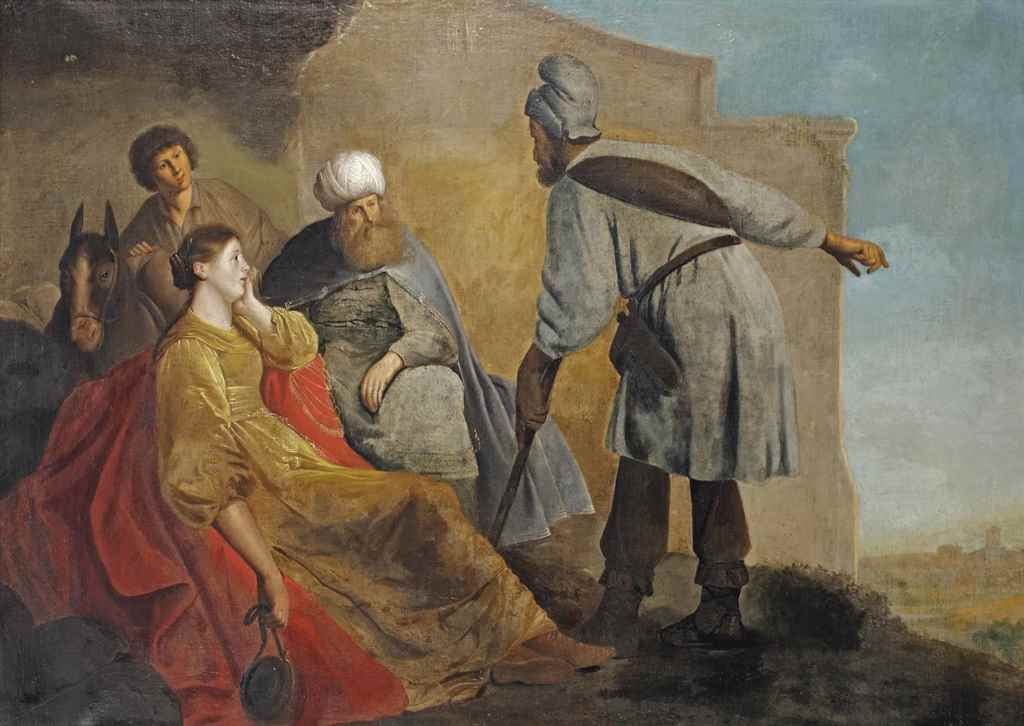
“The Laborer of Gibeah Offering Hospitality by Pieter de Grebber

            The fact of the matter is, the request made by the tribes was not only a reasonable request, it was a necessary one. They needed to put those men of Gibeah to death. It was the only way to, as they said, “remove this wickedness from Israel.” As we saw last time, God requires justice for the shedding of innocent blood. Bloodshed brings bloodguilt, and bloodguilt can only be atoned for by bloodshed.  When a people fail to render justice for bloodshed, they too become marked with bloodguilt. In this manner, a nation becomes quickly polluted with blood and their land defiled with wicked abominations. Injustice and inaction mix together to form a deadly brew that poisons entire societies. God had made it clear in the Torah that when a nation becomes defiled, ruinous calamities from his own hand are not far behind. So the rest of the tribes really didn’t have a choice in the matter. Even if they were not driven by holy outrage and a zeal to carry out the LORD’s ordinances, they would have been disobeying at their own peril. The price for failing to pursue justice is very high indeed. Yet, as Judges 19-21 shows us, that does not mean the price for pursuing justice will be cheap. It can, as we shall see, be quite costly.

Clean Hands, Clear Eyes

            As followers of Christ, we must know what to do when faced with the shedding of innocent blood. For his namesake, and for the sake of our souls that will one day stand before his throne for judgment (1 Peter 1:17), we must know exactly what is required of us. This is true of all forms of bloodshed, but especially so of abortion, since it is without contest the greatest source of blood-pollution in our nation and many other nations of the world today. If God destroys entire societies over the shedding of innocent blood, then we are in urgent need of having a divinely-prescribed response.

            The twenty-first chapter of Deuteronomy provides a good starting place to understand what is required of us. It says:

 “If a slain person is found lying in the open country in the land which the Lord your God gives you to possess, and it is not known who has struck him, then your elders and your judges shall go out and measure the distance to the cities which are around the slain one. It shall be that the city which is nearest to the slain man, that is, the elders of that city, shall take a heifer of the herd, which has not been worked and which has not pulled in a yoke; and the elders of that city shall bring the heifer down to a valley with running water, which has not been plowed or sown, and shall break the heifer’s neck there in the valley. Then the priests, the sons of Levi, shall come near, for the Lord your God has chosen them to serve Him and to bless in the name of the Lord; and every dispute and every assault shall be settled by them. All the elders of that city which is nearest to the slain man shall wash their hands over the heifer whose neck was broken in the valley; and they shall answer and say, ‘Our hands did not shed this blood, nor did our eyes see it. Forgive Your people Israel whom You have redeemed, O Lord, and do not place the guilt of innocent blood in the midst of Your people Israel.’ And the bloodguiltiness shall be forgiven them. So you shall remove the guilt of innocent blood from your midst, when you do what is right in the eyes of the Lord.
(Deuteronomy 21:1-9)

            Here the Lord details how the Israelites are to free themselves from the bloodguilt of an unsolvable crime. They know that there has been a transgressor in their midst but they have no way of bringing him or her to justice. Hence, the usual form of atonement, which involves shedding the perpetrator’s blood, cannot be done. In this case, a heifer is killed—perhaps as a substitute for the life of the unknown assailant—and the elders and Levites intercede on behalf of the nation, asking for mercy and forgiveness over the blood that has been shed.

            This passage provides many principles on how a people are to handle bloodguilt, but for our purposes, we shall draw our attention to the statement made by the elders in verse seven. To have their land freed from the guilt of shed blood, the elders, who stand as representatives for the entire community, had to be able to truthfully confess two things: one, that they did not shed the blood; and two, that they did not see it. Not only did they have to claim abstention from the act; they had to profess a lack of knowledge as to its going on. They could be neither actors nor witnesses to the deed. Then and only then would the bloodguiltiness be forgiven them.1
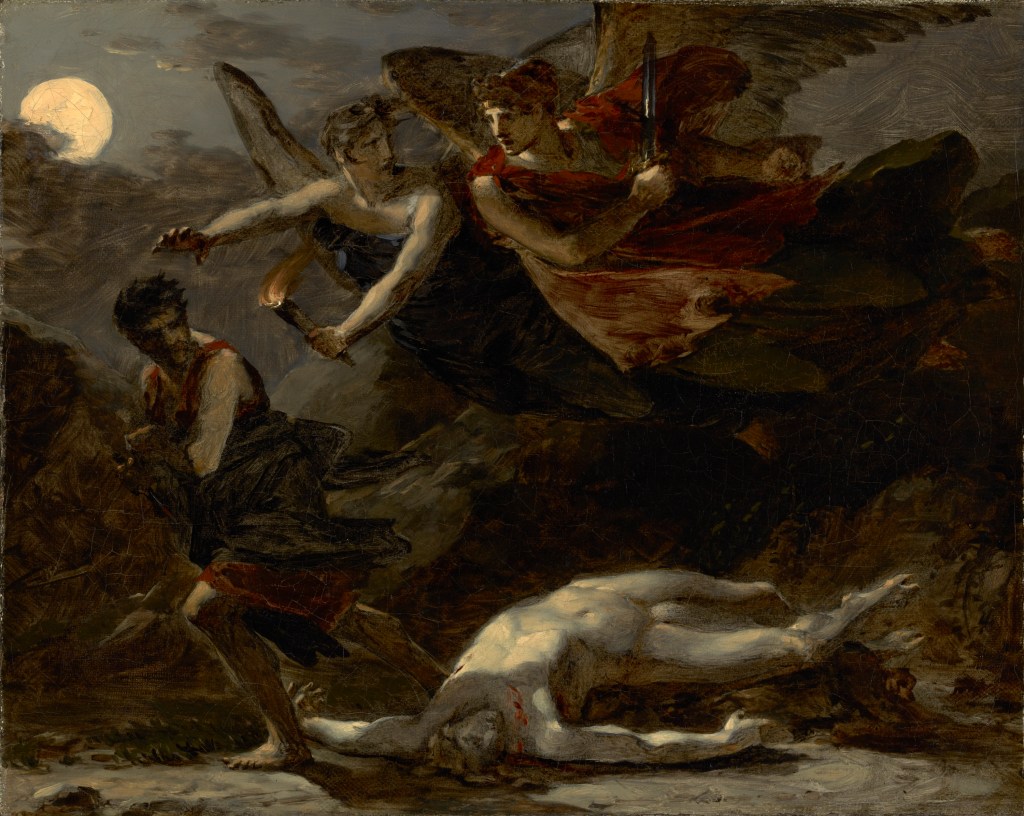
Justice and Divine Vengeance Pursuing Crime by Pierre-Paul Prud’hon

            It is easy to see why this is the case. If they were witnesses to the shedding of innocent blood and did not try to stop it, or, being unable to stop it, did nothing afterward to bring the transgressor to justice, they would be complicit in the bloodshed. What their eyes saw demanded a response from them. In this case, their failure to participate in the act does not absolve them because their failure to intervene in the act condemns them. Clean hands do not absolve you of slack hands when your eyes witness evil. Remember the reaction of the tribes of Israel when they saw the dead concubine’s body? The witness requires a response. For those who witnessed but did not participate, their hands were soiled with blood not by what they did, but by what they refrained from doing.2

            This joint innocence of hands and eyes hearkens back to the principles of bloodshed elucidated within the previous essay in this series, which detailed how the sin of bloodshed can be committed through active and intentional participation or acts of negligence. In one case, it is an action that brings bloodguilt; in the other it is inaction. Bloodguilt comes both from committing murder and from failing to bring the act of murder to justice. But as we see here and as we shall see from other scriptures as well, it also comes from failing to intervene. This is because the pursuit of justice is not simply something done after an evil is committed; it also involves what individuals do while an evil is being committed.

Christian Bloodguilt

            The straightforward implication of Deuteronomy  21:7 is that if you knew that the shedding of innocent blood was going on and you did nothing about it, you have bloodguilt. If it has not dawned on the reader yet, let it be made explicit: many people who believe abortion is wrong and who recoil at the thought of ever doing it have the bloodguilt of abortion on their hands. This tragically includes many people within the Church. Few, if any of us in the Church can say, “Our eyes did not see it,” even if hopefully most of us can say, “Our hands did not shed this blood.” Too many of us have mistaken moral disgust at the shedding of innocent blood and a personal commitment not to engage in it as absolution in the matter. But unlike the elders, we cannot wash our hands over the slain heifer; we are not unaware of what is going on.

            We know there are centers all over this nation where people are lawfully murdering their children every day. We know that justice is not being sought for those murders. We know that right now, there are politicians in our state and nation’s capital using their power to ensure that the slaughter of unborn children remains unabated and unhindered and even broadened in scope. We know that there are corporations and various organizations pouring in millions of dollars every year to ensure this legal, systemic apparatus of murder is well-funded and successful. The question is, what are we doing with all this knowledge? Sadly, the answer for too many of us is—not much.

            Do we feel the weight of this? Or even now, are we so lethargic in heart that we cannot be stirred to conviction? Dearest Christ-follower, mark deep within your soul: bloodguilt is not just on those who shed blood, but on those who do nothing to halt it and who do not labor for the fruition of justice.

            The first order of business for the people of God, then—in seeking to respond rightly to the shedding of innocent blood—is to deal with our own bloodguilt. We must repent for the ways our hands are stained. For some it is the confession of both having had an abortion (directly as the mother, or indirectly as the father of the child, or as someone who encouraged or pressured a woman to do so) and of not seeking justice for the unborn; for others, it will simply be a repentance of their inaction and complacency.

             But let not those guilty of only the latter and not the former be preoccupied with whatever great measure of guilt they suppose those who have had an abortion carry. A man about to stand trial for murdering one person does not reason that he shall be acquitted due to another having killed two, and he would be foolish to plead for mercy by pointing out the greater severity of the other man’s crime. One does not escape dreadful consequences by comparing another man’s bloodguilt with his own. So it is with us. In the fear of God and with genuine anguish over own bloodguilt, we must rend our hearts and not our garments and confess to God that our eyes have seen and we are guilty of inaction. We must not look firstly to others and what they have or have not done; the first task is to look at ourselves until our heart breaks.

An Inescapable Commission

            Our repentance in this matter is not simply to absolve ourselves of all the abortions that have already happened in our nation; it is just as much to ready us to adopt a posture of action that will prevent more bloodguilt from being heaped on our heads. As John the prophet exhorts us, true repentance bears fruit (Luke 3:8). It is not just grief over past behavior; it is a change in behavior for the present moment and the future. And in our present moment, unborn children are being slaughtered every day.

            In this regard, Proverbs 24:11-12 are key verses that show us what the response of God’s people to the horror of abortion is supposed to be—and what God will do to those who do not respond.

11 Deliver those who are being taken away to death,
And those who are staggering to slaughter, Oh hold them back.
12 If you say, “See, we did not know this,”
Does He not consider it who weighs the hearts?
And does He not know it who keeps your soul?
And will He not render to man according to his work?
(Proverbs 24:11-12)

            We know that everyday unborn children are being taken away to death. And God makes clear in that situation that it is not enough to just say we did not personally participate in the killing. What God requires of us when we see people staggering to slaughter is to hold them back. To intervene. To get right in the middle of their march toward the cliff’s edge, dig in our feet, and with arms spread out, halt the advance. To stand between the victim and the killer and their instruments of death and say, “Not on my watch!”

            When we see a Planned Parenthood clinic on a street block in our city; when we see councilmen or senators or mayors seeking to keep the murder of the unborn legal; when see pastors blaspheming the name of Christ by saying God is pro-choice; God has a word for us: “Deliver those who are being taken away to death.” There are certain commissions for the people of God that are automatic. When we see a group of people being taken away to the slaughter, in that very moment, God commissions us to be a deliverer. When the lives of innocent people are at stake you don’t get to decide whether you opt in or not—you’re in. Taking action on a situation like abortion, then, is not a nice and noble option; it is a sacred duty, bound up with our identity as one whom by the blood of the lamb is righteous. Inaction is off the table. Because we have seen, we must act. To do otherwise is to be under the bloodguilt that pollutes nations and brings God’s horrible and mighty wrath.

Blind & Far Away

            Of course, it would be very convenient for us if we could say that our eyes have not seen the evils of abortion. If knowledge necessitates action, then ignorance would seem perhaps to validate inaction, and many people not wanting the burden placed upon them of having to do something will be tempted to claim ignorance in these matters. This is precisely what verse twelve is getting at. God recognizes that there will be people who will want to claim, “See, we did not know this.” But to uttering words like this we are warned: “Does He not consider it who weighs the hearts? And does He not know it who keeps your soul? And will He not render to man according to his work?” In effect, God is saying, “Don’t pull that on me—I won’t fall for it!” He will see right through our protestations of ignorance and he will judge us for doing nothing. If we say, “Our eyes didn’t see it,” he will say, “No—your eyes did.”
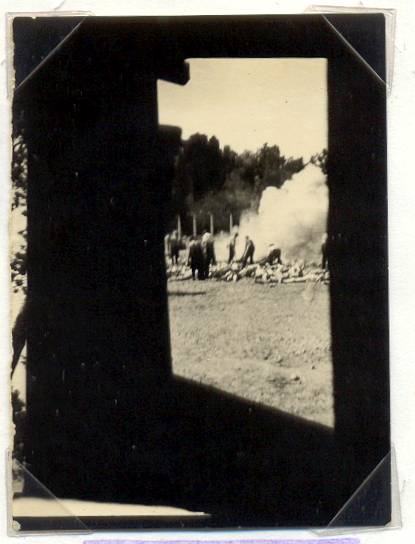
No. 281 of the “Sonderkommando Photographs,” pictures secretly taken and smuggled out of the Nazi Auschwitz concentration camp. After being led to the gas chamber, Jewish victims were stripped of hair, jewelry, and teeth fillings, then cremated. When the crematoria were full, bodies were burned in outside pits as depicted in this photograph.

            The pattern of thought outlined in verse twelve is unfortunately common to history and human nature. In the face of every ongoing atrocity, there has been a temptation for people to blind themselves to the horror of what is really going on so that they are not faced with the responsibility of doing something about it. This has proven to be true with slavery and with the lynchings and other Jim Crow injustices of the South, as well as the Holocaust and other genocides throughout the 20th century. People within the nations those atrocities were committed too often looked away or feigned ignorance. Why?

            The sad and simple reason people do not want to do anything about the shedding of innocent blood is that humans have a tendency towards selfishness, and an impactful response to the shedding of innocent blood will often not just be inconvenient, it will often time be costly— sometimes to a tragic and stupendously large degree. Such was the case of the concubine: a righteous, God-honoring response cost the nation a civil war. While the cost of pursuing justice may rarely reach such agonizing heights, standing up to an evil that has firmly entrenched itself within society is never a walk in the park. It breeds fierce opposition, it is laborious, and above all else, it requires self-sacrifice—not just of time, but of resources and often one’s reputation as well; at times it endangers oneself and one’s family, and may ultimately result in the high price of their life and your own. No wonder many try to pretend they don’t see what is going on. The glory and nobility embedded within the word “justice” are not tasted of easily, for all that we romanticize its pursuit and for all the casual veneration we bestow upon it; it is not a cheaply worn glamour; its glory is a Christ-shaped one—one wrought by suffering. And if there is one thing humans are tempted to loathe more than the suffering of others, it is their own.

            As it pertains to abortion, this willful blindness does not take the shape of outright denial of its existence—as if one had lived under a rock their whole life and had never heard what abortion was. Rather, it is accomplished by means of moral obfuscation; of stripping abortion of its moral horror and turning it into something ambiguous and complex so that a response against it is no longer required—or by simply appealing to the sheer normality of it. It is hard for the human heart to remain horrified by what is commonplace, especially when there is ample sand for which to bury our heads in and we are able to go about our day to day lives without having to think about it or see it.

            This obfuscation is found in the litany of everyday expressions and rebuttals surrounding the issue of abortion: “You know, it’s not that black and white; whose going to support the mother? What if she cannot afford it?” Or, “What about the lack of availability of contraceptives? What about maternity leave?” Or, “No woman comes to this decision easily,”—as if the economic hardship or the intensity of the deliberative process somehow renders the moral status of killing another innocent human being uncertain. By drowning the issue of abortion in a sea of nuances, we attempt to stop the heart of its diabolism that beats loud and clear so we don’t have to listen to it. We turn simple arithmetic—a concise syllogism of moral logic2—into a calculus problem, long and difficult to solve3. We twist it into something our consciences can feel justified to ignore.

            We see this desire to ignore injustice and therefore avoid responsibility to take action in the parable of the Good Samaritan. If you remember in Luke 10, Jesus tells the story of a man robbed and severely beaten while traveling to Jericho. He is left wounded and bleeding and “half dead” on the road. When a priest later travels down the road, he sees this man who has just suffered a horrible crime and decides to pass by him by crossing over to the other side. A Levite later comes and does the same. What were they doing? They were trying to create as much distance from the man and themselves as they could so as to avoid the responsibility of helping him and the guilt of not doing anything about it. If you recall from Deuteronomy 21, it was the city nearest to the slain victim whose elders had to sacrifice the heifer. Here, both the priest and Levite go out of their way (literally) to artificially create less proximity to an injustice. They did want not the burden a righteous response would bring. The very people who were supposed to represent God to their nation proved themselves to have a disposition contrary to his heart that burns with compassion and justice.

            When we scroll by social-media posts about abortion without stopping to ponder the horror of it all; when we try to console ourselves that there are many legitimate causes to be part of and of course, we can’t be part of them all; when we allow ourselves to be deluded by society’s arguments in defiance of the clear weight of scriptures so that abortion is transformed into a murky, morally ambiguous subject, we do the same thing as the Levite and priest. We create distance for ourselves that would not be there if we walked truthfully and allowed ourselves to see the bloody injustice on our path lying right at our feet. We claim blindness to avoid God’s commission of intervention and deliverance—and this God sees.

Love is the Price We Pay

            Inaction in the face of injustice was one of the main and abiding concerns of the Old Testament prophets, and the repeated failure to come to the aid of the afflicted and mistreated was one of the main reasons God ultimately decided to judge the nations of Israel and Judah. Prayer, worship, and forms of religious ceremony however rigorously undertaken did not produce pleasure in the heart of God but rather exasperation and disgust in his people when they were done in concert with idleness towards injustice. Amos reveals the heart of the Lord when he declares by his Spirit:

21 “I hate, I reject your festivals,
Nor do I delight in your solemn assemblies.
22 “Even though you offer up to Me burnt offerings and your grain offerings,
I will not accept them;
And I will not even look at the peace offerings of your fatlings.
23 “Take away from Me the noise of your songs;
I will not even listen to the sound of your harps.
24 “But let justice roll down like waters
And righteousness like an ever-flowing stream.
(Amos 5:21-24)

            God’s call for his people was to pursue justice with such vigor and dedication that justice would seem to be inundating the land like a rainstorm that soaks the ground. They were to contend for righteousness to manifest in their nation with the constancy and power of a river that never stops flowing. This was not to be done in place of their gatherings of prayer, worship and instruction, but rather pursued in tandem with those other forms of devotion. All of them were to be included holistically in a life poured out to God in an act of spiritual worship. Justice was never meant to be an optional expression of a godly man or woman’s devotion, it was always meant to be part of the integrated whole of their obedience and loving service to Christ.

8He has told you, O man, what is good;
And what does the Lord require of you
But to do justice, to love kindness,
And to walk humbly with your God?
(Micah 6:8)


17 Learn to do good;
Seek justice,
Reprove the ruthless,
Defend the orphan,
Plead for the widow.
(Isaiah 1:17)

            What then, as it pertains to abortion, is God looking for? The seeking and doing of justice is required of us—but what does that look like? The particulars of pursuing justice and intervening in the lives of the unborn will be chronicled in more depth at a later time— the ways both biblical and practical we can get involved—but the truth is, while there are concrete steps we can and should take, the exact expression of justice over the issue of abortion will look different for each person. What matters more than the actions themselves is the spirit and attributes that attend them.

            In Luke 10, Jesus contrasts the deeds of the priest and Levite (those who shirk from their God-given duty of pursuing justice) with the actions of the Good Samaritan.

33 But a Samaritan, who was on a journey, came upon him; and when he saw him, he felt compassion34 and came to him and bandaged up his wounds, pouring oil and wine on them; and he put him on his own beast, and brought him to an inn and took care of him. 35 On the next day he took out two denarii and gave them to the innkeeper and said, ‘Take care of him; and whatever more you spend, when I return I will repay you.
(Luke 10:33-35)

            Notice first, that the Samaritan was on a journey; he was not wandering about in his spare time looking to be a good-doer, he was involved in conducting the affairs of his life just as much as you and I; his actions were therefore inconvenient and interruptive to his daily life. Second, his actions were not done with dry or begrudging obedience to the dictates of his religion; they were deeds animated by love. Third, his actions were costly; they cost him his time and money. And here it is important that we mark the character of his cost. How much did the Samaritan pay? As much as was needed for a full recovery. The Samaritan did not tell the innkeeper, “Well, I’ve done my part, now it’s up to you to bear some of the cost and see to it that he is restored.” On the contrary, the Samaritan’s commitment was to see it through to completion.
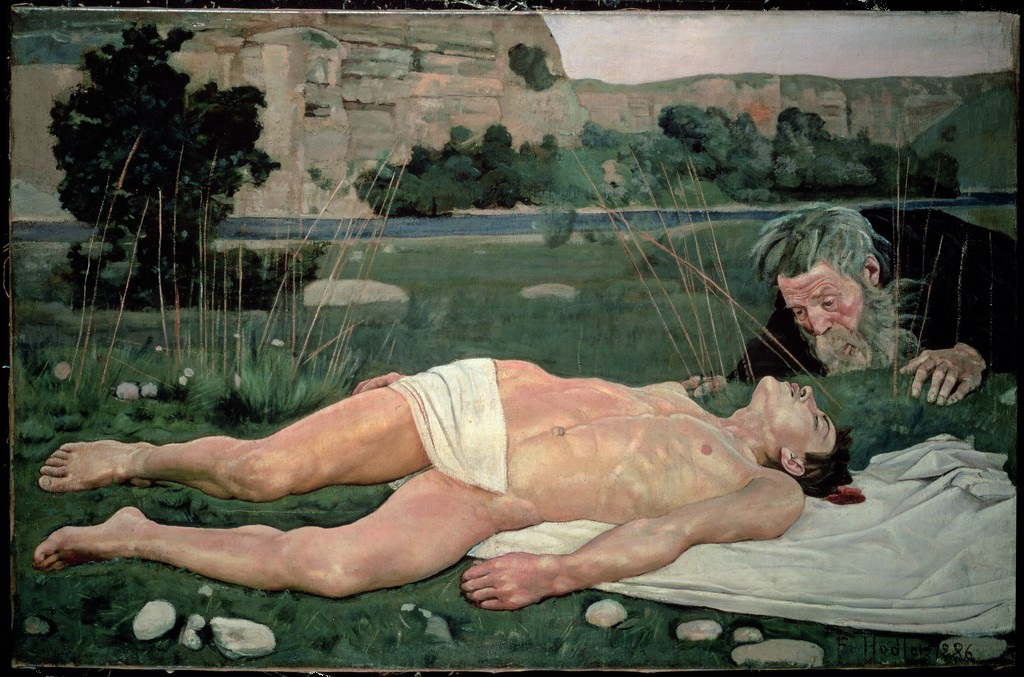
The Good Samaritan by Ferdinand Hodler

            Our response to injustice should be likewise. It must cost us something; something of ourselves must be sacrificed. It must be rooted in love and seen through to the end—for that is the type of cost love pays; love perseveres, it stays constant and implacable, it gives as much as is needed to satisfy its aim. Love never quits, and as such, it never fails. In the final estimation, the pursuit of true justice looks like the one who pursued it perfectly: Christ our Lord. Before the cross, untold billions stood as enemies of God. Mankind’s embrace of sin constituted a heinous rebellion against the Lord fully deserving of devastating recompense. How to right this cosmic injustice? It would have been wholly just if Christ had condemned the whole of humanity to everlasting torment for rebellion against his Father. Instead, he rendered justice by offering himself as a guilt offering; he was pierced for our transgressions, he let the Father crush him for our iniquities (Isaiah 53:5-6,10). His pursuit of justice was one of self-sacrifice, and what can those of us who are truly grateful for it do but humbly strive to walk in the same way?

            In the end, we must realize our failure to pursue justice is a failure to be like Christ. He intervened at a great cost to himself to hold us back from the slaughter of sin and the second death—even though he would have been just in letting us perish. How much more then, should we be willing to heed his call to prevent the innocent from perishing and obey his command to see justice rain down upon the earth?  In our sins, we were just as helpless as unborn children before the forceps and knife of the abortionist, and God intervened and rescued us. Dare we tell him in return that we cannot be bothered to help rescue the unborn? Like the civil war Israel fought to avenge the wickedness of Gibeah, pursuing justice for the unborn and intervening for their deliverance may prove costly, but whatever its price, it will never come close to the price Christ paid for our deliverance and the satisfying of the Father’s perfect justice.

            For the Christian, repentance is not just the exchange of one set of actions for another, repentance is ultimately the realignment of the self to its death and the imitation of Christ. All our pursuits of justice must start and end here; our throwing off of inaction and a robust commitment to deliverance and justice-seeking must take shape within our commitment to be like Christ. With renewed adoration for who he is and what he has done, let us ask the Lord to conform us to his image and ready us to be vessels of deliverance and justice for the unborn in whatever way he so desires. If we pray with sincerity, there is no doubt he will give us what we ask.

Notes

1 For this observation, along with so many others in this essay and the last, I am heavily indebted to John Ensor and his book Innocent Blood, which succinctly, powerfully—and, most important—biblically, details bloodshed and the Christian response to it. His thoughts have proved to be a large tributary to the river of my own in developing a biblical perspective on abortion.

2 In judges 21, after the civil war had been completed, the Israelites inquired if there were any among them who had not come to fight against Benjamin. It was found that none of the inhabitants of Jabesh-Gilead had fought. They had witnessed the evil but had not responded to it. Accordingly, Israel went up and slaughtered every man, child, and woman who had relations with a man. See Judges 21:5-11.

3 As referenced in part one of this series, Scott Klussendorf gives a succinct syllogism concerning the grave immorality of abortion: “Premise 1: It is wrong to intentionally kill innocent human beings. Premise 2: Abortion intentionally kills innocent human beings. Conclusion: Therefore, abortion is morally wrong.”

4 This is not to say that issues arising from abortion or the issues that feed it are without complexity. How to help an unemployed, single mother of two, with nothing more than a high school education, who has been abandoned by her boyfriend and the father of her third and currently gestating child is never a straightforward or quick endeavor; she is the victim of a confluence of social ills, each one on its own dauntingly difficult to address at a systemic level. Solving the question of abortion’s morality is an easy one; solving all the societal difficulties and pressures that may tempt one into having an abortion is a different matter. But the difficulty of entrenched structural maladies has no bearing on the wickedness of the act of abortion itself and the corresponding moral imperative to intervene and stop it.
Our society is currently plagued by a morass of sexual addictions and dysfunctions that have no doubt lent themselves to the sickening high statistics of harassment, rape and abuse in this country; but no one dares suggest—unless they want to subject themselves to near-universal outrage and scorn—that the prevalence of these addictions and dysfunctions in any shape or form excuses or blunts the incalculable evil of rape and sexual abuse. Cultural and societal environments can make it easier or harder for different evils to grow, but one cannot use the climate to misclassify the fruit it helps bear. Instead, we should use the ease or difficulty in which immorality grows to diagnose the moral health of the culture itself. Utilizing this approach, it is beyond plain that our nation and society is desperately sick.

*Unless noted, all scripture quotations taken from the NASB. Copyright by The Lockman Foundation.

When God Goes Out of His Mind Part II

There are six things which the Lord hates, yes, seven which are an abomination to Him: haughty eyes, a lying tongue, and hands that shed innocent blood…” (Proverbs 6:16-17)

Yahweh’s Portraits

Note: this is part two in a series of essays examining the issue of abortion biblically. For part one, click here.

“Let there be light.” If creation is likened to a symphonic composition, then these words are the grandest of overtures. The earth is shapeless chaos, all “welter and waste,” as Robert Alter translates it, darkness is spread over the primeval deep and then—God.  With one utterance of his voice comes a burst of a quintillion rays of light, a sudden flare of brilliance that forever cleaves darkness from its totality and omnipresence. The One that was there in the beginning because he precedes it has just set in motion the nascent universe. He is just getting started.

            The sky is torn asunder from the waters with another word from his mouth. The roiling seas are bounded and stone and dirt and sand stretch out over the face of the planet. Green spreads like wildfire, forests and meadows and jungles and swamps sprouting up, space is jeweled with stars and swirling planets, the seas are filled with rainbowed coral and swimming life, the clouds wander slow as avian creatures flit, pinwheel and swoop beneath their white-domed bodies, and the earth teems with the skittering and slithering of creeping creatures, the stalk of paws and the prance of hooves—this panoply of life marching on through the progression of endless day and night in the slow turn of the earth.

            And then—the culmination. The long-anticipated crescendo of string and brass and cymbal. The final set of slashes from the conductor’s wand. The stroke before the artist puts down the brush and the writer his pen. All this unfathomable display of power has been buildup, all this marvelous glory-work the swell and rise of the symphony toward the climax before the Almighty rests from his labor. In all this dazzling display of life and creative genius, God still has one last crowning masterpiece to make. On the sixth day, his voice rings out:

           26 “Let Us make man in Our image, according to Our likeness; and let them rule over the fish of the sea and over the birds of the sky and over the cattle and over all the earth, and over every creeping thing that creeps on the earth.”
(Genesis 1:26)*

            As stated at the conclusion in part one of this series, in creating mankind, God as the master artist has fashioned billions of unique portraits of himself. As created beings, humans display the glory of God in a special way. Every other created thing brings glory to God as the Creator by testifying of his power and genius. The blooming desert rose, the shimmering aurora borealis, the enormity and grace of the blue whale, the spine of Himalayan mountains across Asia—all point to a creator powerful and wise. Humans are different. We too testify of God’s power like the rest of creation, but we also image him. We bear resemblance to God himself. Here we tread on great mysteries too wonderful for us to fully comprehend. To say too little or too much about this is to risk blasphemy. Though we are but dust, in our nature is something inescapably divine that testifies: God—God is like this.

            The mind cannot fully understand the stature God has given to mankind. In a sense, God has staked the reputation of his beauty on us.1 Imagine, if you would, meeting someone whose beauty you so absolutely adore, you are compelled with great urgency and emotional force to show the whole world how marvelous they are, and the only way you get to do that is by drawing a portrait of them. So much would depend on getting that portrait right. It would have to capture and clearly show the beauties of that person in such a way that the observer is immediately drawn in by what he or she sees and would testify with their own lips that the person in the portrait is beautiful, the beauty being self-evident. In a way, that is what God did with us. He chose humanity to bear his image to the rest of creation and to one another.

            Through the fall, this imaging has been tarnished—but not destroyed. It is like a painting at the Louvre that has been attacked with dark ink by a vandal; the fullness of what it was is gone, but amid the inkblots, sections of its brilliance and beauty still shine through. God’s image is still borne by every human being who strides across the stage of existence.

Imago Dei & Iustitia

             In Genesis 9, God makes a covenant with Noah and his descendants where this image-bearing reality of humanity is again noted. God says:

3“Every moving thing that is alive shall be food for you; I give all to you, as I gave the green plant. 4Only you shall not eat flesh with its life, that is, its blood. 5Surely I will require your lifeblood; from every beast I will require it. And from every man, from every man’s brother I will require the life of man. 6“Whoever sheds man’s blood, by man his blood shall be shed, for in the image of God He made man.”
(Genesis 9:3-6)

            Here we see God separating mankind from the rest of creation. God tells Noah and his descendants they may shed the blood of any creature they want and eat it, just so long as they do not ingest its blood since the life of the animal resides in it. But the blood of another man? Noah and his descendants cannot shed that, because man bears God’s image. Animals are governed by one set of rules, humans by another; one bears the image of God and the other does not2. In this passage, a principle of justice is established that whenever a human shed’s another person’s blood, that man or woman must also have their blood shed. Whoever commits murder must themselves be killed. Again, notice the reason God gives for why shedding human blood is wrong: “For in the image of God He made man.”

            The image-bearing nature of humanity is one of the fundamental tenets necessary to having a just society. As Genesis 9 reveals to us, any true understanding of justice cannot be separated from this reality theologians refer to as the imago Dei. This is true with the injustice of abortion and with bloodshed in general. Before we can begin to fathom how truly grievous the mistreatment of man is, we must grasp what he is. Throughout the ages, the individual man and woman has been treated as everything from an expendable creature whose loss of life or deprivation of liberties is of no consequence or tragedy—a cog in the machine, a nameless grunt in a king’s war—to something worthy of deification. We have viewed one another as both ants and gods. In our current cultural milieu, we have paradoxically adopted the view of man as nothing more than a highly evolved animal while at the same time heaping a largesse of self-importance upon ourselves, with our generation’s unbridled narcissism the subject of many dismayed sociologists and psychologists. As many philosophers and thinkers have noted, we have bestowed ourselves with a dignity that demands fair treatment and respect for human rights, while simultaneously unfettering ourselves from the ontological realities that justify it (the existence of God). Sooner or later our moral and logical incoherence is going to crack. We will either return to more solid moorings or embrace the terrifying conclusions of our atheistic logic.

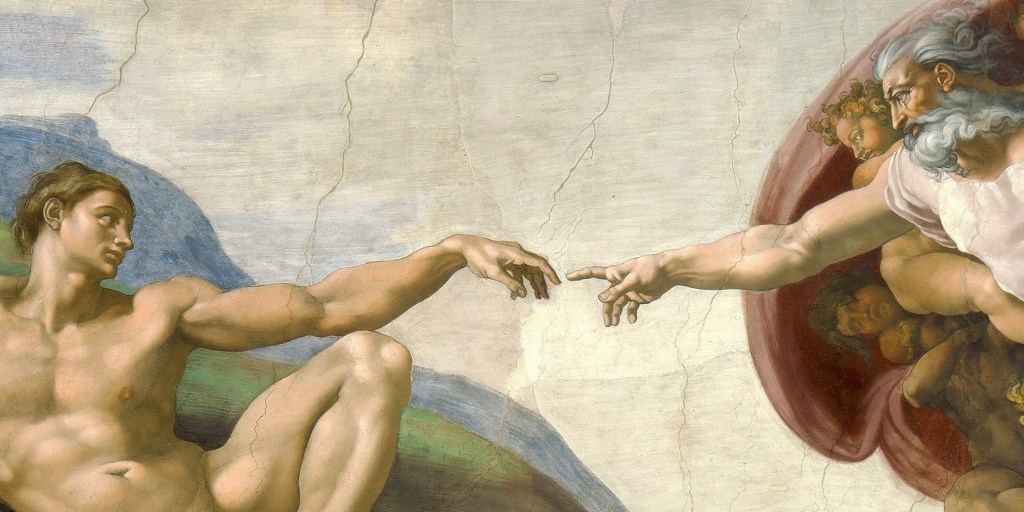
From The Creation of Adam by Michaelangelo

            Man is neither God nor ant. Our worth and value are great but they are not self-derived. What we are is completely bound up in what we have been created to be by the Creator. He has chosen us to bear his image, and since he is the most beautiful being in all of existence, the purpose of humanity is to reflect and emanate God’s glory; we are to be the clearest picture of what God is—outside of God himself. What then, could be more heinous than to kill such beings? As we noted last time, to assert the right to take portraits of God and destroy them is to embody the nemesis of beauty itself.

            In any culture, the outrage directed at the destruction of any given thing is commensurate with the value of the thing destroyed. A driver distracted by his phone is given little or no umbrage for running over a squirrel; he is vilified if it causes him not to see the toddler running after the stray ball in the road. We barely notice the crude graffiti sprayed on the walls of the underpass, yet we would be incensed were we to find it defacing the city’s statue of MLK or sprayed across the ceiling of the Sistine Chapel. How great, then, should our outrage be when one of God’s image-bearers is destroyed? If creation is a symphony, then to kill another human being is to bring in a hundred chalkboards and rake them with fingernails at the climax.

            All true justice is God-centered. True justice is not firstly man getting what he deserves or is owed, it is God getting what he is owed as God. We see this reality manifest within the words of Genesis 9 where God is in effect telling humanity: “When you shed another human being’s blood without cause you are not treating me rightly, because a human bears my image, and by killing him or her you dishonor me.” At its heart, the murder of another human is a glory-of-God issue, not a glory-of-man issue. The concept of the imago Dei becomes twisted in all sorts of ways when the dignity and value of a human being is separated from a greater emphasis on the reality from which human dignity derives from and is contingent upon: God’s glory and his surpassing worthiness. Indeed, far too many people acknowledge man’s image-bearing qualities in a decidedly anthropocentric manner. In doing so, they run the risk of committing the grave sin outlined in Romans 1 of exchanging, “the glory of the incorruptible God for an image in the form of corruptible man,” and worshipping and serving, “the creature rather than the Creator, who is blessed forever” and as such stand under the wrath of God (Romans 1:18-25). The fundamental flaw of so many of the justice movements today—which prevent them from being authentic pursuits of justice—is the man-centered nature of their endeavors. The pursuit of true justice starts from the recognition of God’s glory, and has as its end this recognition restored. As we explore more deeply the sin of bloodshed, we must keep this besmirching of God’s glory front and center.

Bloodshed & Bloodguilt

            We can summarize the principle of justice outlined in Genesis 9 as follows: bloodshed brings bloodguilt, and bloodguilt can only be atoned for by bloodshed. This is the best way to sum up what is meant when God says, “whoever sheds man’s blood, by man his blood shall be shed.” As we shall see, this principle is reaffirmed many times throughout the scriptures.

            It is worth noting before delving further that not all forms of human bloodshed are sins that incur bloodguilt. This is evident within the principle of justice concerning bloodshed itself, since to bring justice for shedding a man’s blood a man’s blood must also be shed; and were this prohibition absolute, those who undertook the execution of justice would themselves be guilty, trapping all humanity in a circular prison of guilt with those who did not execute justice guilty of not rendering it, and those that did finding themselves guilty of an injustice of their own. But as we are told in Romans 13, civil authorities wield the power of the sword and do so as, “servants of God.” War does not necessarily bring bloodguilt, nor do legitimate cases of self-defense or accidents, and God himself sets up cities of refuge where those who have killed human life in such instances may escape from those who in the heat of vengeance would want to retaliate in kind ( see Exodus 21:12-14, Deuteronomy 19:1-13 and Numbers 35:6-28).

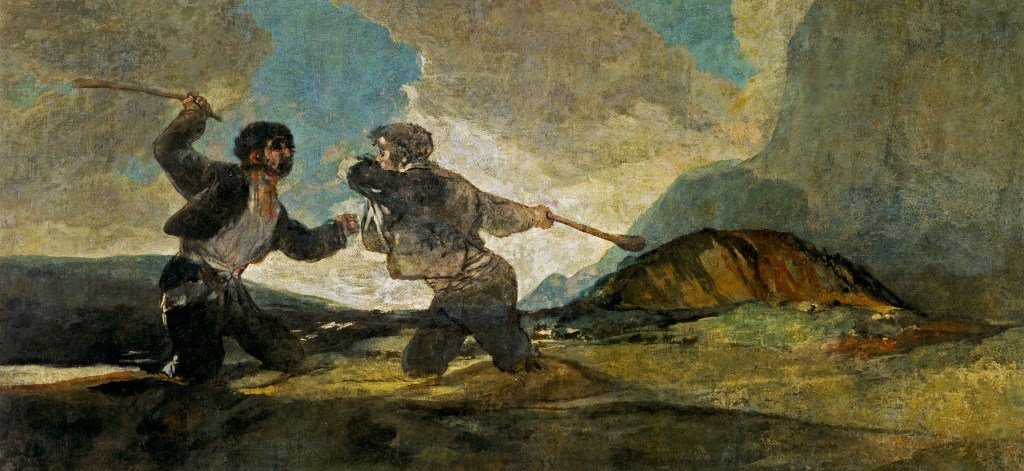
Fight with Cudgels by Francisco Goya

            Broadly speaking, the sin of bloodshed is committed in two ways. The first, is through active and intentional participation. It is the breaking of the sixth commandment in Exodus 20:13 that says, “You shall not murder.” It is committed by those who “act presumptuously toward his neighbor, so as to kill him craftily” (Exodus 21:14), and by those who push another in hatred or strike them down in enmity (Numbers 35:21), and by those who conspire and aid those who do it (Proverbs 1:10-16).

            The second way is through acts of negligence. In Exodus 21, the law states: “If an ox gores a man or a woman to death, the ox shall surely be stoned and its flesh shall not be eaten; but the owner of the ox shall go unpunished. If, however, an ox was previously in the habit of goring and its owner has been warned, yet he does not confine it and it kills a man or a woman, the ox shall be stoned and its owner also shall be put to death.” (Exodus 21:28). In Deuteronomy 22:8, God says, “When you build a new house, you shall make a parapet for your roof, so that you will not bring bloodguilt on your house if anyone falls from it.”

            Inaction is itself an action, and scriptures like these show us that certain types of inactivity can be wicked. When our recklessness leads to death, or we fail to take reasonable precautions to protect our fellow men, God holds us guilty for the loss of life. Like the crime of murder, this type of bloodguilt brings punishment in a modern society. A drunk driver who had no intention of killing anyone is still held liable for the death of the one they struck, and a daycare provider who leaves a loaded firearm within reach of a child will go to jail if that firearm is handled and discharged. Their lack of intention to kill does not absolve them from the bloodguilt; rather, bloodguilt is brought upon them from their utter lack of responsibility and sheer negligence. By leaving people blatantly in harm’s way, they are held responsible as the ones who inflicted the harm. For wrongfully causing the death of beings that bear his image, God requires the ultimate penalty from them in return. That bloodguilt is something incurred both by active and passive actions, is critical to a biblical understanding of justice and anyone seeking righteousness for themselves and their society.

            The thirty-fifth chapter of Numbers contains several keys necessary for us to know the nature of bloodguilt and how to properly deal with bloodshed. It reads:

30 “‘If anyone kills a person, the murderer shall be put to death at the evidence of witnesses, but no person shall be put to death on the testimony of one witness. 31 Moreover, you shall not take ransom for the life of a murderer who is guilty of death, but he shall surely be put to death. 32 You shall not take ransom for him who has fled to his city of refuge, that he may return to live in the land before the death of the priest33 So you shall not pollute the land in which you are; for blood pollutes the land and no expiation can be made for the land for the blood that is shed on it, except by the blood of him who shed it. 34 You shall not defile the land in which you live, in the midst of which I dwell; for I the Lord am dwelling in the midst of the sons of Israel.’”
(Numbers 35:30-34)

            The principle set forth in Genesis 9 is here reaffirmed: bloodshed brings bloodguilt, and bloodguilt can only be atoned for by bloodshed; with the word “only” being emphasized here. God makes clear that the Israelites are not allowed to use an alternative punishment for the sin of bloodshed. A ransom, no matter how costly, will not suffice; only the shed blood of the perpetrator will do. This is how serious killing another human being is to God.

            We also learn that murder pollutes the land the blood was shed on. In other words, the sin of bloodshed does not just have a spiritually corrosive effect on the individual who is guilty of it—it affects the entire nation in which the sin was committed. Bloodshed is a communal affair. It does not just effect the victim by the loss of their life, and the murderer by the warping of their soul, and by the grief and loss brought to those who knew and loved the victim; it extends outwards into the whole community and beyond to the entire nation. When there is no proper expiation for the crime, the land and the people in it become defiled.

            One thing that must not escape our notice are the two ways a nation can be polluted by blood. The first way, of course, is by those who shed the blood. But blood pollution also comes by those who allow the shedding of innocent blood to go unmet with justice. In verses 31-33, God tells the Israelites that if they do not bring the murderer to justice, they are polluting the land with blood even though they themselves have not killed anyone; by failing to execute justice, they have in effect joined with that man or woman in polluting the land and have brought bloodguilt upon themselves.

            Here again, we see the dual nature of the sin of bloodshed. It is slightly different in this scenario, but the essence is the same. One part of bloodguilt comes from doing something, the other part comes from neglecting to do something. Both bring the sin of bloodshed upon a people and pollute the land.

The Doom of Defilement

            A spiritually defiled land certainly does not sound like the most pleasant of realities, but just how dire are the consequences of a land that has been polluted by blood? In Leviticus 18, the terrifying answer is given to us.

20 You shall not have intercourse with your neighbor’s wife, to be defiled with her. 21 You shall not give any of your offspring to offer them to Molech, nor shall you profane the name of your God; I am the Lord. 22 You shall not lie with a male as one lies with a female; it is an abomination. 23 Also you shall not have intercourse with any animal to be defiled with it, nor shall any woman stand before an animal to mate with it; it is a perversion. 24 ‘Do not defile yourselves by any of these things; for by all these the nations which I am casting out before you have become defiled. 25 For the land has become defiled, therefore I have brought its punishment upon it, so the land has spewed out its inhabitants. 26 But as for you, you are to keep My statutes and My judgments and shall not do any of these abominations, neither the native, nor the alien who sojourns among you 27 (for the men of the land who have been before you have done all these abominations, and the land has become defiled); 28 so that the land will not spew you out, should you defile it, as it has spewed out the nation which has been before you
(Leviticus 18:20-28).

            As they are readying themselves to enter the promise land, God informs the Israelites that the current inhabitants they are about to conquer have been given over to judgment because of all the abominations they have committed; God warns Israel that the same fate will befall them if they practice those things. Because of those abominations, the land of the Canaanites, Hivites, Jebusites etc. became defiled, and forced God as the one who is the arbiter of justice to bring punishment upon them. The land “spewed” out these gentile nations, and we are later told what that spewing looked like: “In the cities of these peoples that the Lord your God is giving you as an inheritance, you shall not leave alive anything that breathes” (Deut. 20:16). “Thus Joshua struck all the land, the hill country and the Negev and the lowland and the slopes and all their kings. He left no survivor, but he utterly destroyed all who breathed, just as the Lord, the God of Israel, had commanded” (Josh. 10:40).

            What were these abominations that led to such a ruthless and terrifying destruction?  The whole eighteenth chapter of Leviticus (including the verses preceding the section we have read from) is basically one long list of various sins of sexual immorality and perversion. Then, right in the midst of this litany of sexual sins we are told in verse 21, “You shall not give any of your offspring to offer them to Molech.” Alongside gross sexual immorality, we are told that the abomination of child sacrifice—the murdering of children—is what brought a “spewing” from the land.

            Unfortunately, the Israelites failed to heed God’s warning. In Psalm 106 we are told concerning the nation:

34 They did not destroy the peoples,
As the Lord commanded them,
35 But they mingled with the nations
And learned their practices,
36 And served their idols,
Which became a snare to them.
37 They even sacrificed their sons and their daughters to the demons,
38 And shed innocent blood,
The blood of their sons and their daughters,
Whom they sacrificed to the idols of Canaan;
And the land was polluted with the blood.
39 
Thus they became unclean in their practices,
And played the harlot in their deeds.
(Psalm 106:34-39)

            What God described in Numbers 35 became a reality: the land became polluted with innocent blood. And the victims were not adults but the most helpless and defenseless among them—their children. The land was polluted with the blood of infants3. What happens next should not come as a surprise.

40 Therefore the anger of the Lord was kindled against His people
And He abhorred His inheritance.
41 Then He gave them into the hand of the nations,
And those who hated them ruled over them.
42 Their enemies also oppressed them,
And they were subdued under their power.
(Psalm 106:40-42).

            When a nation pollutes itself with innocent blood, it is only a matter of time before grave and unspeakable calamities are brought down upon it. This is the reality that God sets forth in his holy word. He is a God of justice and his word cannot be broken—he will be true to it. For any Christian that would seek the welfare of the nation in which he or she resides, keeping the land free from the pollution of innocent blood should be a top priority. To claim otherwise is to engage in folly and lose one’s saltiness (Matthew 5:13). God’s glory must remain the highest priority in seeking justice, but the horrifying consequences of a nation polluted by bloodguilt provide a potent motivator for its pursuit.

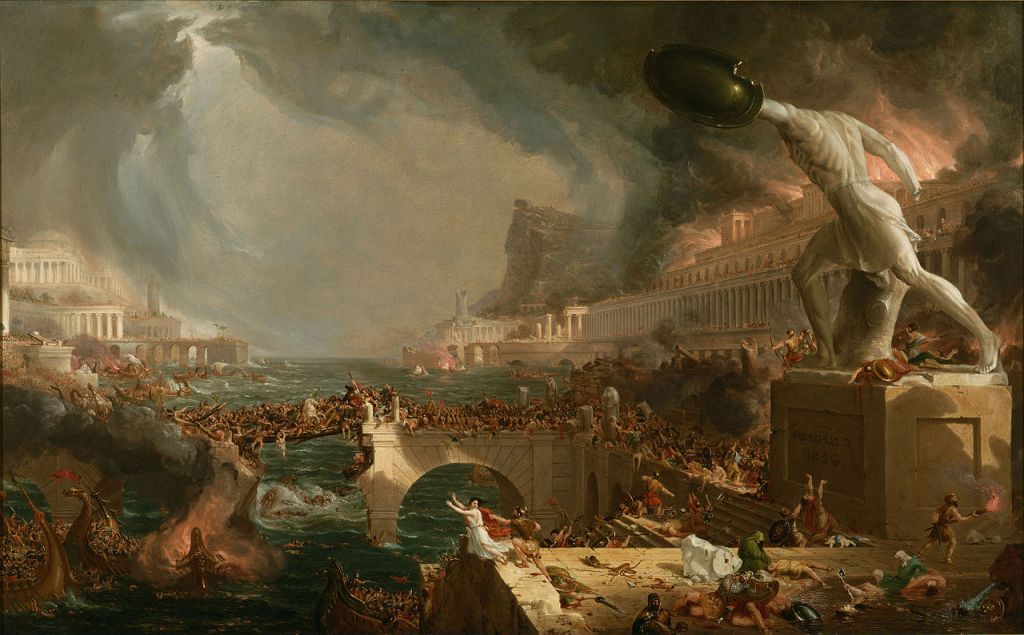
“Destruction” from The Course of Empire series by Thomas Cole

American Bloodguilt

            When we look at our nation today and ask ourselves how our land is being polluted by blood, it is indisputable what is bringing bloodguilt on our nation more than anything else: the murdering of our unborn children. Abortion is the defining justice issue of our time. There is nothing that comes even close in comparison.

            To illustrate this, let us look at some recent figures of bloodshed in our nation. According to the FBI, in 2017, the United States had around 17,284 murders4. These murders are those defined in our nation as the killing of innocent human beings born and living outside of the womb; they do not reflect lives still in gestation. We must note that our society will actively seek justice for this type of killing—we will strive to find out who committed the crime, arrest them, and have them prosecuted and punished. Of these seventeen thousand plus murders, around sixty-one percent were solved; cleared by arrests or other means5. While that is good news, it also means that thirty-nine percent remained unsolved. Justice may have been sought, but it was not able to be accomplished. And sadly, there were probably unreported killings in which no justice was sought at all. Is it safe to say, then, that there is some bloodguilt on our nation through “murder” as our nation legally defines it? Sure. There is probably some.

            But now, let us look at the murder of unborn children. In that same year of 2017, according to the Guttmacher Institute, a pro-choice organization, there were approximately 862,320 abortions6. Let that staggering number of unborn children murdered in a single year sink in. Close to one million babies slaughtered and no justice brought for their deaths. There could be no justice, because those murders were legal, and in many homes across America those murders were celebrated; they were defended and lauded under a false notion of female empowerment and autonomy. Seventeen thousand cases of bloodshed where at least an attempt at expiation of the crime was made, versus the slaughter of nearly nine hundred thousand lives where no expiation was attempted—let the reader do the math and tremble.

            To understand the gravity of the bloodguilt that is in the United States, one must wrap their minds around more than just the staggering number of babies murdered every year, as outrageous as it is. What makes the issue of abortion so unique and so abominable, and an injustice set above every other injustice in our nation is the principle set forth in Numbers 35: a nation is polluted with blood not just by those who do the killing, but also by those who fail to bring justice for the ones whose blood has been shed.

            So the abortionist who performs the procedure and the woman who receives the procedure bring blood pollution to our nation; but so does the woman who stands up and says, “I have three kids and I have never had an abortion but I support my fellow woman’s right to choose.” So does the man who says, “I have never pressured my wife or my girlfriend to get an abortion but I support a woman’s right to do what she wants with her body.” God looks at all of them and says, “all of you have polluted the land with innocent blood.”

            Do we see the multiplying effect of this? Abortion spreads the pollution of blood over a nation like nothing else. Every year there are hundreds of thousands of murdered children, and if that was not abominable enough, every year there are tens of millions of Americans indifferent to their murder, or else celebrating and fighting for the right to murder them. There is nothing else that even comes close to this. What other form of bloodshed is legal in our country? What other form of bloodshed exists where no justice is sought, but is rather defended and proudly lauded?

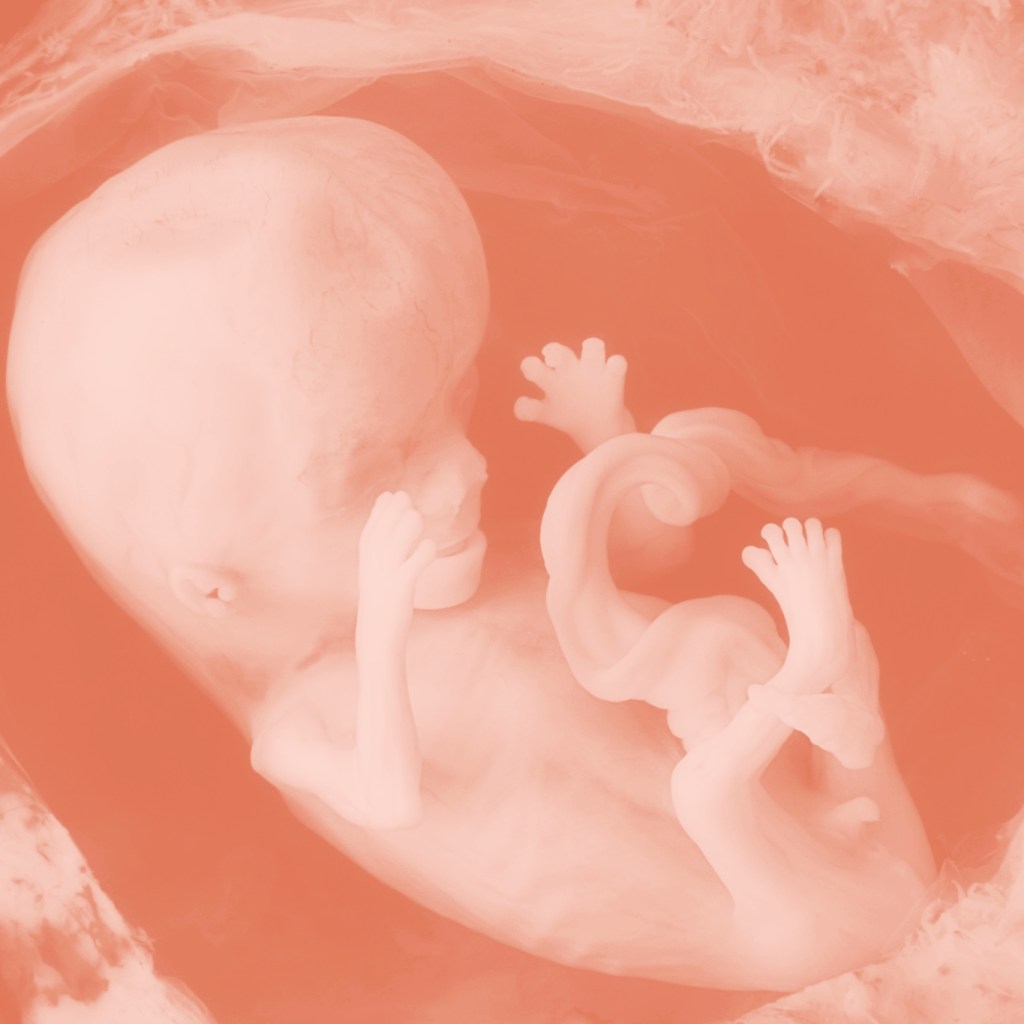
This photo, along with the one below the title, are works by lunar caustic. CC BY 2.0

            Much of the Church’s indifference to abortion springs from this failure to understand bloodguilt and how it spreads in a society. People believe their hands are clean because they themselves have not shed blood. They do not understand that failing to pursue justice for bloodshed brings bloodguilt as well. Many impassioned voices have risen in recent years to speak out against unjust police killings, and while the cultural narrative around this issue is a topic of great controversy, it must be unequivocally stated that where legitimately unjust shootings have indeed taken place, the pursuit of justice is a good and necessary thing. Black or white, young or old, the killing of an innocent human being who bears the imago Dei is a deeply evil action and an assault against God himself. But for anyone who tries to speak out on the issue of shedding innocent blood or any other injustice in America and yet is silent, or even worse, supportive of abortion, there is only one thing to be said of them: innocent blood is on their hands. They themselves have polluted the land with blood. They are not seekers of justice, but purveyors of its antithesis.

Rendezvousing with Wrath

            Abortion drenches the land with innocent blood and we know what happens to a nation polluted by bloodguilt: judgment. Calamities too fearful to even imagine will be foisted upon them. Therefore I have brought its punishment upon it so that the land has spewed out its inhabitants. Bloodshed causes bloodguilt. And what is the only way to cleanse the land? Shed the blood of those performed and those who tolerated bloodshed.

            Of the Almighty Judge, Psalm 9:12 says, “For He who requires blood remembers them; He does not forget the cry of the afflicted.” Remember what God tells Cain in Genesis 4? “The voice of your brother’s blood is crying to Me from the ground.” Shed blood does not just speak—it yells. It makes a scene. And God notices. God hears the cry of the unborn and will avenge them. He will exact it by spilling the blood of those laden with the guilt of their spilt blood. For a God whose execution of justice is perfect, blood is not optional; it is a requirement. That should terrify all of us.

            Make no mistake: the judgments of God are coming to America. They are coming not only for the abortions we have committed, but also for our failure to seek and render justice for each of those abortions. We have tolerated bloodshed. We have celebrated bloodshed. We have supported and allowed bloodshed to continue. That is a sure and certain recipe for doom.

            2nd Kings 24:3-4 informs us that God sent different nations against the nation of Judah to destroy it, “because of the sins of Manasseh, according to all that he had done, and also for the innocent blood which he shed, for he filled Jerusalem with innocent blood; and the Lord would not forgive.” In some ways, it would seem too late to rectify this problem. We have gone too far and too long on a path of destruction. The soil of our nation is soaked with more innocent blood than nearly every other nation in the history of humanity. It would appear that the ship cannot turn around without striking the ice. While the mercy of God is as vast as the sea, so is his commitment to justice (Psalm 36:6).

            Yet time remains. Utter ruin has not come upon us yet. It would be arrogant to think our nation will emerge from our persistent abominations unscathed with no blow of recompense dealt to us. But in swiftly turning from evil and by vigorously pursuing justice, we may receive far less calamity than we deserve and even become recipients of a measure of mercy that is tremendous. We are, by virtue of God’s patience, already swimming in it. Though he burns daily with a righteous indignation we can scarcely fathom (Psalm 7:11), he is slow to act on it (2 Peter 3:9). He restrains himself and waits in the hope we might turn to him. God promises that, “as for the wickedness of the wicked, he will not stumble because of it in the day when he turns from his wickedness,” and that, “none of his sins that he has committed will be remembered against him” (Ezekiel 33:12,16). God’s heart to pardon is truly incredible, but we must not trifle with it; lest we find ourselves spoken of like Manasseh’s Jerusalem—it was filled with innocent blood, “and the Lord would not forgive.”

            If there is to be any hope of mercy for our nation, the Church, as always, must lead the way in positioning ourselves to receive it. Regardless of whether mercy will be granted us, as God’s people, we should be zealous for justice to be accomplished in our land. The innocent blood of those who bear God’s image should not fall apart from the unified cry of outrage and steadfast intervention of the Church. With the weight of bloodguilt our nation carries, how do we as God’s people respond? That is the urgent subject we shall undertake to explain next.

Notes

1 Not in fullness or exaction of course. Mere man could never fully display God’s glory. Only one man has ever done so and he, unlike other men, was also fully God. Concerning Christ, Hebrews tells us: “He is the radiance of His glory and the exact representation of His nature” (Hebrews 1:3) and Paul says that, “in Him all the fullness of Deity dwells in bodily form” (Colossians 2:9). Christ as both fully man and fully God alone perfectly fulfills this call to image God. Remarkably though, a day will come when having seen Him perfectly (what theologians term the “Beatific Vision”), all of Christ’s followers will be transformed into his likeness and finally fulfill humanity’s call to image God in the fullness of what he intended.

2 It is worth noting that while there is nothing wrong with the vegetarian or vegan lifestyle for reasons of health and diet, as a moral conviction it is morally suspect, precisely because taken as a conviction, it will have the effect of blurring the bright line God himself has drawn between the animal kingdom and humanity.  Moral Veganism and Vegetarianism  bestow an unbiblical type of dignity upon animals that diminishes the uniqueness of humanity by insisting that animal lives be respected in the same way as human lives. Such diminishment slights God himself, whose image humans bear. In matters of life it is paramount that we do not blur the line between beast and man; Genesis 9 may give us the freedom of diet, but it forbids equivocation.

3 As Psalm 106:37 shows us, the murdering of infants is part of the regimen of demon worship. Little wonder; something so gross and insidious could only be demonically inspired. It is with great astonishment, then, that a Christian could be found indifferent and even supportive of abortion. To those who are, we must lovingly but firmly characterize their support of abortion for what is: demonic. That such a characterization may be deemed offensive is completely extraneous to the truth. To support abortion is little different than entering a church and attempting to lead the congregants in a hymn dedicated to Satan.  

4 https://ucr.fbi.gov/crime-in-the-u.s/2017/crime-in-the-u.s.-2017/tables/table-1

5 https://ucr.fbi.gov/crime-in-the-u.s/2017/crime-in-the-u.s.-2017/topic-pages/clearances

6 https://www.guttmacher.org/report/abortion-incidence-service-availability-us-2017#

*Unless noted, all scripture quotations taken from the NASB. Copyright by The Lockman Foundation.