
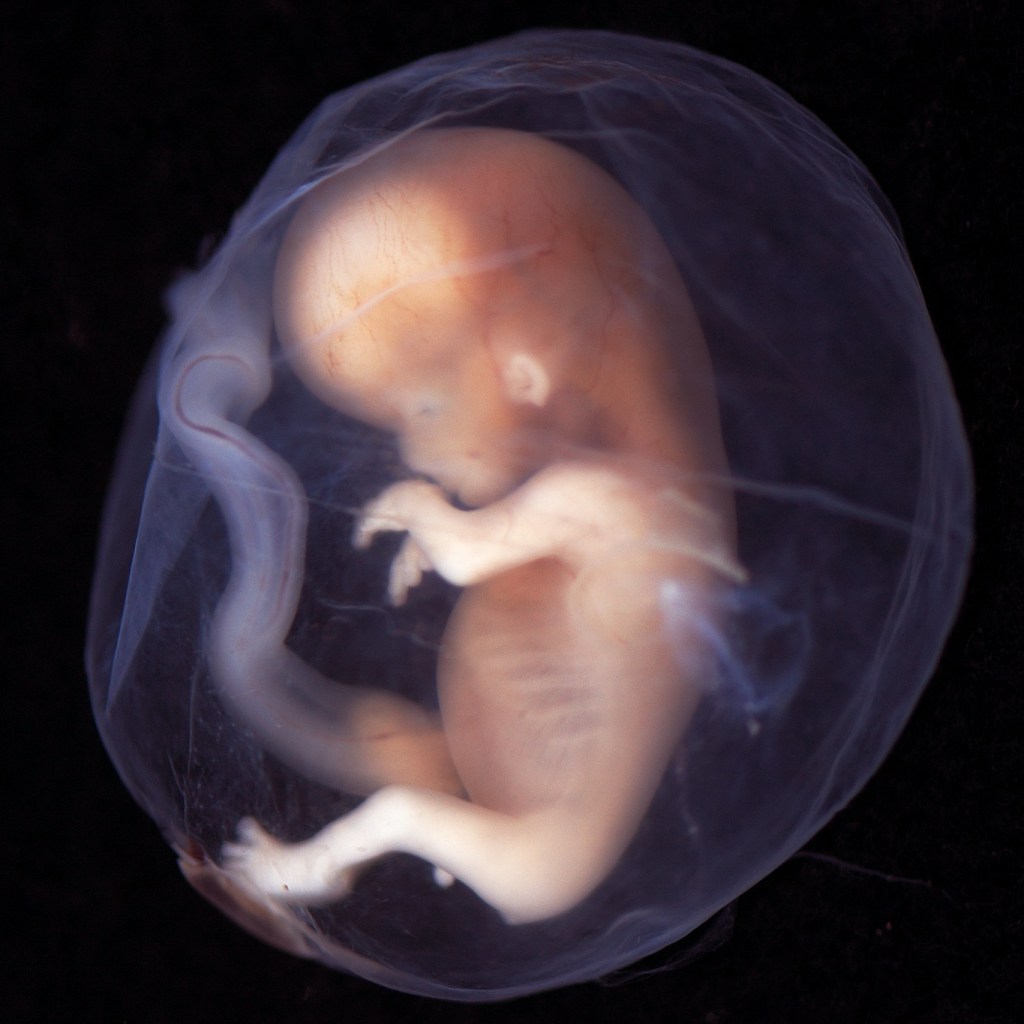
“…they have filled this place with the blood of the innocent and have built the high places of Baal to burn their sons in the fire as burnt offerings to Baal, a thing which I never commanded or spoke of, nor did it ever enter My mind…” Jeremiah 19:4-5.
Introduction
There is no such thing as a pro-choice Christian. To make such an incendiary statement from the outset may strike one as being unnecessarily alienating to readers of a less polemical persuasion, but there is simply no way of getting around it—it is the truth. It is true in the same way that there is no such thing as a pro-rape Christian, or a pro-slavery Christian, or a pro-murder Christian; to hold such views is to be in such blatant defiance of the clear testimony of Scripture and the character of Christianity as to render a profession of faith in such circumstances both glaringly absurd and blasphemous.
A more measured approach to this claim may be considered prudent—to state it at the conclusion and not the introduction of this work, but the pressure and insistence from our culture to not speak forthrightly on this issue is itself a sinister tactic, one which aids the perpetuation of this global injustice, and as such must be resisted. To veil an abomination is itself abominable. Evil thrives when Christians are timid with the truth. To beat around the bush concerning abortion is to suggest the Bible is morally opaque about it, and that is false. The Bible is clear as to what abortion is and how God feels about it; we need not and cannot obfuscate the matter. Abortion is a monstrous abomination, a deeply vile act that grieves and arouses the fierce anger of God like few others can; it is an evil so great that left unresolved will eventually destroy the civilization it has found tolerance in. This series of essays will aim to show biblically why this is so.
To the one who is already put-off by this opening salvo, an earnest plea is given: withhold your judgment until the end; the claim will be amply substantiated by scripture. If you truly love Christ and follow him, that is the only metric that will matter to you. These essays are written for the benefit and up-building of those who have pledged to seek first his kingdom and righteousness, not to placate and bestow validation to those charlatans with itching ears, those Christians in name only, who seek out teaching that is in accordance with their own desires. Such people, Paul tells us, are to be refuted (Titus 1:9), and we will do our best with the clear and rigorous presentation of the truth to do just that.
The Fulcrum of Contention
In the Old Testament, the people of God were given ten commandments to keep. There were of course other commandments in addition to these, but the ten commandments were the most basic protocols for Israel to abide by—a sort of “Obeying God 101” course. Anyone making a claim to basic piety would acknowledge that these commandments were to be obeyed, and no person who denied their authority would reasonably be considered to be a follower of Yahweh. This was true in ancient Israel’s time, it was true in the time of the Roman empire with those who followed Yahweh’s Son, and it is true in our time as well.
The sixth of these commandments contains the injunction, “thou shall not murder,” and any person claiming to follow Christ who says murder is permissible is beyond question not part of the household of God. There are nuanced disagreements between adherents of Orthodox Christianity on a variety of theological and ecclesiological topics and what fidelity to the scriptures looks like in such circumstances—murder is not one of them. To advocate, defend or commit murder with no repentance puts one squarely outside the faith. It is for this reason we maintain that there is no such thing as a pro-choice Christian because to be pro-murder and pro-abortion are the same things.
Scott Klusendorf, a well known pro-life apologist, lays out his case against abortion in a simple syllogism:
Premise 1: It is wrong to intentionally kill innocent human beings.
Premise 2: Abortion intentionally kills innocent human beings.
Conclusion: Therefore, abortion is morally wrong.1
Any reasonable human—believer or not—would agree that murder is wrong, and should not be committed. Why then would someone take umbrage at another for claiming that one cannot be pro-choice just as one cannot be pro-murder? Obviously, they believe the equivalency to be false. Every human with a modicum of morality would have to submit that, assuming both premises are accurate, the conclusion given is not only true—it does not go far enough. The conclusion does not delineate the gravity of its moral wrongness; and given the premises, abortion is not morally wrong as stealing a pack of gum from the liquor store is wrong; it is wrong in the way an assailant walking up behind a stranger and shooting them dead in the head would be. Of course, that is not how everyone feels about abortion—which means one of Klusendorf’s premises is in dispute.
It cannot be the first premise (unless, perhaps, you are a sociopath,) which means it is the second that our society is in contention with. And not the premise as a whole, for few would object that abortion is intentional, and that it kills something, it is the nature of what is killed that is in question. The moral claims of both sides’ most ardent defenders hinge on the nature of what is growing inside a woman’s womb. Is it merely, as some say, “a clump of cells,” or is it as Klusendorf asserts, an innocent human being in the same way a two-month-year-old boy or twenty-two-year old woman would be, or is it something in between those proposed realities?
Virtually all embryologists agree that human embryos are just that—human. This is certainly true at a chromosomal and DNA level; as the markers which distinguish between species, they are fixed from the very moment of conception. The chromosomal makeup of a thirty-year-old woman is the same she possessed when she was nothing more than a zygote. It follows that disputing a fetus’s humanity on the basis of species is unscientific, illogical and wrong. Many pro-choice people, however, do not dispute a fetus’s classification as human in this regard, but the objection is made that fetuses are not persons. That is, they are not human beings in the full sense of the word, lacking in their unborn state different qualities that are necessary to be afforded the dignity and rights of a human being born outside the womb. In other words, speciation is not disputed; personhood is.
This is not a scientific objection but a philosophical one, and it comes as no surprise that the list of requisite qualities absent from an unborn human differs among individuals of the pro-choice persuasion. When does a biological human become a “person?” There is no clear way to answer this question among advocates of abortion. Some contend personhood is conferred when a human being has self-awareness or the capacity to communicate along the lines of Mary Anne Warren’s cognitive criteria2, or that personhood comes when a human being possesses sentience (the ability to feel pleasure and pain) as the philosopher Peter Singer argues3; others subscribe to a social criterion, in which a person has been deemed to be so by the judgment of society or by “mattering” to someone. And still others adopt different biological markers, such as when a fetus becomes “viable,” or when it has a heartbeat, or when brainwaves can be detected.
All of these positions can be robustly refuted through such arguments as the SLED test4 and other defenses as to why conception as the start of human personhood is the most sound argument, both on a rational and philosophical-moral basis. The approach of our argument, however, is being conducted on biblical grounds. Reason, ethics, science, and all the pro-life arguments that can be gleaned from them, are great and indispensable resources, especially when dialoguing with individuals who do not hold to the Bible as their ultimate authority. But for the true Christian, it is God’s word that is supposed to shape our perspective on the world—first and foremost and on a fundamental level. The way we perceive the world should be through Scripture, and the way we react to what we perceive should be catalyzed by its words. Our reactions should not be sparked first and foremost by science or reason or natural law. Such things can supplement and fortify our scripture-wrought convictions; they should not create them. The Bible will thus be our guide to understanding personhood.
Biblical Personhood
A classic text in this regard is Psalm 139. Under the inspiration of the Holy Spirit, David writes:
13 For You formed my inward parts;
You wove me in my mother’s womb.
14 I will give thanks to You, for I am fearfully and wonderfully made;
Wonderful are Your works,
And my soul knows it very well.
15 My frame was not hidden from You,
When I was made in secret,
And skillfully wrought in the depths of the earth;
16 Your eyes have seen my unformed substance;
And in Your book were all written
The days that were ordained for me,
When as yet there was not one of them.
(Psalm 139:13-16)*
This passage reveals something very important about personhood: people are people to God before they are born. Whatever the world may say in regards to when a human is given personhood, the Bible is clear that it is something already bestowed upon them while they are in the womb. The fashioning of the inward parts and the weaving together of a human body are poetic phrases showcasing God’s skill and intentionality as Creator in the multiplying of cells and the formation of an embryo and fetus; they convey a womb-work that God both orchestrates and oversees, and it is a particular work with a particular result in mind. God is not an abstract artist, hurling random cans of paint onto a canvas wondering what is going to come of it; he is a painter of portraits.
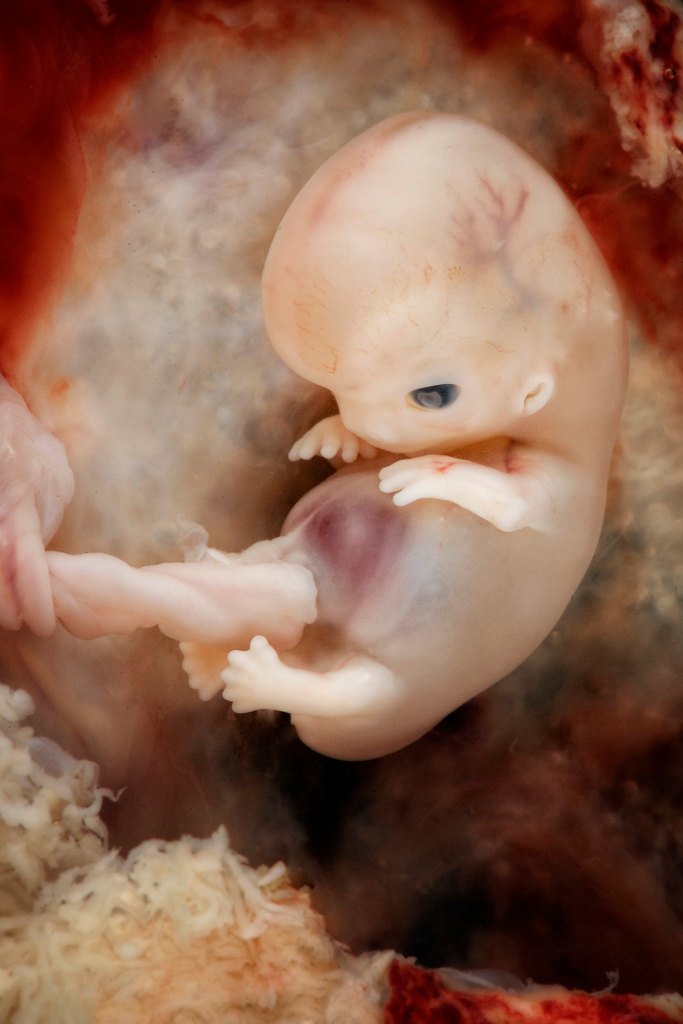
Notice how many times David says “my” in the quoted passage: “my inward parts,” “my frame,” “my unformed substance;” he is emphasizing the personal, not the generalized. When David declares, “Your eyes have seen my unformed substance,” and, “my frame was not hidden from You when I was made in secret,” he is indicating that God does not look at a zygote and see it as a “clump of cells,” but rather as a distinct person. What God beheld and what God worked upon in the womb was David, not something extraneous to himself.
In fact, the passage reveals an understanding of personhood that goes beyond the moment of conception—that is to say, one that goes before it. After saying, “Your eyes have seen my unformed substance,” David also exclaims, “And in Your book were all written the days that were ordained for me, when as yet there was not one of them.” This is a statement with tremendous implications. It shows that the womb-work God oversees is conducted in light of a prior work from himself—the writing of a book in which all the days of the individual he is creating have already been determined. This means that when God beholds the “unformed substance” of a zygote or embryo, he does so with the knowledge of all that person is; he is at once beholding their unformed substance and all the moments of their lived personhood—their triumphs and mistakes, their fears and hopes, the people they will love and their impact upon others—he sees every event that will shape their life.
This was certainly the case with David. God did not wait until David was born, and, suddenly realizing that was previously just a collection of cells in a woman’s body was now a person, decide to retroactively write in a book the number of days David would live upon the earth. David was a person in the heart of God before he ever left the womb. His conception, formation and birth were all part of a long previously ordained plan, and each stage of his existence was an object of God’s intentionality for him as a person. The weaving of David’s body in his mother’s womb was done by God in light of whom he knew and wanted David to be. David was a person to God, so God formed and made him—not the other way around.
We see this same principle at work with the prophet Jeremiah. In the first chapter of the book belonging to his name, we read:
4 Now the word of the Lord came to me saying,
5 “Before I formed you in the womb I knew you,
And before you were born I consecrated you;
I have appointed you a prophet to the nations.”
(Jeremiah 1:4-5)
The Lord tells Jeremiah that before he took the initiative to form Jeremiah in the womb he already knew him. He knew him, not the person he was going to become or be, but the person that he already is and was in the eyes of God. And as a person in the eyes of God, Jeremiah was already given a calling and a destiny to be a prophet to the nations. Again, we see the intentionality God displays towards people even before they are born. They don’t become individuals with distinct gifts and purposes after exiting the womb; they start that way prior to any entrance into the womb, and God fashions them in the womb to fit those very gifts and purposes. In this schema of personhood, birth is not the start of a person, but simply the start of a person’s life outside the womb. Inside the mother, they were a person with a developing body, and before that, they were a person without a body entirely, but a person nonetheless in the heart of God.
Those of this world would posit that every human being walking the earth and experiencing this life are doing so by sheer happenstance. The milestones of human life—choosing a career path, falling in love, starting a family—all are merely products of chance and nature running its course. The Scriptures show us that a person’s life experiences are not just the result of a random sperm fertilizing a random egg, but are in fact the outworking of something ordained by God before that person was even conceived. From the moment an ovum is fertilized and that work of being woven together in the womb begins, God is looking at a unique human individual and he is shaping that unique being into existence by his very own hands.
Lest anyone object, this intentionality by God is not something reserved for David or Jeremiah alone. In Isaiah, the Lord speaks to the nation of Israel, which consists of millions of people, and he informs them that he is the LORD, “who made you” and “who formed you in the womb” (Isaiah 44:2, 24). What does that mean? It means this intentionality in the creation of a person is not an exception to the rule, it is the rule. He tells Israel as well that he has carried them “from the womb” (Isaiah 46:3), indicating that his investment, concern, and care for them did not start after their maternal egress, but was with them throughout the entire gestational period.
The Bible is also replete with instances of the purposes of individuals being delineated like David and Jeremiah before that person was born or even conceived, as we see in the lives of Isaac, Jacob, Esau, Samson, John the Baptist, and Christ himself. While modern society rails against the notion of anyone being forced to carry an “unplanned” pregnancy to term, the matter of the fact is God has plans for each child in the womb. An unexpected and unwanted pregnancy may fall outside the scope of human sovereignty, but it remains squarely within God’s own.
From what we have learned of personhood so far, it is clear, biblically speaking, that abortion kills a person, and as such, is an act of murder, no qualitatively different than killing a human outside the womb. If any believer would dispute this claim, he or she would have to allow that were the virgin Mary to have aborted the divinely conceived fetus of Jesus, she would have committed no wrong. To be sure, knowing beforehand that the life inside her womb would one day become the Messiah and save humanity from their sins would certainly make her abortion particularly selfish, and perhaps wrong in that regard, but the right to an abortion is not defined by its proponents as something contingent on what kind of life the fetus will come to have or live, it is defined as a right a woman can use whenever and however she wants, and to deny her this right is defined as an axiomatic evil. Mary would be no law-breaker of the sixth commandment if she aborted the embryonic Jesus under a different conception of personhood than the one we have so far detailed.
The Basis of Human Equality
There are a few more passages that we must examine to press our case. In Job 31, the vexed and righteous sufferer gives us a powerful statement on the nature of human equality. He says,
13 “If I have despised the claim of my male or female slaves
When they filed a complaint against me,
14 What then could I do when God arises?
And when He calls me to account, what will I answer Him?
15 “Did not He who made me in the womb make him,
And the same one fashion us in the womb?
(Job 31:13-15)
As even the most negligent student of history knows, the past and present are replete with instances of human mistreatment and cruelty erroneously justified on the basis of differences in race, creed or class. History shows that when personhood is bestowed or diminished on the basis of these attributes, inhumane treatment becomes morally permissible on fallacious terms. We see this in the Nazi designation of Jews as “subhuman,” and in the institution of chattel slavery where governments even designated individuals as “three-fifth’s a person.” The wealthy assert superiority to the poor, the colonizers over the colonized, one race over the other, and thus rationalize their subjugation of them. It is a repeated refrain in human history. In the annals of humanity, personhood has proved itself to be a fairly fluid concept, one especially malleable to suit the preferences of those in power—the equal treatment of individuals is a hard-fought yet precariously held ideal that has been absent for many stretches of it. It must be vigilantly grasped by any people who have obtained it, lest it slip from their hands.
Western society has only in the last seventy years decided on a definition of personhood that ostensibly prevents such atrocities from reoccurring. We have by and large embraced the notion that people are entitled to equal treatment, not on the basis of their skin or some other factor, but by the simple virtue of them being human. Personhood is bestowed, respected and defended on the basis of common humanity; not class, race, creed or any other marker. Job’s conception of human equality is very much like our modern conception of it. In the preceding passage from Job, we see the unequal treatment of humans based on these markers denounced as illegitimate. Job points out that as a wealthy man, he cannot mistreat individuals simply because they hold a lower economic status within society. At root, they both share a common humanity, and Job believes denying this common humanity will incur judgment from God.
But it is worth noting where Job believes human equality is derived from. According to Job, common humanity begins in the womb. The same God who fashioned Job in the womb is also the same God who fashioned Job’s servant in the womb, and it is this fact that necessitates Job’s fair and equal treatment of his servant. When it comes to personhood and the moral obligations it entails, what they were in the womb is the only metric that matters to God. We treat people equally because of common humanity; and according to the Bible, the grounds of our common humanity is the womb-work of God. It is not grounded in race or class, and neither is it grounded in some designated time after birth. Our common humanity, and thus our right to not be killed, abused, or mistreated, follows us from the womb on forward. To abort a fetus is to deny him or her the rights God says he or she intrinsically has. It is, at its core, to engage in the same tactics found in Jewish concentration camps and among Southern slave owners—to treat something human as less-than. God looks upon it with the same anger and disgust as he did those other abominations; his framework for personhood, as laid out in Job, has not changed.
New Testament Examples
The lack of distinction between the personhood of born and unborn humans is something we find in the New Testament as well. In Luke 1:15, the angel Gabriel tells Zacharias that his son John the Baptist will be, “filled with the Holy Spirit while yet in his mother’s womb.” For the Christian, this statement carries huge implications. Only those that have a body and a soul can be recipients of the Spirit’s infilling. God does not fill inanimate objects with his Spirit; nor does he fill other forms of life like animals or vegetation. The only thing God fills with his Spirit is a person. To fill an unborn fetus with his own Spirit is to accord it the same level of personhood the disciples possessed in the upper room on the day of Pentecost.
Later on, in Luke 1:41, we are told, “When Elizabeth [John’s mom] heard Mary’s greeting, the baby leaped in her womb.” Elizabeth tells Mary in verse 44, “When the sound of your greeting reached my ears, the baby leaped in my womb for joy.” The first thing to note is that Luke is treating what is in Elizabeth’s womb as a person who has emotions. Mary’s greeting made John respond with a display of joy. The reason for this, as detailed in verses 42-43, is that preborn John recognized that Mary was carrying the Messiah within her womb. In the same way the newly born Jesus produced feelings of thanksgiving and joy in both Simeon and Anna, when through the empowerment of the Holy Spirit they recognized he was the Messiah (Luke 2:25-38), so too does preborn John rejoice at preborn Jesus through the Holy Spirit.
The second thing to take notice of is that the word “baby” in verses 41 and 44 is the same in Greek as the word translated “baby” in Luke 2:16, where it says, “they came in a hurry and found their way to Mary and Joseph and the baby as He lay in the manger.” Luke, who is writing under the inspiration of the Holy Spirit, uses the same word for what is in the womb as what is outside the womb. In one situation, the child lays in the manger; in the other, cradled within his mother. No distinction is made because there is none. A change of location and repose is not a change of personhood.
“Thou shall not murder.” Any true believer of Jesus Christ affirms this command. It is written in God’s holy Word. And it is this very same word that delineates how we are to conceptualize who is murdered. Who is a person, that upon committing no wrong and having their blood shed, becomes a victim of murder? The Bible’s resounding answer on personhood is that it is something fully intact from the moment a human is conceived within the womb. Wherever abortion is committed then, the sixth commandment is broken.
Vandals of Glory
Before closing, we must return to Psalm 139. In the topic of abortion, there is an underlying question that everyone is answering, pro-life or pro-choice advocates alike: What has transpired, and is transpiring, in the womb of a pregnant woman? For the abortion advocate, the answer is nothing inherently worthy of protection. What is happening in the womb is up to the woman to define. If she determines it is a clump of multiplying cells that she wants to rid herself of, then it is. If she determines it is her child that she is going to name, nurture and raise to adulthood, then it is. The worth and personhood of an unborn child are up to the woman to bestow or take away. In allowing the woman to become the final arbiter of what life in the womb is and what is to be done with it, those who advocate for abortion place mankind in the role of God.
If you ask a pro-life person this question, they are going to say that what has transpired in the womb is the beginning of life for an actual person; and what is transpiring is the developing of that person’s body; and therefore, since abortion is the killing of a human life, it is wrong. Biblically, this answer is true but incomplete. When a Christian sees a pregnant woman and is asked: what has transpired, and is transpiring, in the womb that pregnant woman? According to Psalm 139:13-15, the believer in Jesus Christ should answer: the active and intentional workmanship of God. In declaring himself formed, woven and skillfully wrought by the Lord, David shows us that the conception and development of a child is not a hands-off process; God is intimately involved. As servants of Christ, it is imperative to not only include this as part of our understanding about abortion, but to start here.
Too often, abortion is vilified as merely an assault against a human being and the truth is neglected that it is also an assault against God himself. Abortion is not just murder; it is the disruption of the active and intentional hand of God. The womb is not just the starting place of human life; it is a divinely chosen workshop for the Creator of the entire universe to make and fashion the apex of his creation, which are beings that bear his image. When people mess with what is in the womb, they are going into God’s workshop and destroying his project. Abortion, as an act, declares to God: “what you are forming and weaving together, I am going to dismember and pull apart.” To adopt such a posture against God is outrageous. It is to level an assault against God’s sovereign right as Creator. It is a supreme act of arrogance, one of not only rebellion but of contempt and utter disdain for his glory and holiness.
Ultimately, abortion is not just the taking of human life; it is the rejection and replacement of God. The idea that undergirds abortion is one in which human will is absolute. When a woman says, “My body, my choice,” what she is really saying, is, “I am sovereign.” Those that support abortion and those that commit it purport to sit on a throne God alone can occupy, and this frame of mind can only be rightfully described in one way—satanic. True justice is not man-centered but Christ-centered; it seeks to not only rectify the evil inflicted upon another human being, it also seeks to rectify the besmirching of the glory of God whose image that human bore. As Christians then, we must oppose abortion not just for its murderous nature, but also for its brazen assault against God’s glory.
The womb is a place of wonder. It is a stage to showcase a creator at the heights of his genius, an artist at the peak of his powers. Think of it: out of the entwinement of limbs, a union of hearts and bodies, comes the entwinement of two cells; a force of life is wrought, detonating in a flurry of division that rushes on with miraculous construction, building a temple that can contain the glory of God himself and housing a soul that can learn mercy, hate evil, delight in justice, revel in beauty, and love so fiercely that it even lays down his or her life for the sake of another. The womb is a place where God creates beings that look like himself.
As the most beautiful being in all existence, and as the greatest artist in all eternity, what else could rightfully possess the title of the greatest artistic endeavor undertaken, the most magnificent display of creative genius, than to create billions of unique portraits of yourself? And what would more fully embody the nemesis of Beauty than to assert the right to take those portraits and destroy them? Apart from Satan, little else.

Notes
1 https://www.desiringgod.org/articles/the-question-abortion-advocates-wont-answer
See the sub-heading, “The Simple, Irrefutable Logic of Life.”
2https://www.qcc.cuny.edu/socialsciences/ppecorino/medical_ethics_text/Chapter_8_Abortion/Reading_Warren_Moral_Legal_Status_of_Abortion.htm
Warren has five conditions for personhood; the ability to communicate and self-awareness are numbers four and five, respectively.
3 Singer claims quite astonishingly that, “Other things being equal, there is less reason for objecting to the use of an early human embryo, a being that has no brain, no consciousness and no preferences of any kind, than there is for objecting to research on rats, who are sentient beings capable of preferring not to be in situations that are painful or frightening to them.”
See: https://www.utilitarian.net/singer/by/19990821.htm
4 https://www.str.org/w/why-abortion-is-unjust-discrimination#.Xj2PPxNKjq1
*Unless noted, all scripture quotations taken from the NASB. Copyright by The Lockman Foundation.
 Paths of Righteousness